



Relevant for Exams
Article content unavailable; analysis of MGNREGS impact on farm labour shortage not possible.
Summary
The article content is unavailable, preventing a detailed analysis of whether MGNREGS has contributed to farm labour shortages. Without specific data, findings, or expert insights from the text, it is impossible to explain the phenomenon, its implications, or its significance for competitive exam preparation. A comprehensive summary requires the full article content.
Key Points
- 1No specific data or findings regarding MGNREGS impact on farm labour shortage could be extracted due to missing content.
- 2The article's argument or evidence for/against MGNREGS causing labour shortage is unknown.
- 3Details on any specific dates, regions, or numbers related to labour trends are not available.
- 4Constitutional or legal provisions related to MGNREGS or labour laws, if discussed, could not be identified.
- 5Any government reports, committees, or expert opinions mentioned in the article are not accessible.
In-Depth Analysis
The Mahatma Gandhi National Rural Employment Guarantee Scheme (MGNREGS), enacted in 2005, stands as one of India's most ambitious and impactful social welfare programs. Its primary objective is to guarantee 100 days of wage employment in a financial year to every rural household whose adult members volunteer to do unskilled manual work. This legal entitlement, rooted in Article 41 of the Directive Principles of State Policy (DPSP) which calls for the state to make effective provision for securing the right to work, aims to enhance livelihood security in rural areas and reduce distress migration.
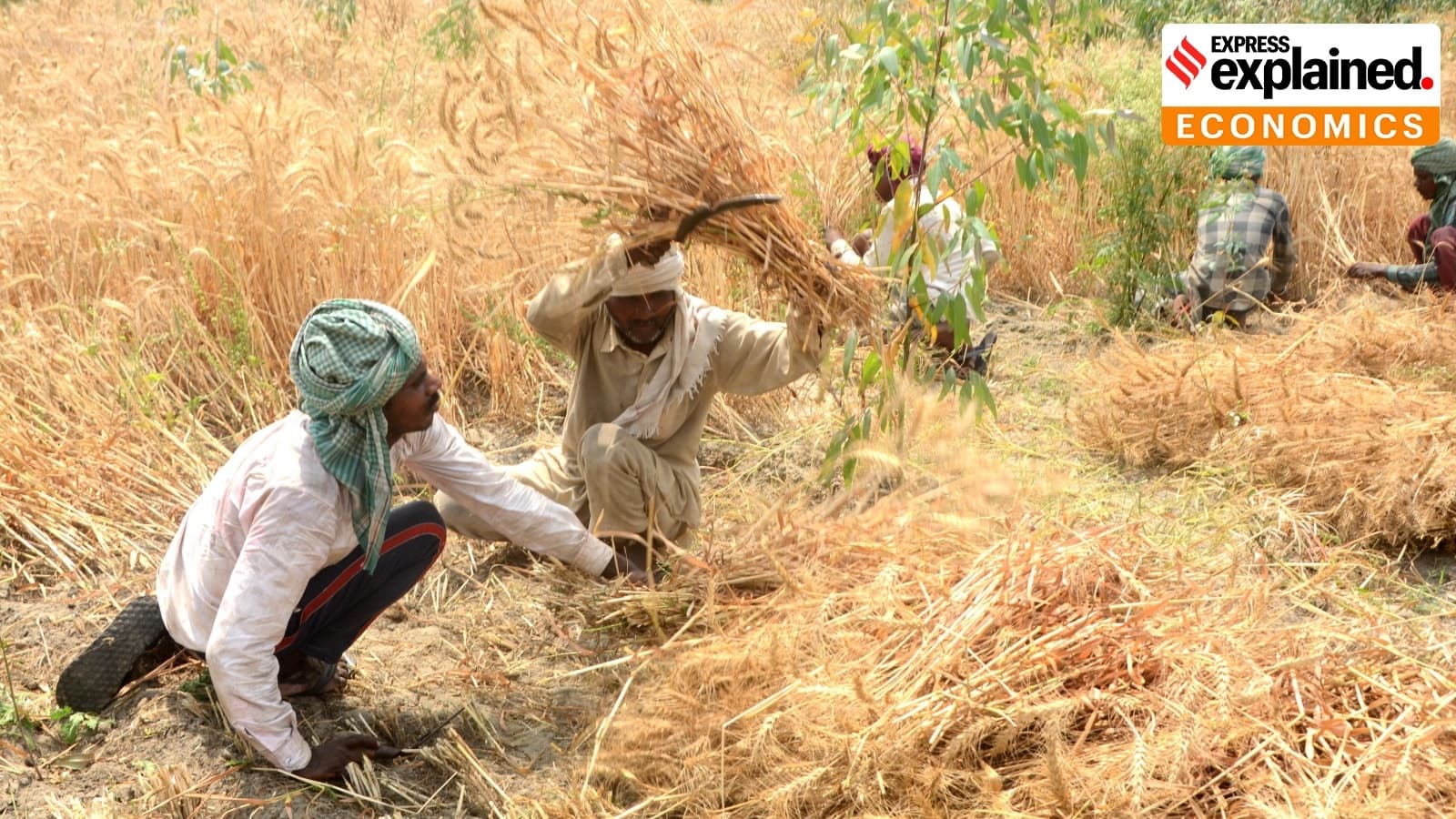
Since its inception, MGNREGS has been a subject of intense debate, particularly concerning its impact on the agricultural sector. One of the most persistent questions is whether the scheme has led to a shortage of farm labour, consequently pushing up agricultural wages and affecting farmers' profitability. The core argument supporting this contention suggests that by providing an alternative, guaranteed source of income, MGNREGS draws workers away from agricultural activities, especially during peak seasons like sowing and harvesting. This perceived shift in labour supply then forces farmers to offer higher wages to attract workers, increasing their production costs and potentially making agriculture less viable.
However, a nuanced understanding reveals a more complex picture. Many economists and studies argue that MGNREGS primarily acts as a safety net during lean agricultural seasons when farm work is scarce. It provides crucial income support, preventing rural households from falling deeper into poverty and reducing the need for distress migration to urban centres. Furthermore, the work offered under MGNREGS is often less strenuous and closer to home compared to farm labour, making it an attractive option for certain demographics, particularly women. The scheme’s demand-driven nature means work is provided when requested, often aligning with periods when agricultural demand for labour is lower.
Key stakeholders in this debate include the rural labourers themselves, who are direct beneficiaries of the scheme, gaining improved bargaining power and financial stability. Farmers, on the other hand, are often vocal about the challenges of labour availability and rising wage costs, perceiving MGNREGS as a direct competitor for their workforce. The Central and State Governments are crucial stakeholders as implementers and funders of the scheme, constantly balancing the welfare objectives with concerns about agricultural productivity and inflationary pressures on rural wages. Economists and policy analysts play a vital role in evaluating the scheme's effectiveness and unintended consequences, offering data-driven insights.
The significance of this issue for India is profound. From a social perspective, MGNREGS has been instrumental in poverty alleviation, particularly for marginalized communities and women, contributing to rural empowerment and reducing income inequality. Economically, its impact on the agricultural sector is a double-edged sword: while it provides a floor for rural wages and injects liquidity into rural economies, concerns about increased input costs for farmers persist. This directly impacts India's food security and the livelihoods of millions dependent on agriculture. Politically, the scheme is a significant tool for rural development and a testament to the government's commitment to social welfare, though its implementation and budget allocations are often subjects of scrutiny.
Historically, India has grappled with rural poverty and unemployment. MGNREGS builds upon earlier employment generation programs but distinguishes itself through its legal guarantee and demand-driven nature, making it a rights-based entitlement. The Mahatma Gandhi National Rural Employment Guarantee Act (MGNREGA) of 2005 legally enshrines this right, making it a cornerstone of India's social security architecture, aligning with the constitutional vision of a welfare state.
Looking ahead, the future implications are critical. Policymakers must continually evaluate and adapt MGNREGS to address its potential externalities while preserving its core benefits. This might involve better integration with agricultural calendars, focusing on asset creation that benefits agriculture (e.g., irrigation, land development), and promoting skill development among rural youth to diversify their livelihood options beyond manual labour. The debate around MGNREGS and farm labour shortage will likely continue, necessitating robust data collection and analysis to inform evidence-based policy adjustments, ensuring that the scheme serves its welfare objectives without unduly hampering the productivity and profitability of India's vital agricultural sector. Balancing social security with economic efficiency remains a central challenge for India's rural development strategy.
Exam Tips
This topic falls under GS Paper-II (Social Justice, Government Policies & Interventions) and GS Paper-III (Indian Economy, Agriculture, Rural Development) for UPSC Civil Services Exam. For SSC, Banking, Railway, and State PSC exams, it's relevant for General Awareness, Economy, and Government Schemes sections.
When studying MGNREGS, focus on its objectives, key features (e.g., 100 days of work, demand-driven, legal guarantee, 1/3rd women beneficiaries), constitutional backing (Article 41 DPSP), and its socio-economic impacts (positive and negative, especially on wages and agriculture).
Common question patterns include analytical questions on the scheme's effectiveness, its pros and cons, challenges in implementation, its role in poverty alleviation, and its impact on rural labour markets and agricultural productivity. Be prepared for both objective (facts, dates) and subjective (analysis, policy recommendations) questions.
Relate MGNREGS to broader economic concepts like rural wage inflation, disguised unemployment, rural-urban migration, and the role of social safety nets in developing economies. Understand the arguments from both farmers' and labourers' perspectives.
Stay updated on recent government reports, Economic Surveys, and policy changes related to MGNREGS and agricultural labour. Data points regarding budget allocations, person-days generated, and wage rates can be crucial for mains answers.