



Relevant for Exams
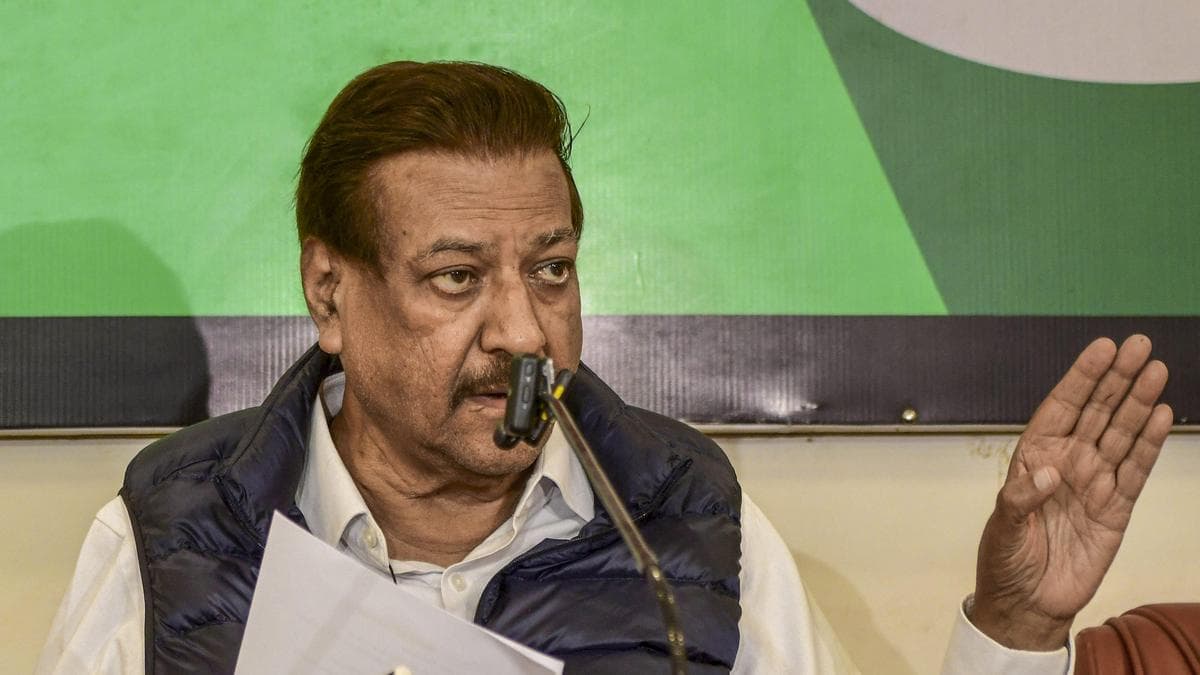
Prithviraj Chavan demands inquiry into 'Operation Sindoor', 'Pahalgam attacks', citing constitutional duty of scientific temper.
Summary
Former Maharashtra CM Prithviraj Chavan demanded an inquiry into "Operation Sindoor" and "Pahalgam attacks". He defended his remarks by emphasizing the constitutional duty under Article 51A(h) to develop scientific temper, humanism, and the spirit of inquiry and reform. This highlights the relevance of Fundamental Duties in public discourse for competitive exams, particularly for polity sections.
Key Points
- 1Former Maharashtra Chief Minister Prithviraj Chavan demanded an inquiry into specific events.
- 2The events for which inquiry is sought are "Operation Sindoor" and "Pahalgam attacks".
- 3Chavan, a prominent Congress leader, made these demands.
- 4He cited the constitutional duty to "develop the scientific temper, humanism, and the spirit of inquiry and reform".
- 5This duty is specified under Article 51A(h) of the Indian Constitution, which lists Fundamental Duties.
In-Depth Analysis
The demand by former Maharashtra Chief Minister Prithviraj Chavan for an inquiry into "Operation Sindoor" and "Pahalgam attacks," coupled with his invocation of Article 51A(h) of the Constitution, highlights critical aspects of India's democratic functioning, constitutional values, and the role of political discourse.
**Background Context and What Happened:**
Prithviraj Chavan, a seasoned Congress leader, recently called for an inquiry into two specific events: "Operation Sindoor" and "Pahalgam attacks." While details on "Operation Sindoor" are not widely publicized in the public domain, "Pahalgam attacks" likely refers to significant militant incidents that have occurred in the Pahalgam region of Jammu & Kashmir, a prominent one being the massacre of Amarnath pilgrims and local residents in August 2000. Chavan's demand is rooted in the broader principle of accountability and transparency in governance, particularly concerning sensitive security operations or terror incidents. What makes his statement particularly noteworthy is his explicit defense of his remarks by citing a fundamental duty enshrined in the Indian Constitution: Article 51A(h). This article mandates every citizen "to develop the scientific temper, humanism and the spirit of inquiry and reform."
**Key Stakeholders Involved:**
1. **Prithviraj Chavan (and the Opposition):** As a former Chief Minister and a prominent leader of the Congress party, Chavan represents the opposition's role in a parliamentary democracy. The opposition is tasked with scrutinizing government actions, demanding accountability, and raising questions on matters of public interest and national security. His demand underscores the importance of a vigilant opposition in upholding democratic principles.
2. **The Government (Union and State):** The current central government and potentially the Jammu & Kashmir administration are the primary stakeholders against whom the demand for inquiry is made. They are responsible for maintaining law and order, conducting security operations, and ensuring transparency and justice. Their response to such demands can significantly impact public trust and perceptions of governmental accountability.
3. **The Indian Public:** Citizens are the ultimate beneficiaries of transparency and accountability. The constitutional duty cited by Chavan is on every citizen, emphasizing their role in fostering a society that values rational thinking and inquiry, not just blind acceptance. Public pressure often plays a crucial role in prompting governments to act on demands for inquiries.
4. **Security Agencies:** Any inquiry into "Operation Sindoor" or "Pahalgam attacks" would involve various security and intelligence agencies. Their operations are often sensitive, but demands for inquiry raise questions about their conduct, intelligence gathering, and operational effectiveness, especially in cases with significant casualties or controversial outcomes.
**Why This Matters for India:**
This episode is significant for several reasons. Firstly, it reiterates the vital role of the opposition in India's democratic framework. By demanding an inquiry, Chavan is exercising the opposition's right and duty to hold the government accountable. Secondly, it brings to the forefront the often-overlooked **Fundamental Duties** enshrined in Part IVA of the Constitution. While not legally enforceable in the same way as Fundamental Rights, these duties are moral obligations meant to guide citizens and the nation. Chavan's specific reference to Article 51A(h) — the duty to develop scientific temper, humanism, and the spirit of inquiry and reform — elevates the debate from mere political wrangling to a discussion grounded in constitutional values. This particular duty encourages critical thinking, questioning, and a rational approach to issues, rather than succumbing to unverified claims or emotional appeals. In a society grappling with misinformation and polarized narratives, promoting a scientific temper and spirit of inquiry is paramount for informed public discourse and progressive governance.
**Historical Context and Constitutional Provisions:**
Fundamental Duties were incorporated into the Indian Constitution by the **42nd Amendment Act of 1976**, during the Emergency, based on the recommendations of the **Swaran Singh Committee**. Originally ten in number, an eleventh duty was added by the **86th Amendment Act of 2002**. Though non-justiciable, they serve as a constant reminder to citizens of their responsibilities towards the nation. Article 51A(h) is particularly relevant in contemporary times, advocating for a rational and evidence-based approach to societal challenges and public policies. The concept of inquiry itself is foundational to democratic accountability, often leading to the establishment of **Commissions of Inquiry** under the **Commissions of Inquiry Act, 1952**, to investigate matters of public importance. The **Right to Information Act, 2005**, further empowers citizens to seek information, reinforcing the spirit of inquiry.
**Future Implications:**
Chavan's demand could potentially lead to increased political pressure on the government to provide more information or even constitute an inquiry. Regardless of the immediate outcome of the demand, the invocation of Article 51A(h) sets a precedent for framing political discourse within the constitutional framework of fundamental duties. This could encourage a more principled and constitutionally informed public debate. It also serves as a reminder to citizens about their collective responsibility to foster an environment of critical thinking and rational questioning, which is essential for combating disinformation and promoting good governance. For India, this emphasis on scientific temper and inquiry is crucial for its progress as a knowledge-based society and a vibrant democracy.
Exam Tips
This topic falls under the 'Indian Polity and Governance' section of the UPSC, SSC, and State PSC syllabi. Focus on the origin, significance, and specific articles related to Fundamental Duties.
Study Fundamental Duties (Part IVA, Article 51A) in conjunction with Fundamental Rights (Part III) and Directive Principles of State Policy (Part IV) to understand their interrelationship and constitutional balance. Pay special attention to the 42nd and 86th Constitutional Amendment Acts.
Common question patterns include direct questions on the articles of Fundamental Duties (e.g., 'Which article mandates developing scientific temper?'), their enforceability, the committee that recommended them, and their relevance in modern India's governance and societal values. Case study-based questions linking a current event to a constitutional provision are also possible.
Related Topics to Study
Full Article
‘It is my duty as a citizen to develop the scientific temper, humanism, and the spirit of inquiry and reform, promoting rational thinking, compassion, and progress, rather than blind faith or superstition,’ the Congress leader said, defending his earlier remarks