



Relevant for Exams
Gopinath, Sanyal advocate joint polls, citing economic boost and policy continuity benefits.
Summary
Economists Gopinath and Sanyal have reportedly voiced support for simultaneous elections, or 'joint polls', in India. They argue that this electoral reform would provide a significant boost to the economy and ensure greater policy continuity. This topic is highly relevant for competitive exams, especially UPSC and State PSC, as it delves into governance, electoral reforms, and their potential economic impact.
Key Points
- 1The concept of "joint polls" refers to simultaneous elections for Lok Sabha and State Assemblies.
- 2Economists Gopinath and Sanyal have publicly supported the implementation of joint polls.
- 3A primary argument put forth for joint polls is its potential to provide a "boost to the economy".
- 4Another key benefit highlighted is the assurance of "policy continuity" by reducing frequent election cycles.
- 5This discussion on electoral reforms holds significant relevance for India's governance and economic stability.
In-Depth Analysis
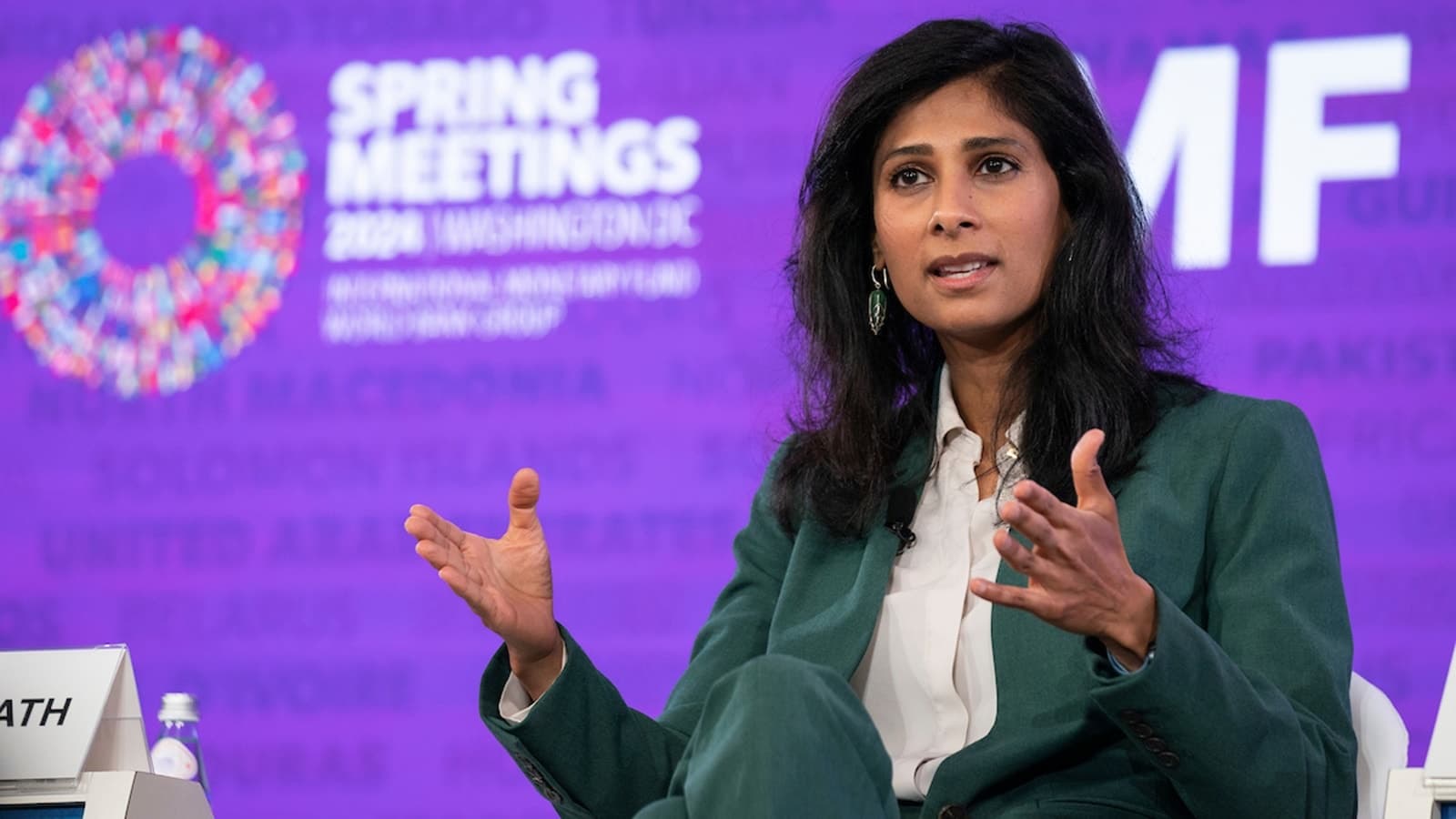
The concept of 'simultaneous elections' or 'joint polls' in India, where elections for the Lok Sabha (Parliament) and all State Legislative Assemblies are held concurrently, has resurfaced as a significant policy debate. Recently, economists like Gita Gopinath, First Deputy Managing Director of the International Monetary Fund (IMF), and Sanjeev Sanyal, a member of the Economic Advisory Council to the Prime Minister (EAC-PM), have reportedly voiced strong support for this reform. Their primary arguments hinge on the potential for a substantial 'boost to the economy' and ensuring greater 'policy continuity', thereby minimizing disruptions caused by frequent election cycles.
Historically, India conducted simultaneous elections for both the Lok Sabha and State Assemblies during its first four general elections, from 1952 to 1967. This practice was disrupted due to various factors, including the dissolution of some State Assemblies in 1968 and 1969, followed by the premature dissolution of the Lok Sabha in 1970. Since then, India has witnessed a fragmented electoral calendar, with elections occurring almost annually in different states. This constant state of electioneering has led to several concerns, prompting various bodies, including the Law Commission of India and NITI Aayog, to examine the feasibility of reverting to simultaneous polls.
Key stakeholders in this debate include the Union Government, which has been a vocal proponent, viewing it as a critical governance reform. The Election Commission of India (ECI) is another central player, responsible for the logistical and administrative mammoth task of conducting elections. While the ECI has expressed its readiness to conduct simultaneous polls, it has also highlighted the need for significant augmentation of resources, including electronic voting machines (EVMs), voter-verified paper audit trails (VVPATs), and personnel. Opposition parties often raise concerns about the potential impact on federalism and regional parties, fearing that national issues might overshadow local concerns, thereby disadvantaging smaller parties. Legal experts and constitutional scholars debate the constitutional amendments required and their implications for the basic structure of the Constitution. Finally, the citizens, as voters, are directly impacted by any changes to the electoral calendar, affecting their participation and the accountability of their representatives.
For India, the implications of simultaneous elections are profound. Economically, proponents argue that it would lead to substantial savings in public expenditure. The ECI estimates the cost of conducting Lok Sabha elections alone runs into thousands of crores, let alone state elections. Beyond government expenditure, political parties also spend enormous sums. More critically, frequent elections lead to the imposition of the Model Code of Conduct (MCC), which restricts the government from announcing new projects or policies. This frequent imposition, as argued by Gopinath and Sanyal, disrupts policy implementation, hinders long-term planning, and slows down investment, thus impacting economic growth. Policy continuity is crucial for investor confidence and the sustained execution of development projects.
Politically, the reform aims to enhance governance by allowing governments to focus on administration and development rather than being perpetually in election mode. It could free up administrative and security personnel from election duties, allowing them to concentrate on their primary responsibilities. However, critics argue that it might reduce the accountability of governments, as voters would have fewer opportunities to express their discontent. There are also concerns about the potential for 'voter fatigue' if too many elections are bundled together, potentially affecting voter turnout in subsequent elections within the same cycle.
Implementing simultaneous elections would necessitate significant constitutional amendments. Articles 83(2) and 172(1), which define the five-year tenure of the Lok Sabha and State Assemblies respectively, would need to be modified. Provisions related to the dissolution of assemblies and the imposition of President's Rule (Article 356) would also require review. For instance, if a government loses confidence mid-term, mechanisms would be needed to ensure the remaining term is completed, perhaps through a 'constructive vote of no-confidence' or fresh elections only for the remainder of the term. The Representation of the People Act, 1951, would also need extensive amendments. The Law Commission of India, in its 170th report (1999) and later in a draft report (2018), has detailed the constitutional and legal challenges, suggesting a phased approach.
In conclusion, the call for simultaneous elections is rooted in a desire for greater economic efficiency, administrative effectiveness, and policy stability. While the economic arguments put forth by economists like Gopinath and Sanyal are compelling, the practical implementation involves navigating complex constitutional, legal, logistical, and political challenges. Achieving consensus among all political parties, ensuring that the spirit of federalism is upheld, and addressing concerns about voter accountability will be crucial for any successful reform in this direction. The debate continues to be a cornerstone of governance reform discussions in India, with future implications for its democratic process and developmental trajectory.
Exam Tips
This topic falls under GS Paper II (Polity & Governance) for UPSC and State PSC exams, specifically under 'Electoral Reforms' and 'Indian Constitution - features, amendments, significant provisions'. It also touches upon GS Paper III (Economy) due to its economic implications.
For Prelims, focus on facts: relevant constitutional articles (e.g., 83, 172, 324, 356), reports by the Law Commission or NITI Aayog on simultaneous elections, and the historical context (until when were elections simultaneous?). For Mains, be prepared to critically analyze the 'pros and cons' of simultaneous elections, discussing constitutional feasibility, impact on federalism, and the role of various stakeholders.
Common question patterns include: 'Critically examine the arguments for and against simultaneous elections in India, highlighting its potential impact on governance and federalism.' or 'Discuss the constitutional and logistical challenges in implementing 'One Nation, One Election' in India.' Be prepared to provide a balanced perspective with constitutional references and practical implications.
Study related topics like the Model Code of Conduct (MCC), its implications, and the role and powers of the Election Commission of India (ECI) in conducting elections. Understanding the arguments for and against electoral bonds can also provide a broader context of electoral reforms.
Understand the difference between a 'no-confidence motion' and a 'constructive vote of no-confidence' as proposed solutions for mid-term government collapses under a simultaneous election regime. This demonstrates a deeper understanding of proposed solutions to a key challenge.