



Relevant for Exams
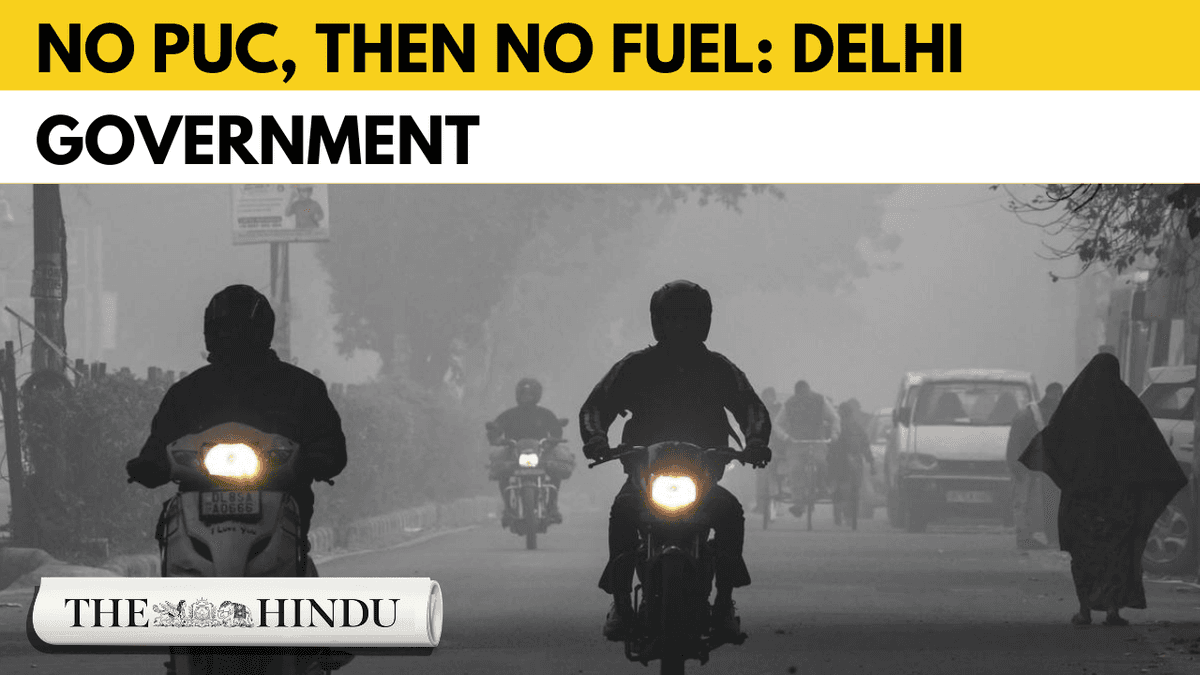
Delhi to deny fuel to vehicles without valid PUC certificate from December 18 to combat air pollution.
Summary
Delhi is set to implement a new policy from December 18, denying fuel to vehicles without a valid Pollution Under Control (PUC) certificate. This measure is aimed at combating severe air pollution in the capital, a recurring environmental challenge. The move highlights governmental efforts in environmental governance and public health, making it significant for competitive exams focusing on environmental policies and urban administration.
Key Points
- 1Delhi government will deny fuel to vehicles lacking a valid Pollution Under Control (PUC) certificate.
- 2The new policy is scheduled to be enforced from December 18.
- 3The initiative is a measure to control and improve air quality in Delhi.
- 4A Minister stated that Delhi's air quality remained better for nearly eight months this year compared to the same period last year.
- 5This policy falls under environmental governance and urban transport regulations in India.
In-Depth Analysis
Delhi's perpetual struggle with severe air pollution has prompted numerous interventions from various governmental bodies and the judiciary. The recent announcement by the Delhi government to deny fuel to vehicles without a valid Pollution Under Control (PUC) certificate, effective December 18, is another significant step in this ongoing battle. This policy aims to target vehicular emissions, a major contributor to the capital's deteriorating air quality.
**Background and Genesis of the Crisis**
Delhi's air pollution crisis is a complex, multi-faceted issue, exacerbated by geographical factors, rapid urbanization, and a burgeoning vehicle population. Situated in the Indo-Gangetic Plains, Delhi often experiences temperature inversions during winter, trapping pollutants close to the ground. Vehicular emissions, industrial pollution, construction dust, biomass burning (including stubble burning in neighbouring states), and domestic waste burning collectively create a toxic cocktail that frequently pushes the Air Quality Index (AQI) into 'severe' or 'hazardous' categories. Over the past two decades, various measures, from the introduction of CNG for public transport in the early 2000s to the Odd-Even scheme (first implemented in January 2016), have been tried, often with limited long-term success. The judiciary, particularly the Supreme Court and the National Green Tribunal (NGT), has played a proactive role, issuing directives to both central and state governments to address the crisis.
**The Policy Explained**
Under the new 'no PUC, no fuel' policy, vehicles operating in Delhi will be required to possess a valid PUC certificate to refuel at petrol pumps. A PUC certificate certifies that a vehicle's emissions are within prescribed limits, as per the Bharat Stage (BS) emission norms. This policy leverages fuel stations as enforcement points, making it difficult for non-compliant vehicles to operate. The Delhi Transport Department is tasked with overseeing the implementation and ensuring compliance. The minister's statement about Delhi's air quality being better for eight months this year compared to last year, while encouraging, underscores the need for continuous and stringent measures, especially as winter approaches and pollution levels typically surge.
**Key Stakeholders and Their Roles**
Several key stakeholders are involved in the success and implications of this policy. The **Delhi Government**, particularly its Transport and Environment Departments, is the primary driver, responsible for policy formulation, implementation, and enforcement. **Vehicle Owners** are directly impacted, needing to ensure their vehicles undergo regular pollution checks. **Fuel Stations** become critical enforcement points, tasked with verifying PUC certificates before dispensing fuel. **Pollution Check Centers** play an essential role in providing accessible and reliable testing services. Beyond these, the **Ministry of Environment, Forest and Climate Change (MoEFCC)** sets national environmental standards and policies like the National Clean Air Programme (NCAP) and the Graded Response Action Plan (GRAP), which often guide state-level actions. Finally, the **Judiciary** (Supreme Court, NGT) remains a vigilant stakeholder, often intervening to ensure environmental protection and public health.
**Significance for India**
This policy holds significant implications for India. Firstly, it directly addresses **public health**, as chronic exposure to high levels of air pollution leads to severe respiratory and cardiovascular diseases, premature deaths, and reduced life expectancy. Secondly, it strengthens **environmental governance**, demonstrating a political will to move beyond advisory measures to direct enforcement. If successful, it could serve as a model for other highly polluted Indian cities grappling with similar challenges. Economically, while initial compliance might pose minor inconveniences, better air quality can improve productivity, reduce healthcare costs, and potentially boost tourism. Socially, it fosters greater **environmental awareness** and responsibility among citizens, reinforcing the idea that clean air is a shared responsibility.
**Constitutional and Legal Framework**
The policy draws its legitimacy from various constitutional provisions and environmental laws. **Article 21** of the Indian Constitution, guaranteeing the 'Right to Life and Personal Liberty,' has been broadly interpreted by the Supreme Court to include the right to a clean and healthy environment. **Article 48A**, a Directive Principle of State Policy, mandates that 'The State shall endeavour to protect and improve the environment and to safeguard the forests and wildlife of the country.' Furthermore, **Article 51A(g)** imposes a Fundamental Duty on every citizen 'to protect and improve the natural environment including forests, lakes, rivers and wildlife, and to have compassion for living creatures.'
Legally, the policy is rooted in the **Motor Vehicles Act, 1988**, specifically Section 190(2), which prescribes penalties for vehicles plying without a valid PUC certificate. Other overarching laws like the **Environment (Protection) Act, 1986** and the **Air (Prevention and Control of Pollution) Act, 1981**, provide the broader legal framework for pollution control and environmental protection in India. The **Graded Response Action Plan (GRAP)**, implemented by the Commission for Air Quality Management (CAQM), also mandates stringent actions, including vehicular pollution control, when air quality deteriorates.
**Future Implications and Challenges**
The success of the 'no PUC, no fuel' policy hinges on robust enforcement and public cooperation. Challenges include ensuring the integrity of PUC centers, preventing fraudulent certificates, and managing logistical issues at fuel stations. If effectively implemented, it could lead to a tangible reduction in tailpipe emissions, particularly from older and poorly maintained vehicles. This policy also subtly encourages a shift towards cleaner mobility, including electric vehicles (EVs) and public transport. Its long-term impact will depend on its sustained application and integration with other complementary measures, such as enhancing public transport infrastructure, controlling industrial emissions, managing waste, and addressing agricultural stubble burning. The policy could inspire other states and Union Territories to adopt similar stringent measures, creating a cascading effect across the nation in the fight against air pollution.
Exam Tips
This topic primarily falls under GS Paper III (Environment and Ecology, Conservation, Environmental Pollution and Degradation, Environmental Impact Assessment) and GS Paper II (Governance, Policies and Interventions for Development).
Prepare for factual questions on specific dates (e.g., December 18 implementation), relevant constitutional articles (21, 48A, 51A(g)), and acts (Motor Vehicles Act, Environment Protection Act, Air Act).
Expect analytical questions on the effectiveness of such policies, challenges in implementation, the role of various stakeholders, and the socio-economic and health implications of air pollution. Practice essay questions on environmental governance and sustainable urban development.
Study related topics like the National Clean Air Programme (NCAP), Graded Response Action Plan (GRAP), and Bharat Stage (BS) Emission Norms to provide a holistic answer in mains examinations.
Understand the difference between various types of pollution and their sources, particularly focusing on the specific pollutants (PM2.5, PM10, NOx, SOx) and their health impacts.
Related Topics to Study
Full Article
The Minister said Delhi’s air quality remained better for nearly eight months this year compared to the same period last year