

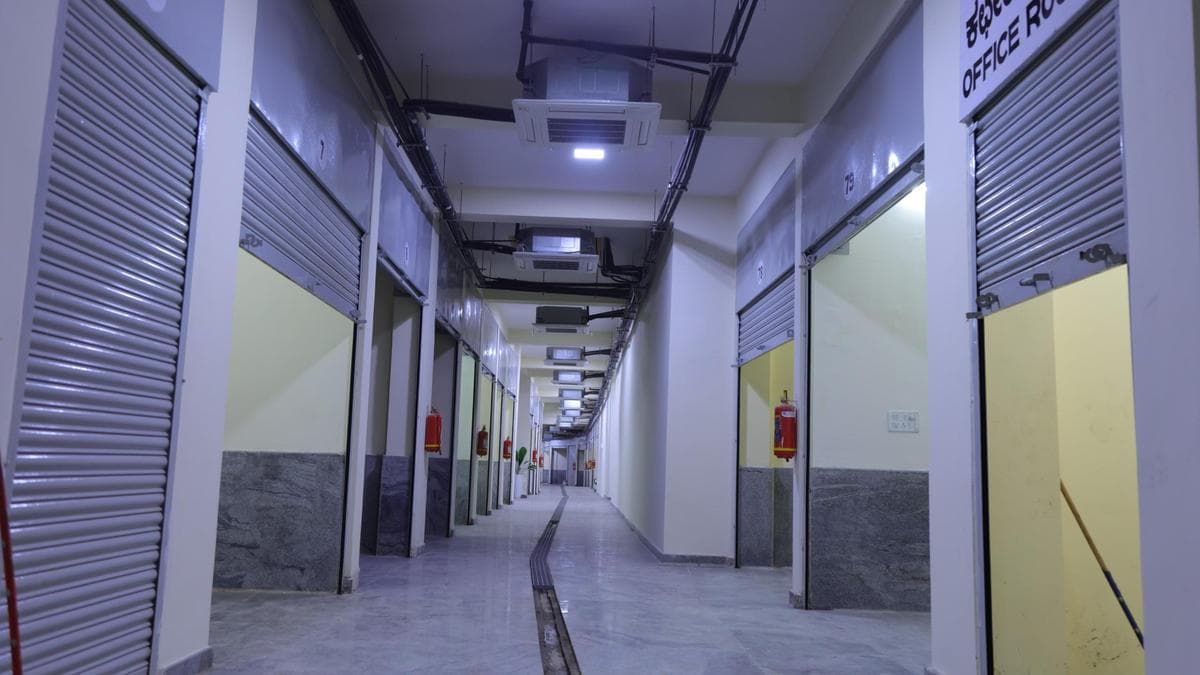


Content unavailable: Vijayanagar palike bazaar shops e-auction details missing for analysis.
Summary
The article on Vijayanagar palike bazaar shops e-auction lacks content, preventing extraction of specific details like dates, names, or financial figures. Without this crucial information, it's impossible to analyze the event's significance or its implications for competitive exam preparation. Key aspects such as the policy framework or constitutional provisions cannot be identified. Therefore, a comprehensive summary or precise exam relevance cannot be provided.
Key Points
- 1No article content was provided for analysis.
- 2Specific details like dates, names, numbers, or percentages related to the e-auction are unavailable.
- 3The policy or legal provisions governing the e-auction cannot be identified without content.
- 4The location 'Vijayanagar' and the administrative body 'palike' are mentioned in the title, but context is missing.
- 5Without content, the precise impact and relevance for competitive exams cannot be assessed.
In-Depth Analysis
The news item about "Vijayanagar palike bazaar shops to be allotted through e-auction" provides a valuable opportunity to delve into significant aspects of local governance, public asset management, transparency, and economic development in India. While the specific content of the article is unavailable, the title itself signals a crucial shift towards modern, transparent administrative practices by urban local bodies (ULBs).
**Background Context and What Happened (General Principles):**
Traditionally, the allotment of commercial spaces, such as bazaar shops, by municipal bodies in India has often been marred by allegations of favoritism, lack of transparency, and corruption. Manual tender processes, discretionary quotas, and opaque decision-making mechanisms have frequently led to public distrust and inefficient utilization of valuable public assets. This scenario often resulted in ULBs not realizing the true market value of their properties, thereby missing out on potential revenue crucial for urban development and service delivery. To counter these systemic issues, various state governments and ULBs have increasingly adopted e-governance initiatives, with e-auctions being a prominent tool. An e-auction for bazaar shops, like the one indicated in Vijayanagar, represents a move towards leveraging technology to ensure a fair, competitive, and transparent process for leasing out commercial spaces. It aims to maximize revenue for the 'palike' (a common term for municipal corporation or council in Karnataka, where Vijayanagar is located), provide equal opportunities for prospective bidders, and foster public confidence in local administration.
**Key Stakeholders Involved:**
1. **The Vijayanagar Palike (Urban Local Body):** As the primary authority, the palike is the owner of the bazaar shops and the entity initiating the e-auction. Its primary interests are to generate maximum revenue, ensure transparent asset management, and provide public services effectively. The revenue from such auctions directly contributes to the municipal fund, which is then used for urban infrastructure, sanitation, public health, and other civic amenities.
2. **Prospective Bidders/Entrepreneurs:** These are individuals or businesses seeking commercial space to operate. Their interest lies in acquiring shops through a fair and accessible process, ensuring a level playing field, and securing a viable location for their ventures.
3. **Citizens/Public:** The broader citizenry is a crucial stakeholder. They benefit indirectly from the increased revenue that allows the palike to deliver better services. More importantly, they have a vested interest in transparent governance and the prevention of corruption in public dealings.
4. **State Government:** The state government oversees the functioning of ULBs and sets the policy framework for their financial management and property disposal. It encourages e-governance reforms and ensures that municipal bodies adhere to state laws and guidelines.
**Why This Matters for India:**
This seemingly local event holds significant implications for India's governance landscape. Firstly, it underscores the national push towards **Good Governance and E-governance**. Initiatives like e-auctions align with the vision of 'Minimum Government, Maximum Governance' and the Digital India program, aiming to make government processes efficient, transparent, and accountable. Secondly, it addresses the perennial issue of **Revenue Generation for ULBs**. Indian municipalities often face severe financial constraints, limiting their ability to provide quality urban services. Transparent e-auctions can unlock significant non-tax revenue, empowering ULBs to fund local development projects, improve infrastructure, and implement schemes like Swachh Bharat Abhiyan or Smart Cities Mission effectively. Thirdly, it promotes **Economic Opportunity and Fair Competition**. By reducing discretionary powers, e-auctions create a more equitable environment for small and medium enterprises (SMEs) to access commercial spaces, fostering local entrepreneurship and economic activity without the need for intermediaries or illicit payments.
**Historical Context and Constitutional Provisions:**
The foundation for such municipal actions lies in the evolution of local self-governance in India. While local bodies existed even during British rule (e.g., Lord Ripon's Resolution of 1882), their constitutional status was solidified much later. The **74th Constitutional Amendment Act of 1992** is pivotal. It granted constitutional recognition to Urban Local Bodies (Municipalities), defining their powers, functions, and financial resources. Specifically, **Article 243W** empowers Municipalities with such authority as may be necessary to enable them to function as institutions of self-government, including powers to prepare plans for economic development and social justice. **Article 243X** grants state legislatures the power to authorize Municipalities to levy, collect, and appropriate taxes, duties, tolls, and fees, and to provide for the assignment to, or appropriation by, the Municipalities of such taxes, duties, tolls, and fees levied and collected by the State Government. The management and disposal of municipal property, including bazaar shops, fall under the purview of these constitutional provisions and are further governed by specific State Municipal Acts (e.g., the Karnataka Municipal Corporations Act for Vijayanagar).
**Future Implications:**
The successful implementation of e-auctions for public assets can set a precedent for broader adoption of digital platforms in municipal administration across India. This could lead to more efficient management of other public resources, such as parking lots, advertising spaces, and land parcels. It could also enhance public trust in local governance, which is crucial for citizen participation and compliance with municipal regulations. However, challenges remain, including ensuring digital literacy among potential bidders, addressing connectivity issues in remote areas, and preventing cartelization among bidders. The long-term implication is a stronger, more financially robust, and transparent system of urban local governance, contributing significantly to India's overall development goals.
Exam Tips
This topic falls under 'Indian Polity & Governance' (UPSC Mains GS-II, State PSCs) and 'Indian Economy' (UPSC Mains GS-III). Focus on the role of Urban Local Bodies (ULBs) and their financial autonomy.
Study the 73rd and 74th Constitutional Amendment Acts thoroughly. Understand the powers, functions, and revenue sources of Panchayats and Municipalities. Relate e-governance initiatives to these constitutional provisions.
Common question patterns include: 'Discuss the challenges faced by ULBs in India and suggest measures to improve their financial health,' 'Evaluate the role of e-governance in promoting transparency and accountability in local administration,' or 'Analyze the significance of the 74th CAA in strengthening urban governance.'
Pay attention to government schemes related to urban development and e-governance, such as Smart Cities Mission, AMRUT, and Digital India, and how they connect to local asset management.
Be prepared to discuss the advantages and disadvantages of e-auctions for public assets, including their impact on revenue generation, transparency, and accessibility for small businesses.