



Relevant for Exams
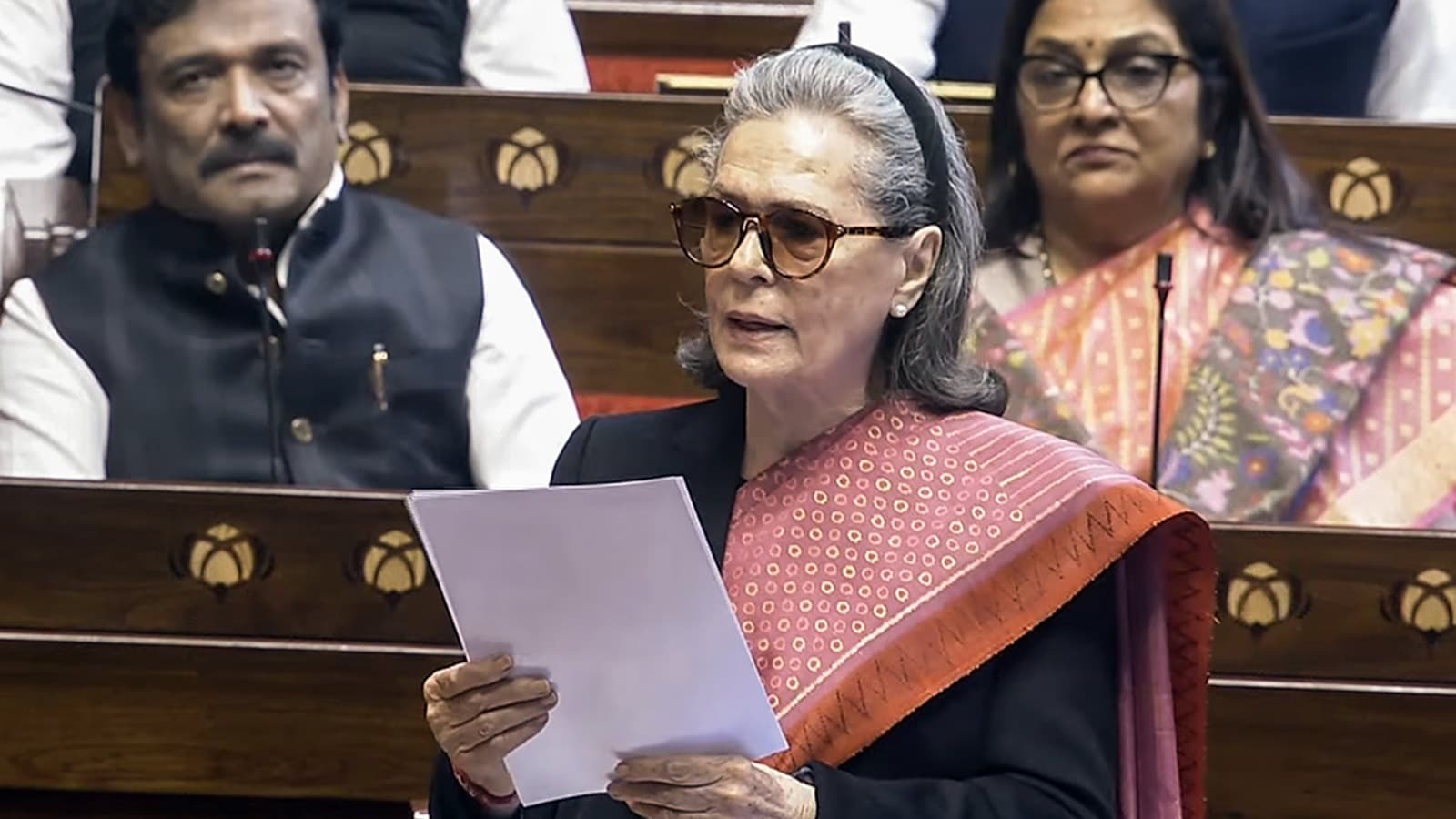
Sonia Gandhi urges Centre to double pay contribution for ASHA, Anganwadi workers.
Summary
Sonia Gandhi urged the Central government to double its contribution towards the remuneration of ASHA and Anganwadi workers. This demand highlights the crucial role of these frontline workers in public health and child development schemes, underscoring the ongoing debate about their fair wages and working conditions. For competitive exams, this topic is relevant for understanding government social welfare schemes like ICDS and NHM, as well as issues related to labor and social justice.
Key Points
- 1Sonia Gandhi, a prominent political figure, made a demand to the Central government.
- 2The demand specifically concerns ASHA (Accredited Social Health Activists) and Anganwadi workers.
- 3The core of the demand is to double the central government's financial contribution to their pay or honorarium.
- 4ASHA workers are integral to community health initiatives under the National Health Mission (NHM).
- 5Anganwadi workers are key implementers of the Integrated Child Development Services (ICDS) scheme.
In-Depth Analysis
The recent call by Sonia Gandhi to double the Central government's contribution to the remuneration of ASHA (Accredited Social Health Activist) and Anganwadi workers brings to the forefront a critical issue concerning India's social welfare framework and the rights of its vital frontline workforce. This demand is not merely a political statement but a reflection of long-standing grievances and the indispensable role these workers play in the nation's public health and child development initiatives.
**Background Context and What Happened:**
ASHA workers are community health volunteers under the National Health Mission (NHM), launched in 2005. They act as a crucial link between the community and the public health system, facilitating access to health services, promoting health-seeking behaviors, and providing basic healthcare information. Their responsibilities range from maternal and child health, immunization, family planning, to disease surveillance and, more recently, critical roles during the COVID-19 pandemic. Anganwadi workers and helpers, on the other hand, are the backbone of the Integrated Child Development Services (ICDS) scheme, India's flagship program for early childhood care and development, launched in 1975. They provide supplementary nutrition, non-formal pre-school education, health education, immunization, and referral services to children under six, pregnant women, and lactating mothers. Both cadres are primarily women, often from economically disadvantaged backgrounds, and are paid an 'honorarium' rather than a fixed salary, leading to their classification as 'volunteers' rather than 'employees'. Sonia Gandhi's demand specifically targets the Central government's financial share in this honorarium, advocating for a significant increase to address their economic insecurity.
**Key Stakeholders Involved:**
* **ASHA and Anganwadi Workers:** The primary stakeholders, these workers are the direct implementers of government schemes at the grassroots. Their well-being, motivation, and fair compensation are central to the success of public health and child development programs.
* **Central Government:** Through the Ministry of Health & Family Welfare (for ASHA) and the Ministry of Women & Child Development (for Anganwadi), the Central government designs policies, allocates funds, and sets national guidelines. It is responsible for a significant portion of their honorarium.
* **State Governments:** States are crucial in implementing these schemes, managing the workers on the ground, and contributing their share to the remuneration. They often face the immediate brunt of worker demands and protests.
* **Political Parties/Opposition:** Political figures like Sonia Gandhi raise these issues, advocating for worker rights and leveraging them in the political discourse to push for policy changes.
* **Beneficiaries:** Millions of women, children, and families in rural and urban areas depend directly on the services provided by ASHA and Anganwadi workers, making them indirect but significant stakeholders.
**Significance for India and Historical Context:**
The issue of fair remuneration for ASHA and Anganwadi workers is profoundly significant for India. Firstly, it directly impacts the efficacy of vital social welfare programs. Underpaid and overworked frontline workers can lead to demotivation, reduced quality of service delivery, and ultimately, poorer health and developmental outcomes for the population. Historically, their demands for better pay, social security benefits, and recognition as government employees have been persistent, leading to numerous protests and strikes across various states. While the Central government has periodically increased their honorarium (e.g., in 2018, the ASHA honorarium was doubled to Rs 2,000 per month, and Anganwadi workers' honorarium was increased to Rs 4,500), these increases are often deemed insufficient given their extensive duties and the rising cost of living. This issue is also critical for women's empowerment, as these roles are predominantly filled by women, often from marginalized communities. Fair wages can significantly improve their economic independence and social standing, aligning with broader goals of gender equality and social justice.
**Constitutional Provisions and Broader Themes:**
This debate is deeply rooted in the Directive Principles of State Policy (DPSP) enshrined in Part IV of the Indian Constitution. **Article 39(d)**, which mandates equal pay for equal work for both men and women, is highly relevant, as these workers perform extensive duties for meager compensation. **Article 42** speaks of making provision for just and humane conditions of work and maternity relief, while **Article 43** calls for securing a living wage for workers. Furthermore, **Article 47** places a duty on the State to raise the level of nutrition and the standard of living and to improve public health, which directly links to the services provided by these workers. Their classification as 'honorary volunteers' often exempts them from standard labor laws like the Minimum Wages Act, 1948, which is a major point of contention. The issue also touches upon broader themes such as federalism, given the shared financial responsibility between the Centre and states; social justice, concerning the rights of informal workers; and gender budgeting, as increased investment would disproportionately benefit women.
**Future Implications:**
If the Central government accedes to the demand, it would entail a substantial increase in public expenditure, potentially necessitating a re-evaluation of budget allocations for social sectors. It could lead to improved morale and effectiveness of ASHA and Anganwadi workers, potentially enhancing India's performance in health and child development indicators such as maternal mortality rates, infant mortality rates, and malnutrition levels. Conversely, continued inadequate remuneration could exacerbate worker discontent, leading to more frequent disruptions in essential services. The debate also opens avenues for formally recognizing these workers as government employees, a long-standing demand that would bring them under the ambit of labor laws and provide social security benefits, transforming their socio-economic status. This policy shift would not only be an act of social justice but also a strategic investment in India's human capital and future well-being, especially crucial as India aims to achieve Sustainable Development Goals related to health and nutrition by 2030.
Exam Tips
This topic primarily falls under GS Paper II of UPSC Civil Services (Governance, Social Justice, Welfare Schemes, Health & Education). For SSC/Banking/State PSCs, it's relevant for General Awareness, Government Schemes, and Current Affairs.
Study the Integrated Child Development Services (ICDS) scheme (launched 1975) and the National Health Mission (NHM) (launched 2005, formerly NRHM) in detail. Understand their objectives, components, funding patterns, and impact. Also, revise the Directive Principles of State Policy (DPSP), especially Articles 39(d), 42, 43, and 47.
Common question patterns include direct questions on the objectives/components of ICDS/NHM, analytical questions on challenges faced by frontline workers (e.g., low pay, lack of social security), questions linking these schemes to constitutional provisions (DPSP), and policy-oriented questions on improving social sector delivery.