



Relevant for Exams
Rajya Sabha clears additional fertilizer subsidy allocation due to increased urea usage and expenses.
Summary
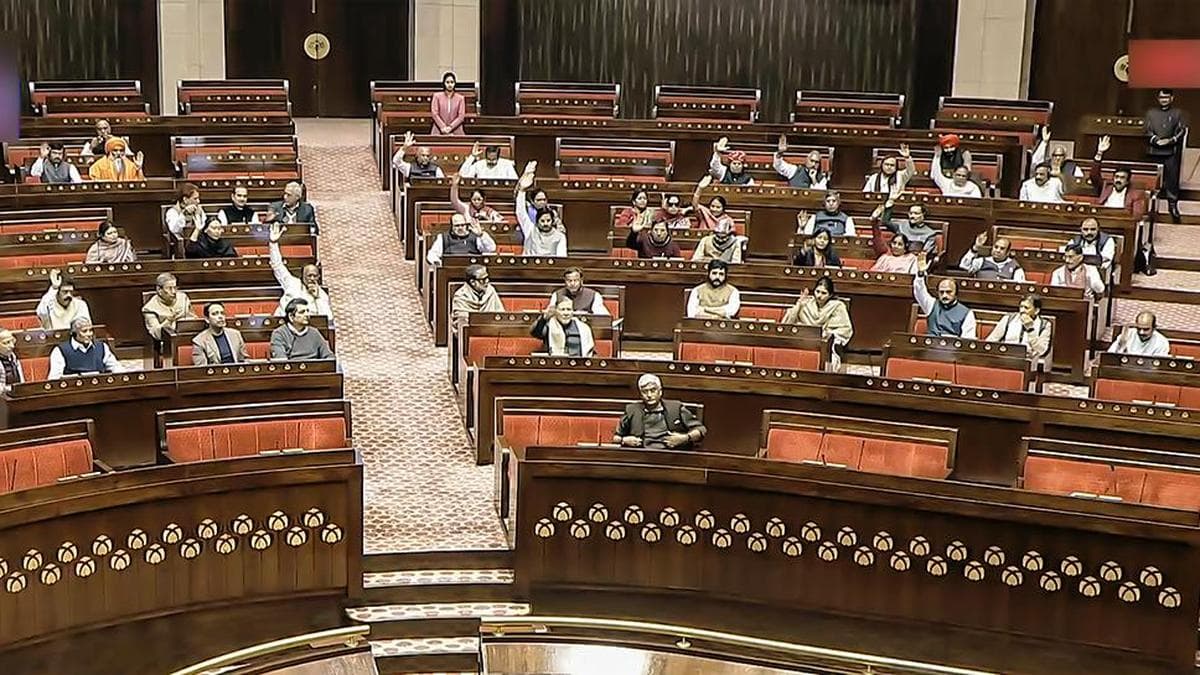
The Rajya Sabha has approved an additional allocation for the fertilizer subsidy, a significant move impacting government expenditure and agricultural policy. Minister of State for Finance Pankaj Chaudhary highlighted the increased expenses and usage of fertilizers, particularly urea, as the primary reasons. This decision underscores the government's commitment to supporting the agricultural sector amidst rising input costs and is crucial for understanding India's fiscal policy and farm economics for competitive exams.
Key Points
- 1The Rajya Sabha cleared an additional allocation for fertilizer subsidy.
- 2Minister of State for Finance Pankaj Chaudhary addressed the debate on this matter.
- 3The decision was prompted by increased expenses and usage of fertilizers.
- 4Urea was specifically mentioned as a fertilizer with increased usage.
- 5This allocation reflects government support for the agricultural sector and impacts fiscal policy.
In-Depth Analysis
The recent approval by the Rajya Sabha for an additional allocation for fertilizer subsidy is a significant development, reflecting the Indian government's ongoing commitment to its agricultural sector and its fiscal strategy. This move, highlighted by Minister of State for Finance Pankaj Chaudhary, addresses the rising expenses and increased usage of fertilizers, particularly urea, underscoring critical aspects of India's economy, governance, and social welfare.
**Background Context and Historical Evolution:**
India's journey with fertilizer subsidies began in the 1970s, primarily to support the Green Revolution and ensure food security by making crucial agricultural inputs affordable for farmers. Fertilizers, vital for enhancing soil fertility and crop yields, are often expensive due to raw material costs and international market dynamics. Historically, the government has subsidized fertilizers to bridge the gap between the cost of production/import and the price at which farmers purchase them. This policy has evolved over decades. Initially, a product-specific subsidy regime was prevalent for all fertilizers. However, recognizing the fiscal burden and imbalanced nutrient use (overuse of urea duepped by price controls), the government introduced the Nutrient Based Subsidy (NBS) scheme in 2010 for non-urea fertilizers (DAP, MOP, NPK complexes). Under NBS, a fixed per-kilogram subsidy is provided on various nutrients, encouraging balanced fertilization. Urea, however, remained under a price-controlled regime with a fixed Maximum Retail Price (MRP), leading to its continued disproportionate usage and higher subsidy outlays.
**What Happened and Why:**
The Rajya Sabha's clearance for additional allocation signifies a Supplementary Demand for Grants. This process, as outlined in **Article 115** of the Indian Constitution, allows the government to seek parliamentary approval for additional expenditure during the financial year if the original budget allocation proves insufficient. Minister Chaudhary's statement explicitly linked this necessity to increased expenses and usage, particularly of urea. The primary drivers for this increase are global commodity price volatility, especially for natural gas (a key feedstock for urea production) and other raw materials like rock phosphate and potash. Events like the Russia-Ukraine conflict have exacerbated these price pressures. Domestically, robust agricultural activity and the relatively lower price of urea compared to other fertilizers (due to its fixed MRP) have led to sustained high demand, further pushing up the subsidy bill.
**Key Stakeholders Involved:**
Several key players are central to this policy. The **Government of India**, through the **Ministry of Finance** (responsible for budgetary allocation) and the **Ministry of Chemicals and Fertilizers** (responsible for fertilizer policy and distribution), is the primary stakeholder. **Parliament** (both Rajya Sabha and Lok Sabha) plays a crucial role in approving these allocations. **Farmers** are the direct beneficiaries, relying on affordable fertilizers to maintain agricultural productivity and income. **Fertilizer manufacturing and importing companies** receive the subsidies to cover their costs, ensuring supply. Indirectly, **consumers** benefit from stable food prices, and the **rural economy** thrives on a productive agricultural sector.
**Significance for India and Broader Themes:**
This additional allocation holds immense significance for India. Firstly, it directly impacts **food security** and **agricultural productivity**, ensuring that farmers have access to essential inputs. Given that agriculture employs a large segment of India's population, this also directly contributes to **farmer welfare** and **rural livelihoods**. Secondly, it has substantial implications for **government finances** and **fiscal policy**. Fertilizer subsidies constitute a significant portion of the Union Budget, impacting the fiscal deficit. For instance, the revised estimate for fertilizer subsidy for FY 2023-24 was around ₹1.89 lakh crore. Managing this expenditure is critical for macroeconomic stability. Thirdly, it touches upon **environmental concerns**. The continued high subsidy on urea often leads to its imbalanced use, causing soil degradation, water pollution, and greenhouse gas emissions (nitrous oxide).
**Constitutional and Policy References:**
Beyond Article 115 concerning supplementary grants, the broader budgetary process is governed by **Articles 112 to 117** of the Constitution. While there isn't a direct constitutional mandate for fertilizer subsidies, the **Directive Principles of State Policy (DPSP)**, particularly **Article 38** (State to secure a social order for the promotion of welfare of the people) and **Article 48** (Organization of agriculture and animal husbandry), provide a guiding framework for state intervention in agriculture for public welfare. Furthermore, fertilizers are often regulated under the **Essential Commodities Act, 1955**, which empowers the government to control their production, supply, and distribution to ensure availability at fair prices.
**Future Implications:**
The sustained high expenditure on fertilizer subsidies necessitates a re-evaluation of the policy's long-term sustainability. Future implications include the need for more targeted and efficient subsidy mechanisms, such as expanding **Direct Benefit Transfer (DBT)** to all fertilizers, which was implemented for urea in 2016. This involves transferring the subsidy directly to farmers' bank accounts upon purchase, aiming to reduce diversion and improve transparency. There is also a push for promoting balanced nutrient application through initiatives like **Soil Health Cards** and encouraging the use of alternative fertilizers and organic farming practices. The government might explore ways to reduce reliance on imported raw materials and promote domestic production. Ultimately, the challenge lies in balancing farmer welfare, fiscal prudence, and environmental sustainability in India's agricultural policy landscape.
Exam Tips
This topic primarily falls under **GS Paper III (Economy - Agriculture, Government Budgeting, Subsidies)** for UPSC Civil Services Exam. For SSC, Banking, Railway, and State PSC exams, it relates to current affairs, Indian economy, and agricultural policies.
When studying, focus on the distinction between Urea subsidy (fixed MRP) and Nutrient Based Subsidy (NBS) for non-urea fertilizers. Understand the reasons for the high subsidy bill, its impact on fiscal deficit, and the pros and cons of different subsidy mechanisms (e.g., DBT).
Common question patterns include: Direct questions on fertilizer policy reforms, reasons for increased fertilizer subsidy, impact of subsidies on agriculture and economy, and comparison between different types of agricultural subsidies. Be prepared for both factual (e.g., year of NBS introduction) and analytical questions.
Related Topics to Study
Full Article
Replying to a brief debate on the matter, Minister of State for Finance Pankaj Chaudhary said the expenses for fertilizers, and the use of fertilizers, particularly of urea, has increased.