



Relevant for Exams
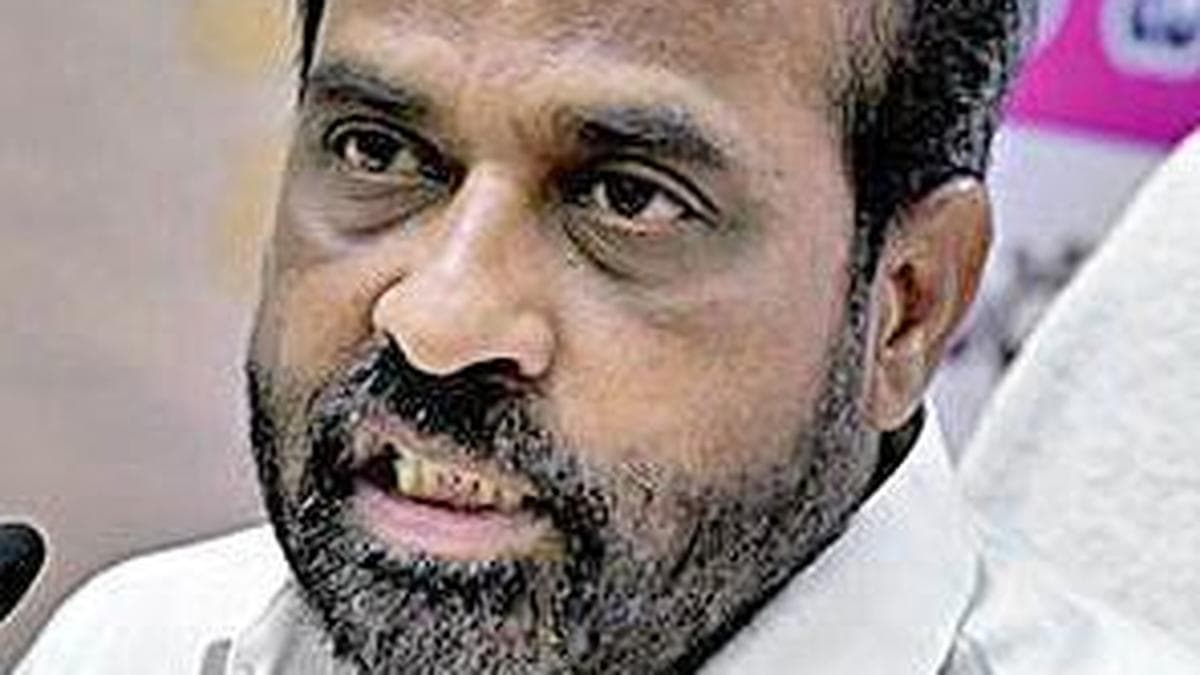
AP Health Minister criticizes YSRCP's 'privatisation' claims on PPP medical colleges as political drama.
Summary
Andhra Pradesh Health Minister Satya Kumar criticized the YSRCP's signature campaign regarding the Public-Private Partnership (PPP) model for medical colleges. He accused YSRCP MPs of misrepresenting the PPP model as 'privatisation' due to a lack of understanding, labeling their campaign as a political drama for Chief Minister Jagan Mohan Reddy's survival. This highlights ongoing political debate over healthcare policy and the role of PPPs in medical education at the state level, relevant for understanding governance challenges.
Key Points
- 1Andhra Pradesh Health Minister Satya Kumar made statements regarding PPP medical colleges.
- 2The YSRCP initiated a signature campaign concerning the PPP model for medical colleges.
- 3Minister Satya Kumar described the YSRCP's campaign as a 'drama for Jagan’s political survival'.
- 4YSRCP MPs were accused of misrepresenting the PPP model as 'privatisation'.
- 5The core issue of contention is the Public-Private Partnership (PPP) model in the medical education sector.
In-Depth Analysis
The recent political contention in Andhra Pradesh regarding Public-Private Partnership (PPP) medical colleges underscores a broader national debate on the role of the private sector in essential social services, particularly healthcare and education. Andhra Pradesh Health Minister Satya Kumar's criticism of the YSRCP's signature campaign, labeling it a 'drama for Jagan’s political survival' and accusing YSRCP MPs of misrepresenting the PPP model as 'privatisation', brings to the forefront the challenges of governance, resource allocation, and political narrative in India's healthcare sector.
**Background Context and What Happened:**
India faces a significant deficit in healthcare infrastructure and medical professionals. The doctor-patient ratio, while improving, still falls short of global standards (WHO recommends 1:1000, India's is approximately 1:834 as per NITI Aayog 2023 data). To bridge this gap, successive governments, both at the Centre and in states, have explored various models, including the involvement of the private sector. The PPP model, which involves collaboration between public entities and private companies, is often touted as a viable solution to leverage private capital, expertise, and efficiency while retaining public oversight and ensuring service delivery. In Andhra Pradesh, the current TDP-led government appears to be pursuing this model for expanding medical colleges and healthcare facilities. The YSR Congress Party, currently in opposition, launched a signature campaign, portraying the PPP model as a move towards 'privatisation' of medical education, implying reduced access for the poor and increased costs. This narrative was swiftly countered by the Health Minister, who clarified the distinction between PPP and outright privatisation, emphasizing that PPPs are designed to enhance public services, not diminish them.
**Key Stakeholders Involved:**
1. **Andhra Pradesh Government (TDP-led alliance):** As the ruling party, it advocates for PPPs to accelerate infrastructure development and improve healthcare services, viewing it as a pragmatic approach to address resource constraints. They are responsible for policy formulation and implementation.
2. **YSR Congress Party (YSRCP):** As the principal opposition, they are campaigning against the PPP model, framing it as detrimental to public interest and a form of privatisation. Their motivation is likely political, aiming to mobilize public opinion and challenge the government's policies.
3. **Medical Students and Aspirants:** Their future careers and access to quality, affordable medical education are directly impacted by the policies adopted. The nature of PPPs can influence tuition fees, admission processes, and the availability of seats.
4. **General Public:** The ultimate beneficiaries or sufferers of healthcare policies. They are concerned about access to affordable healthcare, quality of medical services, and the cost of medical education.
5. **Private Healthcare Providers/Investors:** These entities are potential partners in the PPP model, bringing capital, technology, and management expertise. Their involvement is crucial for the success of such projects.
6. **National Medical Commission (NMC):** The apex regulatory body for medical education and practice in India, established under the NMC Act, 2019. It sets standards for medical colleges, including those operating under PPP models, ensuring quality and ethical practices.
**Why This Matters for India:**
This debate in Andhra Pradesh is a microcosm of a larger national challenge. India's burgeoning population and diverse healthcare needs necessitate innovative financing and delivery models. PPPs are enshrined in the **National Health Policy 2017**, which emphasizes "strategic partnerships with the private sector" to fill critical gaps. The success or failure of PPPs in states like Andhra Pradesh can set precedents for other states. It impacts India's ability to achieve its healthcare goals, including Universal Health Coverage, as envisioned under **Article 47** of the DPSP, which mandates the State to improve public health. The question of equitable access to quality medical education is also linked to **Article 21 (Right to Life)**, as access to healthcare professionals is fundamental to a dignified life. Furthermore, the allocation of responsibilities between the Centre and states, with 'Public health and sanitation; hospitals and dispensaries' primarily under the **State List (Entry 6 of Seventh Schedule)**, and 'Education, including technical education, medical education and universities' under the **Concurrent List (Entry 25 of Seventh Schedule)**, highlights the federal complexities of such policy decisions.
**Historical Context and Future Implications:**
Historically, India's medical education system was predominantly government-funded. However, economic liberalization in the 1990s and the increasing demand for medical professionals led to a rise in private medical colleges. The debate over quality, affordability, and regulation intensified, leading to the establishment of the NMC in 2020, replacing the Medical Council of India (MCI), with a mandate for greater transparency and quality control. The current political tussle in AP reflects the ongoing tension between public sector dominance and private sector participation. If the PPP model is successfully implemented, it could significantly boost medical infrastructure and output of doctors. However, if mismanaged or perceived as pure privatisation, it could lead to public discontent and further politicization of healthcare. The outcome will influence investment patterns in medical education, shaping the future landscape of healthcare delivery and access in the state and potentially inspiring similar debates and policies across other Indian states grappling with similar challenges.
**Related Constitutional Articles, Acts, or Policies:**
* **Article 21 (Right to Life):** Implies a right to health and access to medical care.
* **Article 47 (Directive Principles of State Policy):** Duty of the State to raise the level of nutrition and the standard of living and to improve public health.
* **Seventh Schedule (State List, Entry 6):** Public health and sanitation; hospitals and dispensaries.
* **Seventh Schedule (Concurrent List, Entry 25):** Education, including technical education, medical education and universities.
* **National Medical Commission (NMC) Act, 2019:** Governs medical education and practice in India.
* **National Health Policy 2017:** Promotes strategic partnerships with the private sector to achieve health goals.
* **Public-Private Partnership (PPP) Policy:** The overarching framework guiding such collaborations across various sectors in India.
Exam Tips
This topic falls under GS Paper II (Governance, Social Justice - Health & Education sectors) and GS Paper III (Indian Economy - Infrastructure, Government Budgeting). Focus on understanding the conceptual differences between PPP, privatization, and nationalization.
Study related topics like the National Medical Commission (NMC) and its regulatory role, key government health schemes (e.g., Ayushman Bharat), and NITI Aayog's recommendations on healthcare. Understand the challenges in India's healthcare infrastructure and human resources.
Expect analytical questions on the pros and cons of Public-Private Partnerships in social sectors (education, health), the role of state versus private sector in service delivery, ethical considerations of private involvement in essential services, and case studies of successful/unsuccessful PPP models.
Related Topics to Study
Full Article
Its MPs are misrepresenting the model as privatisation due to their own lack of understanding, says Satya Kumar