



Relevant for Exams
Parliament Winter Session: New 'Viksit Bharat' rural mission likely; electoral reforms discussion continues.
Summary
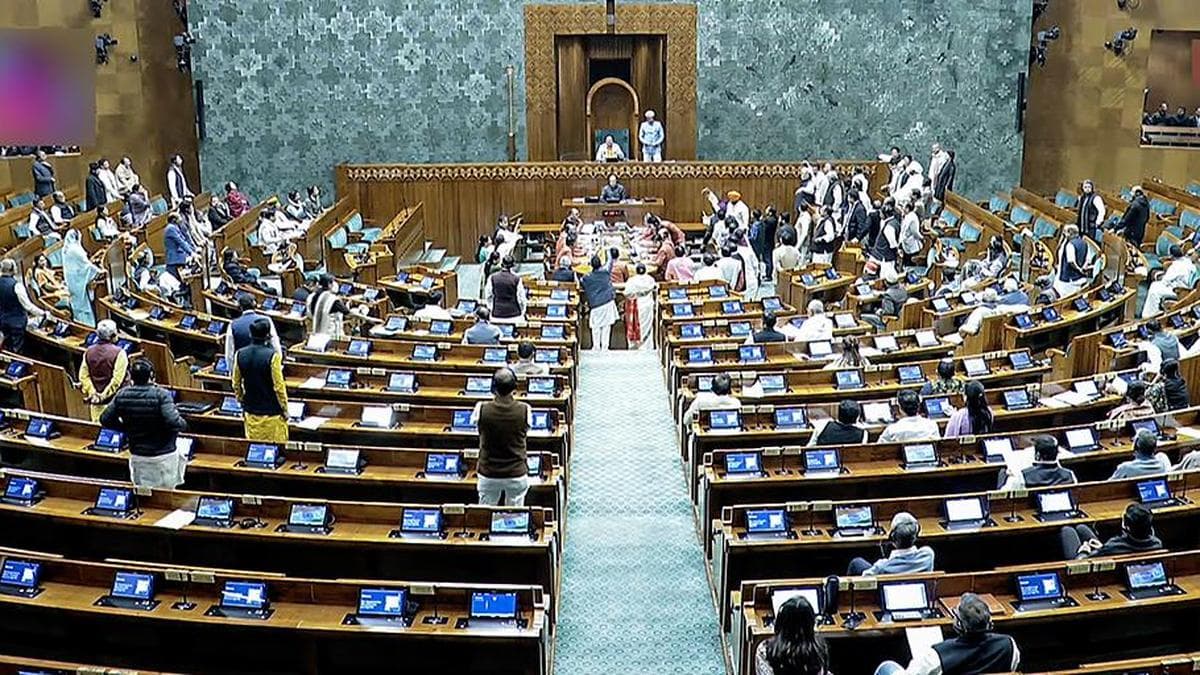
During Day 12 of the Parliament Winter Session, discussions on electoral reforms are set to continue. A significant development includes the likely introduction of the 'Viksit Bharat Guarantee for Rozgar and Ajeevika Mission (Gramin)' in the House. This new mission, if introduced, will be crucial for competitive exams, highlighting government focus on rural employment and livelihood, while electoral reforms remain a key topic for governance and polity sections.
Key Points
- 1The 'Viksit Bharat Guarantee for Rozgar and Ajeevika Mission (Gramin)' is likely to be introduced in Parliament.
- 2The parliamentary proceedings are part of the ongoing Winter Session.
- 3Discussions on electoral reforms are slated to continue today in the House.
- 4The mission focuses on 'Rozgar and Ajeevika' (employment and livelihood) for 'Gramin' (rural) areas.
- 5The events transpired on Day 12 of the Parliament Winter Session.
In-Depth Analysis
The 12th day of the Parliament's Winter Session brought into focus two critical areas for India's governance and development: the likely introduction of the 'Viksit Bharat Guarantee for Rozgar and Ajeevika Mission (Gramin)' and ongoing discussions on electoral reforms. These developments underscore the government's dual focus on enhancing rural livelihoods and strengthening democratic processes, both vital for achieving the vision of a developed India.
The proposed 'Viksit Bharat Guarantee for Rozgar and Ajeevika Mission (Gramin)' is a significant policy initiative that aligns with the broader 'Viksit Bharat @2047' vision, which aims to transform India into a developed nation by the 100th year of its independence. The background for such a mission stems from the persistent challenges of rural unemployment, underemployment, and the need for sustainable livelihood opportunities. Despite various government interventions over the decades, including flagship schemes like the Mahatma Gandhi National Rural Employment Guarantee Act (MGNREGA), 2005, and the National Rural Livelihoods Mission (NRLM), there remains a significant demand for robust programs that can guarantee employment and improve living standards in rural areas. The COVID-19 pandemic further exacerbated rural distress, highlighting the importance of resilient rural economies. This new mission, by its very name, suggests a 'guarantee' component, potentially indicating a more assured or rights-based approach to employment and livelihood, building upon the framework of existing schemes.
Key stakeholders involved in the 'Viksit Bharat Guarantee for Rozgar and Ajeevika Mission (Gramin)' would primarily include the Government of India (executive branch), which conceptualizes and introduces such policies. Parliament, as the legislative body, would debate and potentially pass the necessary legislation or approve the mission's framework. The Ministry of Rural Development is likely to be the nodal ministry for its implementation, working in coordination with various state governments, which play a crucial role in grassroots delivery. Ultimately, the rural population, including farmers, landless laborers, artisans, and women's self-help groups, are the primary beneficiaries. Panchayati Raj Institutions would be vital for effective local-level implementation and ensuring accountability.
The significance of this mission for India is profound. Economically, it aims to boost the rural economy by providing assured income, reducing poverty, and stimulating local demand. Socially, it can empower rural communities, reduce distress migration to urban centers, and improve overall human development indicators. Politically, it reflects the government's commitment to inclusive growth and addressing the needs of a large segment of the population. From a constitutional perspective, such a mission directly relates to the Directive Principles of State Policy (DPSP) in Part IV of the Constitution, particularly Article 38 (State to secure a social order for the promotion of welfare of the people), Article 39(a) (right to an adequate means of livelihood), and Article 41 (right to work, to education and to public assistance in certain cases). It signifies the state's endeavor to realize these socio-economic rights.
Simultaneously, the continuation of discussions on electoral reforms during the Winter Session highlights the ongoing efforts to strengthen India's democratic fabric. The need for electoral reforms has been a perennial subject of debate, driven by concerns over issues such as criminalization of politics, opaque election funding, misuse of state machinery, and the need for greater transparency and fairness. Historically, various committees, including the Dinesh Goswami Committee (1990) and the Indrajit Gupta Committee (1998), along with recommendations from the Law Commission of India and the Election Commission of India (ECI), have proposed numerous reforms. The ECI, established under Article 324 of the Constitution, plays a pivotal role in conducting free and fair elections and has consistently advocated for reforms to enhance the integrity of the electoral process.
Key stakeholders in electoral reforms include the Election Commission of India, which is the constitutional body responsible for supervising, directing, and controlling elections. Political parties are central, as they are directly impacted by and often resist certain reform proposals. Parliament is the ultimate authority for legislating on electoral matters, primarily through amendments to the Representation of the People Act, 1950, and 1951. The Supreme Court and various High Courts have also played a significant role through landmark judgments, guiding the reform process. Civil society organizations and media also act as important watchdogs and advocates for reform.
For India, robust electoral reforms are crucial for maintaining the health of its democracy. They can lead to greater transparency in political funding, reduce the influence of money and muscle power, ensure a more level playing field for candidates, and ultimately improve the quality of governance by electing more capable and ethical representatives. The future implications of these discussions could range from incremental changes to significant legislative amendments, depending on the political consensus achieved. Any reforms would need to navigate the complexities of India's diverse political landscape.
In essence, the Parliament's deliberations on rural livelihood and electoral reforms are two sides of the same coin – aiming to foster a more equitable society and a more robust democracy, both indispensable for India's journey towards becoming a developed and just nation. The introduction of the 'Viksit Bharat Guarantee for Rozgar and Ajeevika Mission (Gramin)' could be a landmark step in rural development, while electoral reforms are fundamental to upholding the sanctity of the democratic process.
Exam Tips
This topic falls under GS-II (Indian Polity & Governance, Social Justice) and GS-III (Indian Economy) for UPSC CSE. For SSC, Banking, and State PSCs, it's relevant for General Awareness/Current Affairs and Indian Polity.
When studying the 'Viksit Bharat Guarantee for Rozgar and Ajeevika Mission (Gramin)', compare and contrast it with existing schemes like MGNREGA, NRLM, PMGKY. Focus on its unique features, target beneficiaries, and potential impact. For electoral reforms, understand the historical context, key recommendations by committees (e.g., Dinesh Goswami, Indrajit Gupta), and the role and powers of the Election Commission of India.
Expect questions on government schemes (objectives, beneficiaries, nodal ministry), constitutional provisions related to DPSP and elections (Articles 38, 39, 41, 324), and parliamentary procedures (bill introduction, sessions). For mains exams, analytical questions on the need for reforms, challenges in implementation, and their socio-economic impact are common.
Related Topics to Study
Full Article
Viksit Bharat Guarantee for Rozgar and Ajeevika Mission (Gramin) is likely to be introduced in the House