



Relevant for Exams
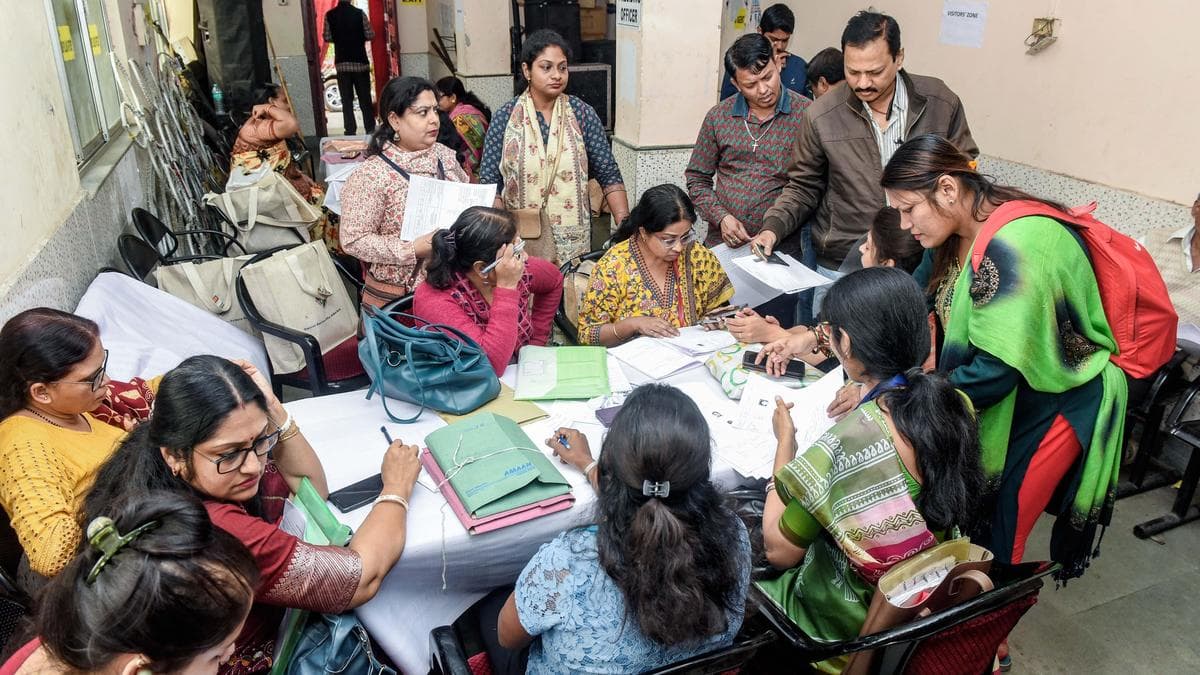
ECI flags over 1.36 crore West Bengal voters via progeny mapping; claims open till Jan 15.
Summary
The Election Commission of India (ECI) has flagged over 1.36 crore voters in West Bengal due to anomalies detected during 'progeny mapping'. This exercise aims to identify duplicate entries or discrepancies in electoral rolls by linking family members. The move is crucial for ensuring the purity and accuracy of voter lists, which is vital for free and fair elections, and the window for claims and objections is open until January 15.
Key Points
- 1Over 1.36 crore voters were flagged by the Election Commission of India (ECI).
- 2The anomalies were detected in the state of West Bengal.
- 3The method used for identifying discrepancies was 'progeny mapping'.
- 4The claims and objections window for these flagged voters is open until January 15.
- 5The Election Commission of India (ECI) is the authority responsible for this exercise.
In-Depth Analysis
The Election Commission of India (ECI) plays a pivotal role in upholding the sanctity of India's democratic process. Its recent flagging of over 1.36 crore voters in West Bengal through 'progeny mapping' highlights a critical ongoing effort to ensure the accuracy and purity of electoral rolls, a cornerstone for free and fair elections.
**Background Context and the Imperative for Purity:**
India, as the world's largest democracy, conducts elections on a massive scale. The integrity of these elections hinges significantly on the accuracy of its electoral rolls. Historically, electoral rolls have been plagued by various discrepancies, including duplicate entries, names of deceased voters, individuals registered at multiple addresses, and even 'bogus' voters. These inaccuracies not only undermine the principle of 'one person, one vote' but also create avenues for electoral malpractice, such as impersonation and multiple voting, thereby distorting election outcomes and eroding public trust. The ECI has consistently undertaken initiatives to cleanse these rolls, recognizing that a credible voter list is the bedrock of electoral legitimacy.
**What Happened: Progeny Mapping in West Bengal:**
In a significant move, the ECI identified over 1.36 crore anomalies in the electoral rolls of West Bengal using a technique called 'progeny mapping'. This method involves linking voters within a household based on their familial relationships (progeny). By cross-referencing demographic data and family trees, the system can detect inconsistencies such as multiple entries for the same individual, individuals listed as residing at multiple addresses, or names of deceased family members still present on the rolls. The sheer volume of flagged voters underscores the scale of discrepancies that can accumulate over time. Following this identification, the ECI has opened a 'claims and objections' window until January 15, allowing individuals to verify their details, report errors, or challenge flagged entries, ensuring transparency and due process.
**Key Stakeholders Involved:**
At the forefront is the **Election Commission of India (ECI)**, a constitutional body established under **Article 324** of the Indian Constitution, which vests it with the superintendence, direction, and control of elections. Its mandate is to conduct free, fair, and impartial elections. The ECI initiates and oversees such exercises. **Voters** are crucial stakeholders, as their fundamental right to vote is directly impacted by the accuracy of the rolls. They are also responsible for verifying their details during the claims and objections period. **Political parties** are keenly interested parties, as the purity of electoral rolls directly affects their electoral prospects. They often raise concerns about roll inaccuracies and participate in the verification process. Finally, the **State Election Machinery**, comprising District Collectors, Electoral Registration Officers (EROs), and Booth Level Officers (BLOs), plays a vital role in the ground-level implementation of ECI directives, including data collection, verification, and processing claims and objections.
**Significance for India and Historical Context:**
This exercise holds immense significance for India's democratic health. Accurate electoral rolls are fundamental to strengthening democracy by ensuring genuine representation and preventing electoral fraud. It enhances the credibility of election results, boosting public confidence in the electoral system. Historically, the ECI has employed various methods for electoral roll purification, from manual verification drives to initiatives like the National Electoral Roll Purification and Authentication Programme (NERPAP) in 2015, which aimed to link Aadhaar numbers with voter IDs. While the Aadhaar-linking initiative faced privacy concerns and was later made voluntary, the ECI's commitment to leveraging technology for roll purification remains steadfast. Such efforts are critical in a country with a vast and diverse electorate, where demographic shifts and migration are constant.
**Future Implications and Constitutional Framework:**
The successful implementation of 'progeny mapping' in West Bengal could pave the way for similar technology-driven initiatives across other states, further improving the overall integrity of India's electoral process. It demonstrates the ECI's proactive approach to electoral reforms and its adaptability in utilizing modern tools. The claims and objections window is a crucial legal safeguard, rooted in principles of natural justice, ensuring that no legitimate voter is disenfranchised and that due process is followed. The **Representation of the People Act, 1950**, specifically deals with the preparation and revision of electoral rolls, providing the legal framework for such exercises. The **Representation of the People Act, 1951**, governs the conduct of elections and outlines procedures for addressing election-related disputes. This ongoing effort will contribute to more credible elections, potentially influencing voter turnout and the perceived legitimacy of elected governments. It also underscores the broader theme of good governance, where the efficient and transparent management of public data is paramount.
By systematically cleaning electoral rolls, the ECI reaffirms its constitutional duty to conduct elections that are not only free and fair but also perceived as such by every citizen.
Exam Tips
For UPSC CSE (Polity & Governance): Focus on Article 324 (ECI's powers, functions, independence), electoral reforms (RPA 1950 & 1951), and the role of technology in elections. Mains questions can ask about challenges to free and fair elections and ECI's measures to address them.
For SSC/Banking/Railway/State PSC (General Awareness): Expect direct questions on the Election Commission of India (constitutional status, appointment, removal, functions), basic understanding of electoral rolls, and the significance of 'progeny mapping' for election purity.
Current Affairs Integration: Link this topic to broader discussions on electoral integrity, voter turnout, and the use of technology in governance. Understand the 'why' behind such initiatives and their impact on India's democratic framework.
Related Topics for Comprehensive Study: Prepare notes on the composition and powers of the ECI, major electoral reforms undertaken in India (e.g., EVMs, VVPATs, expenditure limits), and the legal provisions governing elections (RPA Acts).
Common Question Patterns: MCQs testing knowledge of constitutional articles (e.g., Article 324), functions of the ECI, and terms like 'electoral roll purification' or 'progeny mapping'. Descriptive questions might ask about the importance of accurate voter lists or challenges faced by the ECI.
Related Topics to Study
Full Article
ECI says anomalies emerged during progeny mapping; claims and objections window now open till January 15