



Relevant for Exams
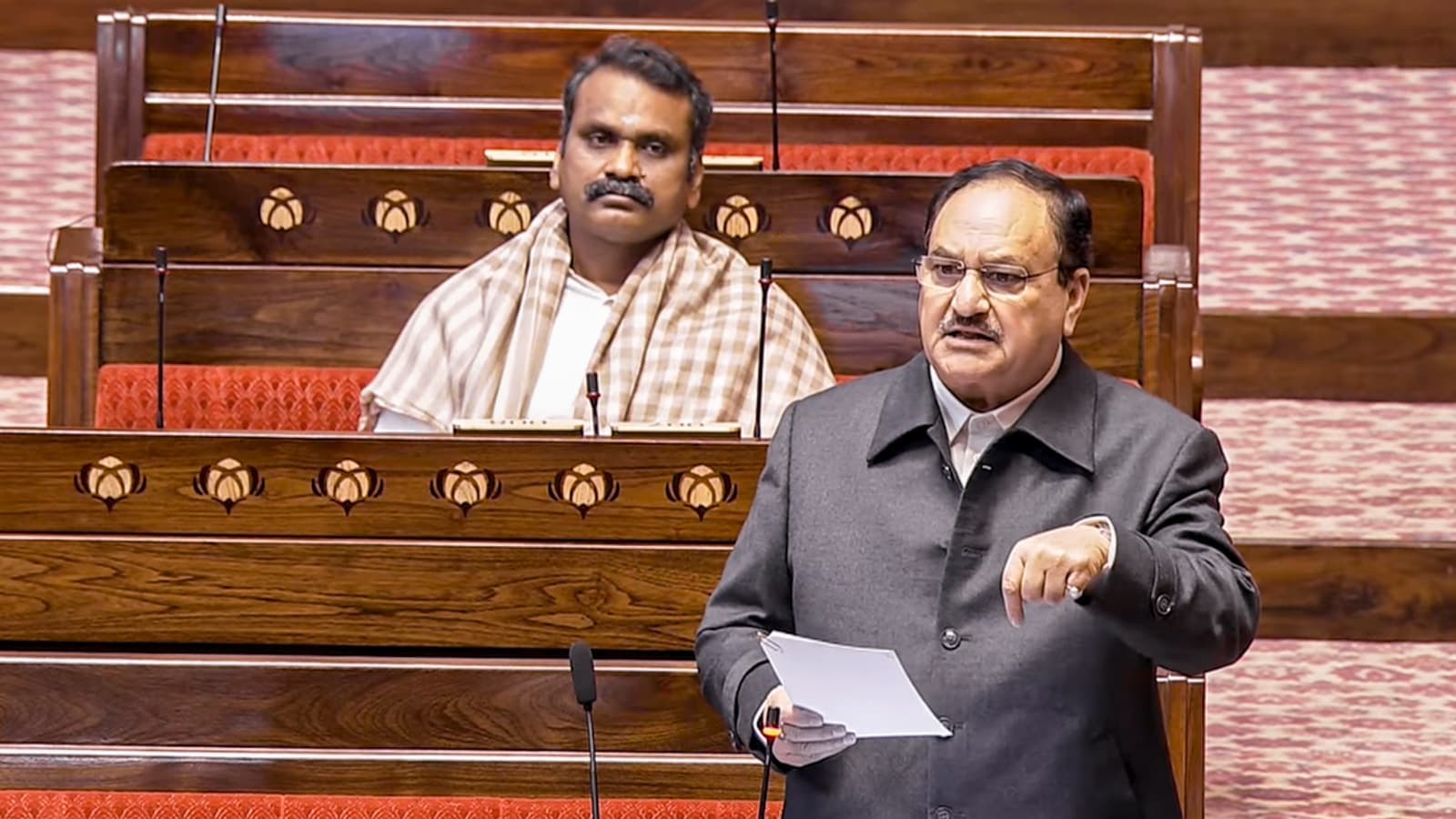
Nadda-Derek clash over 'SIR' and electoral rolls; specific details unavailable.
Summary
The article title indicates a political debate between J.P. Nadda and Derek O'Brien concerning 'SIR' and the purification of electoral rolls. Nadda suggests 'SIR' aims to purify rolls, while O'Brien accuses the government of using it for division and distraction. However, specific details about 'SIR', its implications, or the full context of this political exchange are unavailable due to missing article content, severely limiting its utility for exam preparation.
Key Points
- 1The article title mentions J.P. Nadda's statement regarding 'SIR' being used to 'purify rolls'.
- 2Derek O'Brien is quoted accusing the government of using 'SIR' to 'divide, distract and deflect'.
- 3Specific details about what 'SIR' refers to (e.g., scheme, initiative, legislation) are not provided in the article content.
- 4The full context of this political discussion, including dates or specific government actions, is unavailable due to missing article body.
- 5No concrete facts, figures, or constitutional/legal provisions can be extracted from the provided content for competitive exam preparation.
In-Depth Analysis
The article title, despite lacking content, points to a crucial and often contentious aspect of India's democratic process: the purification of electoral rolls. The exchange between J.P. Nadda, representing the ruling Bharatiya Janata Party (BJP), and Derek O'Brien of the Trinamool Congress (TMC), highlights the deep political polarization surrounding electoral reforms. While Nadda suggests an initiative, possibly referred to as 'SIR', aims to 'purify rolls', O'Brien counters with the accusation that the government is using it to 'divide, distract and deflect'. This debate underscores fundamental questions about electoral integrity, voter rights, and the potential for political manipulation.
The background context for such discussions is rooted in the Election Commission of India's (ECI) continuous efforts to maintain accurate and updated electoral rolls. Clean electoral rolls are the bedrock of free and fair elections, ensuring that only eligible citizens can vote and preventing electoral fraud like multiple entries or 'bogus voters'. Historically, the ECI has undertaken various drives, including Special Summary Revisions (SSR), to update these rolls. However, these efforts have often been met with suspicion from opposition parties, who fear that such drives could be used to selectively delete names, particularly those from minority communities or specific demographic groups perceived as opposition voters. A significant development in this regard was the Election Laws (Amendment) Act, 2021, which allowed for the linking of Aadhaar numbers with voter ID cards. While the government argued this would help in purifying rolls and preventing duplication, opposition parties and civil society groups raised concerns about potential disenfranchisement, privacy issues, and the possibility of data misuse.
In this scenario, the key stakeholders involved are diverse. The **Election Commission of India (ECI)** is the primary constitutional body responsible for the superintendence, direction, and control of elections, including the preparation and revision of electoral rolls, as mandated by Article 324 of the Constitution. Its autonomy and ability to conduct impartial elections are paramount. The **ruling party (BJP)**, represented by J.P. Nadda, advocates for stringent measures to purify rolls, often framing it as essential for maintaining the integrity of the electoral process. They typically emphasize the need to remove duplicate or ineligible voters. **Opposition parties (like TMC)**, represented by Derek O'Brien, often voice concerns about the methodology and potential impact of such purification drives, fearing they might be politically motivated to disenfranchise specific sections of the electorate. **Citizens and voters** are the ultimate stakeholders, as their right to vote and be accurately represented on the electoral roll is directly affected. Lastly, **civil society organizations and election watchdog groups** play a crucial role in monitoring these processes, advocating for transparency, and ensuring that no legitimate voter is excluded.
This debate matters profoundly for India's democracy. The integrity of elections is non-negotiable for a functioning democracy. If electoral rolls are perceived as flawed or manipulated, it erodes public trust in the entire electoral system. Accusations of 'division, distraction, and deflection' highlight the broader political discourse in India, where electoral reforms often become battlegrounds for political advantage rather than consensus-building. The potential for large-scale disenfranchisement, even if unintended, can have significant social and political consequences, impacting representation and social justice. The linking of Aadhaar with voter ID, for instance, raises questions about data security and the fundamental right to privacy, which the Supreme Court affirmed in the Puttaswamy judgment (2017) as part of Article 21.
Historically, India has a robust framework for electoral management, established through the Representation of the People Act, 1950 (dealing with electoral rolls) and the Representation of the People Act, 1951 (dealing with the conduct of elections). Efforts to improve electoral rolls have evolved from basic paper-based systems to electronic databases and now to proposals for linking with other identity documents. The contentious nature of these reforms often reflects a deep-seated mistrust between political parties, a common feature in India's multi-party democracy.
The future implications of such debates are significant. Continued efforts to 'purify' electoral rolls, especially through digital means and linkage with other databases, will necessitate robust safeguards to prevent errors, ensure transparency, and protect voter data. The ECI will face increasing pressure to balance the need for accurate rolls with the imperative to protect every citizen's right to vote. Legal challenges to specific provisions or implementation methods are also likely. This issue ties into broader themes of governance, digital inclusion, and the safeguarding of democratic institutions against perceived political interference. The outcome of these debates will shape the future landscape of Indian elections and the trust citizens place in their democratic processes.
Exam Tips
This topic falls under 'Indian Polity and Governance' for UPSC Civil Services Exam (General Studies Paper II) and State PSC exams. Focus on the roles and responsibilities of the Election Commission of India (ECI), electoral reforms, and constitutional provisions related to elections.
Study related topics like the powers and functions of the ECI (Article 324), the Representation of the People Act, 1950 and 1951, the Election Laws (Amendment) Act, 2021, the Aadhaar Act, 2016, and the Supreme Court's judgments on the Right to Privacy (Puttaswamy case) and electoral reforms.
Common question patterns include: 'Discuss the challenges faced by the ECI in maintaining accurate electoral rolls and suggest solutions.' 'Analyze the pros and cons of linking Aadhaar with voter ID cards.' 'Examine the constitutional provisions safeguarding the independence of the ECI.' 'Critically evaluate recent electoral reforms in India.'
Pay attention to the arguments for and against electoral roll purification drives, especially concerning potential disenfranchisement versus preventing fraud. Understand the differing perspectives of the government, opposition, and civil society.
Be prepared to write analytical answers that connect specific reforms to broader democratic principles, constitutional rights (like the right to vote, right to privacy), and the integrity of the electoral process.