



Relevant for Exams
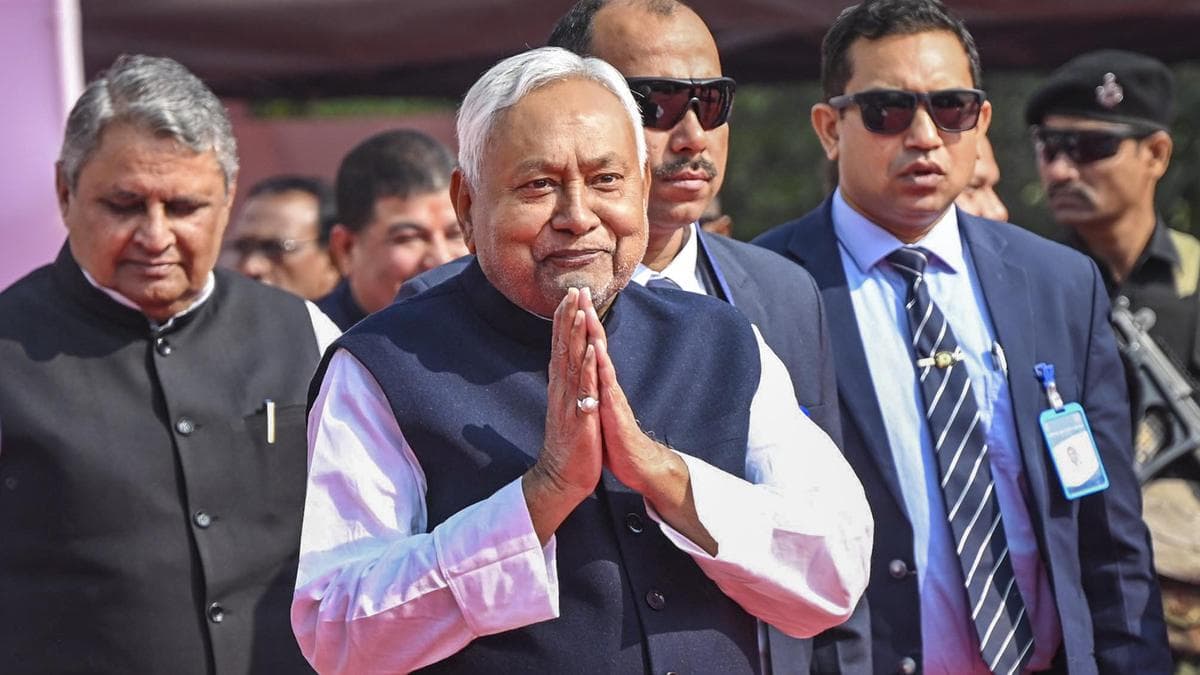
Bihar CM Nitish Kumar slammed by Kashmir parties for removing female doctor's naqab.
Summary
Bihar Chief Minister Nitish Kumar faced strong criticism for publicly removing a Muslim female doctor's naqab (face veil). The National Conference (NC) leader and Minister Sakina Ittoo condemned the act as "deeply disturbing and indefensible." This incident, while not a policy matter, highlights issues of personal liberty and religious freedom, offering insight into socio-political sensitivities relevant for competitive exam preparation on current affairs.
Key Points
- 1The incident involved Bihar Chief Minister Nitish Kumar.
- 2Mr. Kumar publicly pulled at a Muslim woman's naqab (face veil).
- 3The woman involved in the incident was identified as a female doctor.
- 4National Conference (NC) leader and Minister Sakina Ittoo criticized the act.
- 5Sakina Ittoo termed Mr. Kumar's action as "deeply disturbing and indefensible."
In-Depth Analysis
The incident involving Bihar Chief Minister Nitish Kumar publicly removing a Muslim female doctor's naqab (face veil) sparked widespread condemnation, highlighting critical issues of personal liberty, religious freedom, and the conduct of public figures in a diverse, democratic nation like India. While seemingly an isolated act, it resonates deeply within the socio-political fabric of the country, touching upon fundamental constitutional values and the sensitivities surrounding religious identity.
**Background Context and What Happened:**
India, a nation celebrated for its pluralism, guarantees its citizens a wide array of freedoms, including the right to practice one's religion and express one's identity. Religious attire, such as the naqab, is a deeply personal and often sacred aspect of religious practice for many individuals. The incident, as reported, involved Bihar CM Nitish Kumar, a seasoned politician, publicly pulling at a Muslim woman's naqab. The woman was identified as a doctor. This act, regardless of intent, was perceived by many as an invasion of personal space, a disregard for religious sentiment, and an affront to individual dignity. The subsequent condemnation by National Conference (NC) leader and Minister Sakina Ittoo, who termed the act "deeply disturbing and indefensible," underscored the gravity of the incident and its potential to ignite broader discussions.
**Key Stakeholders Involved:**
1. **Nitish Kumar:** As the Chief Minister of Bihar, his actions carry significant weight and are seen as representative of the state's executive authority. His conduct in public life is expected to uphold constitutional values and demonstrate respect for all citizens. His involvement brought the incident into the national political discourse.
2. **The Female Doctor:** An ordinary citizen whose personal liberty and religious practice were publicly interfered with. She represents the vulnerability of individuals, particularly women and minorities, to actions by those in positions of power.
3. **Sakina Ittoo and the National Conference (NC):** As a political leader and minister, Ittoo's strong condemnation brought the issue to the fore, signaling that such acts would not go unchallenged. Her reaction highlights the political ramifications and the role of opposition parties and minority representatives in safeguarding constitutional rights.
4. **The Muslim Community:** The incident directly impacts the sentiments of the Muslim community, for whom the naqab is a significant religious and cultural symbol. Perceived disrespect towards such symbols can lead to feelings of marginalization and insecurity.
5. **The Public and Media:** The incident became a subject of public debate and media scrutiny, influencing public opinion and shaping discourse on secularism, individual rights, and political accountability.
**Why This Matters for India and Historical Context:**
This incident is highly significant for India for several reasons. Firstly, it directly challenges the principles of **secularism** enshrined in the Preamble of the Indian Constitution. India's secular fabric demands respect for all religions and their practices, ensuring that the state remains neutral and protects the religious freedom of its citizens. Secondly, it is a stark reminder of the importance of **personal liberty and dignity**, guaranteed under **Article 21** of the Constitution, which states that no person shall be deprived of his life or personal liberty except according to procedure established by law. The right to choose one's attire, especially religious, is an integral part of personal liberty and self-expression, as affirmed by various judicial pronouncements.
Moreover, the incident directly implicates **Article 25**, which guarantees the freedom of conscience and the right to freely profess, practice, and propagate religion. Wearing a naqab is considered a form of religious practice by many Muslim women, and any unprovoked interference with it can be seen as a violation of this fundamental right. While India has not seen widespread state-imposed bans on religious attire akin to some Western nations, debates around religious symbols occasionally surface, often in educational or public spaces. However, this particular incident stands out due to the direct involvement of a high-ranking public official in an unprovoked act against an individual's religious attire.
**Future Implications:**
Such incidents have several future implications. Politically, they can fuel criticism against the ruling party or the individual concerned, especially in states with significant minority populations or during election cycles. Socially, they can exacerbate tensions between communities and reinforce stereotypes or feelings of alienation among minorities. More broadly, they underscore the need for greater sensitivity and training for public officials regarding India's diverse cultural and religious landscape. It also serves as a crucial reminder for all citizens about the importance of upholding constitutional values of respect, tolerance, and individual rights in a pluralistic society. The episode reiterates that leaders in power must set an example of constitutional propriety and respect for individual freedoms, ensuring that their actions do not inadvertently undermine the very principles they are sworn to uphold.
**Related Constitutional Articles, Acts, or Policies:**
* **Preamble to the Constitution of India:** Emphasizes India as a 'Secular' democratic republic.
* **Article 14:** Equality before law and equal protection of laws.
* **Article 15:** Prohibition of discrimination on grounds of religion, race, caste, sex or place of birth.
* **Article 21:** Protection of life and personal liberty, including the right to dignity, privacy, and choice of attire.
* **Article 25:** Freedom of conscience and free profession, practice, and propagation of religion.
* **Article 29:** Protection of interests of minorities, including their right to conserve their distinct culture.
* **Fundamental Duties (Article 51A):** Specifically, 51A(e) which promotes harmony and the spirit of common brotherhood amongst all the people of India transcending religious, linguistic and regional or sectional diversities; to renounce practices derogatory to the dignity of women.
Exam Tips
This topic falls under GS Paper I (Indian Society), GS Paper II (Indian Polity, Governance, Social Justice), and Current Affairs. Focus on the interplay between individual rights, secularism, and the role of public office holders.
Study Fundamental Rights (Articles 14, 15, 21, 25, 29) in detail. Understand the 'essential religious practice' doctrine as interpreted by the Supreme Court, though this incident is more about personal liberty and dignity than an 'essential practice' debate.
Be prepared for analytical questions on the conduct of public officials, ethical dilemmas in governance, and the challenges to secularism in India. Practice essay writing on topics related to religious freedom, personal liberty, and minority rights.
Relate this incident to broader debates on freedom of expression, cultural diversity, and the responsibilities of leaders in a democratic setup. Understand how such incidents can impact social cohesion and political stability.
Common question patterns include: 'Discuss the constitutional provisions safeguarding religious freedom and personal liberty in India. How do incidents like these challenge these provisions?' or 'Analyze the role and responsibilities of public office holders in upholding secular values and individual dignity.'
Related Topics to Study
Full Article
Ruling National Conference (NC) leader and Minister Sakina Ittoo termed Mr. Kumar’s act of publicly pulling at a Muslim woman’s naqab (face veil) as “deeply disturbing and indefensible”