



Relevant for Exams
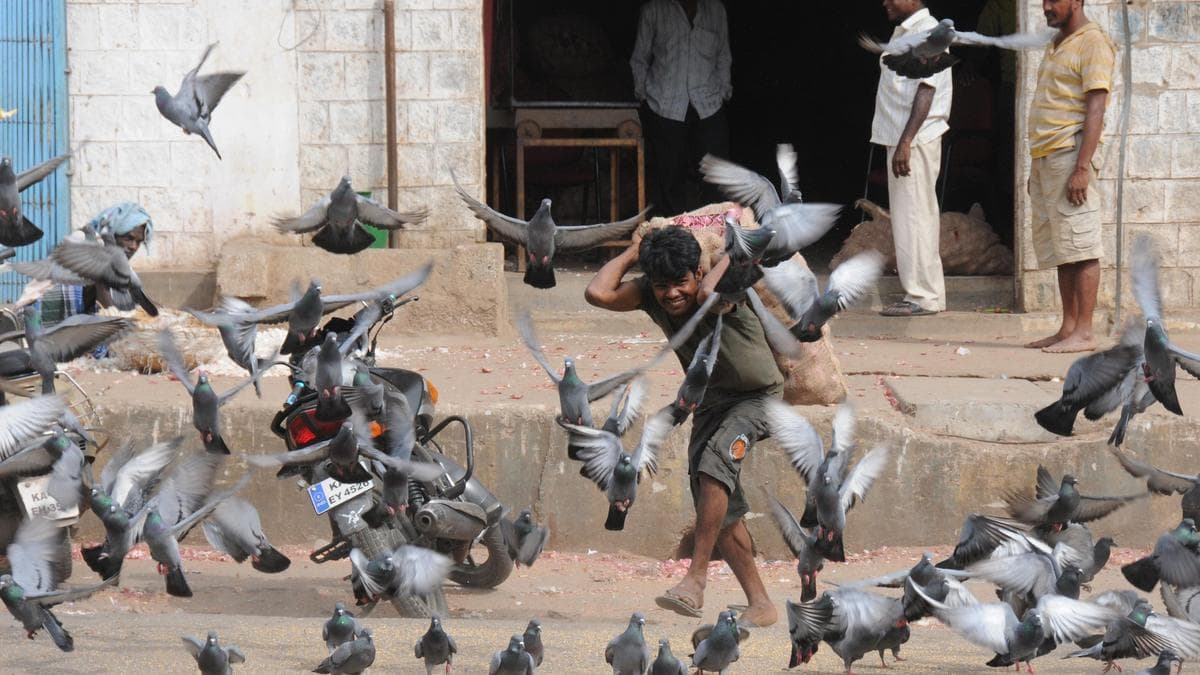
Karnataka to regulate public pigeon feeding citing respiratory health concerns.
Summary
Karnataka's Health and Family Welfare Department has initiated steps to regulate and prohibit pigeon feeding in public places, citing respiratory health concerns. This move, spearheaded by Deputy Secretary V. Lakshminath, aims to address potential public health risks associated with large pigeon populations. It signifies a state-level effort to balance urban wildlife interaction with public health, a relevant topic for state-specific policy questions in competitive exams.
Key Points
- 1The initiative to regulate and prohibit pigeon feeding in public places has been taken by the state of Karnataka.
- 2The concerned department is the Health and Family Welfare Department of Karnataka.
- 3V. Lakshminath, Deputy Secretary of the Health and Family Welfare Department, initiated this step.
- 4The communication for this regulation was sent to the Urban Development Department.
- 5The primary reason cited for regulating pigeon feeding is respiratory health concerns among the public.
In-Depth Analysis
The initiative by Karnataka's Health and Family Welfare Department to regulate and potentially prohibit pigeon feeding in public places marks a significant step towards addressing a multifaceted urban challenge. This move, spearheaded by Deputy Secretary V. Lakshminath and communicated to the Urban Development Department, underscores the growing recognition of public health and environmental concerns associated with uncontrolled urban wildlife populations, particularly pigeons.
**Background Context:** Pigeons, specifically the Rock Dove (Columba livia), have long been an integral part of urban landscapes across India. Their presence is often encouraged by human feeding, driven by religious sentiments, cultural practices, or simply a desire to interact with nature. This widespread feeding, however, leads to unnaturally large pigeon populations. While seemingly harmless, these large flocks contribute to several issues: increased droppings that deface buildings and monuments, damage infrastructure, and, most critically, pose significant public health risks. Respiratory health concerns, as cited by Karnataka, are paramount, but other issues like zoonotic diseases are also gaining attention.
**What Happened:** The Karnataka Health and Family Welfare Department has officially initiated steps to regulate and prohibit the feeding of pigeons in public spaces. This is not merely an advisory but a formal communication to the Urban Development Department, indicating a serious intent to formulate and implement a policy. The primary justification provided is the concern for respiratory health among the public, which highlights the state's proactive approach to preventive healthcare in urban settings. The involvement of two key departments — Health and Urban Development — demonstrates a recognition that this issue requires a coordinated, inter-sectoral approach, bridging public health mandates with urban planning and civic management responsibilities.
**Key Stakeholders Involved:**
* **Karnataka Health and Family Welfare Department:** The primary initiator, driven by its mandate to safeguard public health. They are responsible for identifying health risks and proposing preventive measures.
* **Karnataka Urban Development Department:** The implementing authority, responsible for drafting and enforcing regulations related to public spaces, urban planning, and civic amenities. Their role will be crucial in translating the health department's concerns into actionable policy.
* **Local Municipal Corporations/Panchayats:** These bodies will be at the forefront of implementing any regulations, including public awareness campaigns, enforcement, and managing urban sanitation.
* **Public/Citizens:** This group is diverse, including those who regularly feed pigeons (often for religious or cultural reasons), those who suffer from pigeon-related nuisances (e.g., respiratory issues, property damage), and the general populace who will be impacted by changes in public spaces.
* **Animal Welfare Organizations:** May voice concerns regarding the humane treatment of pigeons and the potential impact of feeding restrictions on bird populations, advocating for balanced approaches.
* **Religious and Cultural Groups:** Some groups consider feeding pigeons an act of charity or religious devotion, and their perspectives will need to be considered during policy formulation and implementation.
**Why This Matters for India:** This move by Karnataka holds significant implications for India. Firstly, it brings to the fore the critical public health dimension of urban wildlife management. Large pigeon populations are reservoirs for various pathogens, including bacteria (e.g., Chlamydia psittaci causing psittacosis), fungi (e.g., Cryptococcus neoformans causing cryptococcosis, Histoplasma capsulatum causing histoplasmosis), and parasites. Inhaling dust from dried pigeon droppings can lead to severe respiratory illnesses and allergic reactions. Secondly, it highlights a governance challenge: balancing public health with traditional cultural practices and animal welfare concerns. This requires sensitive policy-making and effective public communication. Thirdly, it sets a potential precedent for other Indian cities and states grappling with similar issues. Rapid urbanization across India has intensified human-wildlife interactions, making such policies increasingly relevant for sustainable urban development.
**Historical Context:** Historically, pigeons have coexisted with humans for centuries, often revered and used for communication. However, the scale of urban development and the resultant human density, combined with continuous feeding, have led to an ecological imbalance. What was once a symbiotic relationship has, in many urban centers, turned into a public health and environmental concern. This policy reflects a modern understanding of urban ecology and public health, moving beyond traditional perspectives.
**Future Implications:** The regulation's success will depend heavily on its enforcement and public acceptance. This might necessitate extensive public awareness campaigns, educational initiatives, and potentially, alternative measures for managing pigeon populations humanely. There could be initial resistance from certain segments of the population. Furthermore, this policy could catalyze broader discussions on urban biodiversity, waste management, and the role of state governments in ensuring a healthy urban environment. It may also inspire other states to adopt similar regulations, potentially leading to a national dialogue on urban wildlife management policies.
**Related Constitutional Articles, Acts, or Policies:**
* **Article 21 (Right to Life and Personal Liberty):** The Supreme Court has interpreted Article 21 to include the right to a healthy environment and freedom from pollution, which could be invoked to support regulations aimed at mitigating health risks from urban pests.
* **Article 48A (Protection and Improvement of Environment and Safeguarding of Forests and Wildlife):** As a Directive Principle of State Policy, it mandates the State to endeavor to protect and improve the environment and to safeguard the forests and wildlife of the country. While pigeons are urban wildlife, their management falls under this broad environmental protection mandate.
* **Article 51A(g) (Fundamental Duty):** This article states that it shall be the duty of every citizen of India to protect and improve the natural environment, including forests, lakes, rivers and wildlife, and to have compassion for living creatures. This presents a nuanced situation where compassion for pigeons needs to be balanced against the larger environmental and public health concerns.
* **Prevention of Cruelty to Animals Act, 1960:** Any regulation on pigeon feeding would need to ensure compliance with this act, which prohibits causing unnecessary pain or suffering to animals. The regulation is about feeding, not harming, but the broader impact on pigeon populations might be considered.
* **Local Municipal Corporation Acts and Bylaws:** These acts typically empower urban local bodies to manage public health, sanitation, and nuisances. Regulations on pigeon feeding could be incorporated into these existing legal frameworks.
Exam Tips
This topic falls under General Studies Paper II (Governance, Social Justice – particularly Health aspects of public policy) and General Studies Paper III (Environment and Ecology, Urbanization challenges).
Study related topics such as zoonotic diseases, urban planning challenges, public health policies in India, and the balance between cultural practices and scientific evidence in policy-making. Understand the roles of various government departments (Health, Urban Development, Local Self-Government).
Expect questions on policy analysis: 'Critically analyze the rationale behind regulating pigeon feeding in urban areas, considering public health, environmental, and socio-cultural aspects.' or 'Discuss the constitutional provisions that empower states to enact such policies and the challenges in their implementation.'
Be prepared for questions comparing this initiative with similar efforts in other Indian states or globally, or questions on the role of state governments in addressing urban environmental and health issues.
Focus on the interplay of Fundamental Rights (Art 21 - Right to healthy environment), Directive Principles (Art 48A - Environmental protection), and Fundamental Duties (Art 51A(g) - Compassion for living creatures) in such policy decisions.
Related Topics to Study
Full Article
The Deputy Secretary of the Health and Family Welfare Department, V. Lakshminath, has written to the Urban Development Department to initiate steps to regulate and prohibit the feeding of pigeons in public places