



Relevant for Exams
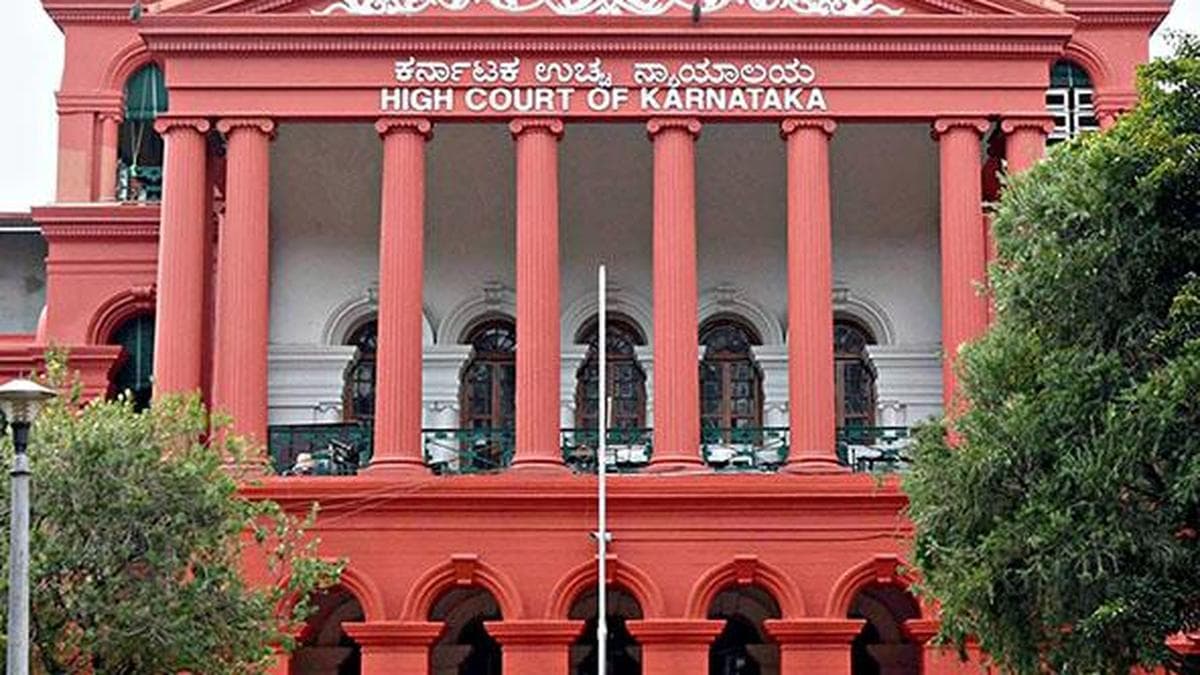
Karnataka HC orders service regularisation for 68-year-old daily wager retired in 2015 after 21 years.
Summary
The Karnataka High Court has ordered the regularisation of service for a 68-year-old man who retired in 2015 after serving as a daily wage employee for 21 years. This significant judicial intervention underscores the rights of long-serving daily wage workers and the judiciary's role in ensuring fair service conditions. It highlights important aspects of labor law and service jurisprudence for competitive exams.
Key Points
- 1The order for service regularisation was issued by the Karnataka High Court.
- 2The beneficiary of the order was a 68-year-old former daily wage employee.
- 3The individual had retired from service in the year 2015.
- 4He had served as a daily wage employee for a substantial period of 21 years.
- 5The court's directive specifically mandates the regularisation of his service.
In-Depth Analysis
The Karnataka High Court's recent directive to regularise the service of a 68-year-old man, who retired in 2015 after 21 years as a daily wage employee, is more than just an isolated judicial decision; it is a significant pronouncement that delves into the heart of India's labour jurisprudence, social justice, and the role of the judiciary in upholding the rights of vulnerable workers. This case brings to the forefront the long-standing issue of precarious employment in government sectors and the struggle of daily wage workers for dignified service conditions.
**Background Context and What Happened:**
In India, government departments often rely on daily wage or contractual employees to manage workload, especially for non-core functions or when permanent positions are unavailable or frozen. While this offers flexibility to the administration, it often leaves workers in a vulnerable state, devoid of the benefits, security, and dignity associated with regular employment. These workers typically lack provident fund, gratuity, pension, and job security, despite often performing similar duties as their regular counterparts. The specific case involved a 68-year-old individual who had dedicated 21 years of his life, until his retirement in 2015, as a daily wage employee. Despite his long and continuous service, his employment was never regularised, leading him to seek judicial intervention for the recognition of his rightful dues and service conditions. The Karnataka High Court, acknowledging his extensive service, intervened to ensure justice.
**Key Stakeholders Involved:**
1. **The Employee:** Represents a large segment of daily wage and contractual workers in India, often exploited due to their economic vulnerability and lack of bargaining power. Their primary concern is job security, fair wages, and social security benefits.
2. **The Government (Public Employer):** The State of Karnataka, in this instance, is the employer. Governments often resist regularisation due to potential financial burdens, administrative complexities, and the adherence to formal recruitment rules which emphasize merit-based selection through competitive processes (e.g., via Public Service Commissions). There's also a policy stance to curb 'backdoor entries' or irregular appointments.
3. **The Judiciary (Karnataka High Court):** Plays a pivotal role as the guardian of the Constitution and protector of individual rights. Courts are often approached by aggrieved employees to ensure fair play, social justice, and adherence to labour laws and constitutional principles. The High Court's decision here reflects judicial activism aimed at mitigating the harsh effects of precarious employment.
**Significance for India:**
This judgment holds immense significance for India on multiple fronts. **Social Justice** is paramount; it reinforces the idea that long-serving workers, despite their initial irregular appointment, cannot be denied the benefits of regularisation indefinitely, especially when they have dedicated decades of service. It addresses the exploitation inherent in keeping workers on daily wages for prolonged periods. From a **labour rights** perspective, it strengthens the argument for fair service conditions and challenges the widespread practice of maintaining a parallel workforce without proper benefits. Economically, while regularisation can impose a financial burden on the state exchequer through increased salaries, pensions, and benefits, it also ensures **economic security** for workers, leading to improved living standards and dignity. Politically and in terms of **governance**, such judicial pronouncements often compel governments to re-evaluate their policies on contractual employment, staffing patterns, and the regularisation of services, pushing for more humane and equitable labour practices within the public sector.
**Historical Context and Constitutional References:**
This case must be understood in the light of the landmark Supreme Court judgment in **Secretary, State of Karnataka v. Umadevi (3) (2006)**. In this case, a Constitution Bench generally prohibited the regularisation of illegal or irregular appointments, emphasizing that such appointments violate Articles 14 and 16 of the Constitution (equality before law and equality of opportunity in public employment). However, the *Umadevi* judgment also provided a one-time exception for those who had worked for more than 10 years without the cover of any court order, as of the date of the judgment. Subsequent judgments have often interpreted and applied this exception, allowing regularisation in deserving cases, particularly for long-serving daily wagers who meet basic eligibility criteria and where the initial appointment was not fraudulent. The present Karnataka High Court order likely draws strength from these subsequent interpretations, upholding the spirit of **Article 21 (Protection of life and personal liberty)**, which has been interpreted to include the right to livelihood and a dignified life, and the **Directive Principles of State Policy (DPSP)**, specifically **Article 38 (State to secure a social order for the promotion of welfare of the people)** and **Article 39 (State to secure adequate means of livelihood and equal pay for equal work)**. These principles guide the state in formulating policies that ensure social and economic justice.
**Future Implications:**
This judgment could serve as a significant precedent, potentially encouraging other long-serving daily wage or contractual employees across various government departments to seek similar relief. This may lead to a surge in litigation, placing further pressure on the judiciary and the state. Governments might be prompted to review their existing policies regarding contractual appointments, perhaps establishing clearer guidelines for the absorption or regularisation of long-term temporary staff, or facing the budgetary implications of such regularisations. It could also spark a broader debate on the need for comprehensive labour reforms, ensuring that the dignity of labour is upheld across all sectors, without creating undue financial strain on public resources or compromising the principles of merit-based public employment. Ultimately, it underscores the continuous tension between administrative efficiency, fiscal prudence, and the fundamental imperative of social justice and human rights in India's governance framework.
Exam Tips
This topic falls under **GS Paper II: Polity & Governance** (Judiciary, Fundamental Rights, DPSP, Government Policies) and **GS Paper III: Economy** (Labour Issues, Social Security). Be prepared to analyze the role of the judiciary and the state's welfare responsibilities.
Study related topics such as **Judicial Review and Activism**, **Fundamental Rights (Articles 14, 16, 21)**, **Directive Principles of State Policy (Articles 38, 39)**, and landmark Supreme Court judgments like the **Umadevi case (2006)**. Understand the nuances of contractual vs. regular employment in government.
Common question patterns include analytical questions on the balance between administrative efficiency and social justice, the impact of judicial pronouncements on government policy, and case studies on labour rights. Be ready to discuss the constitutional basis for such judgments and their broader implications for governance and public administration.