



Relevant for Exams
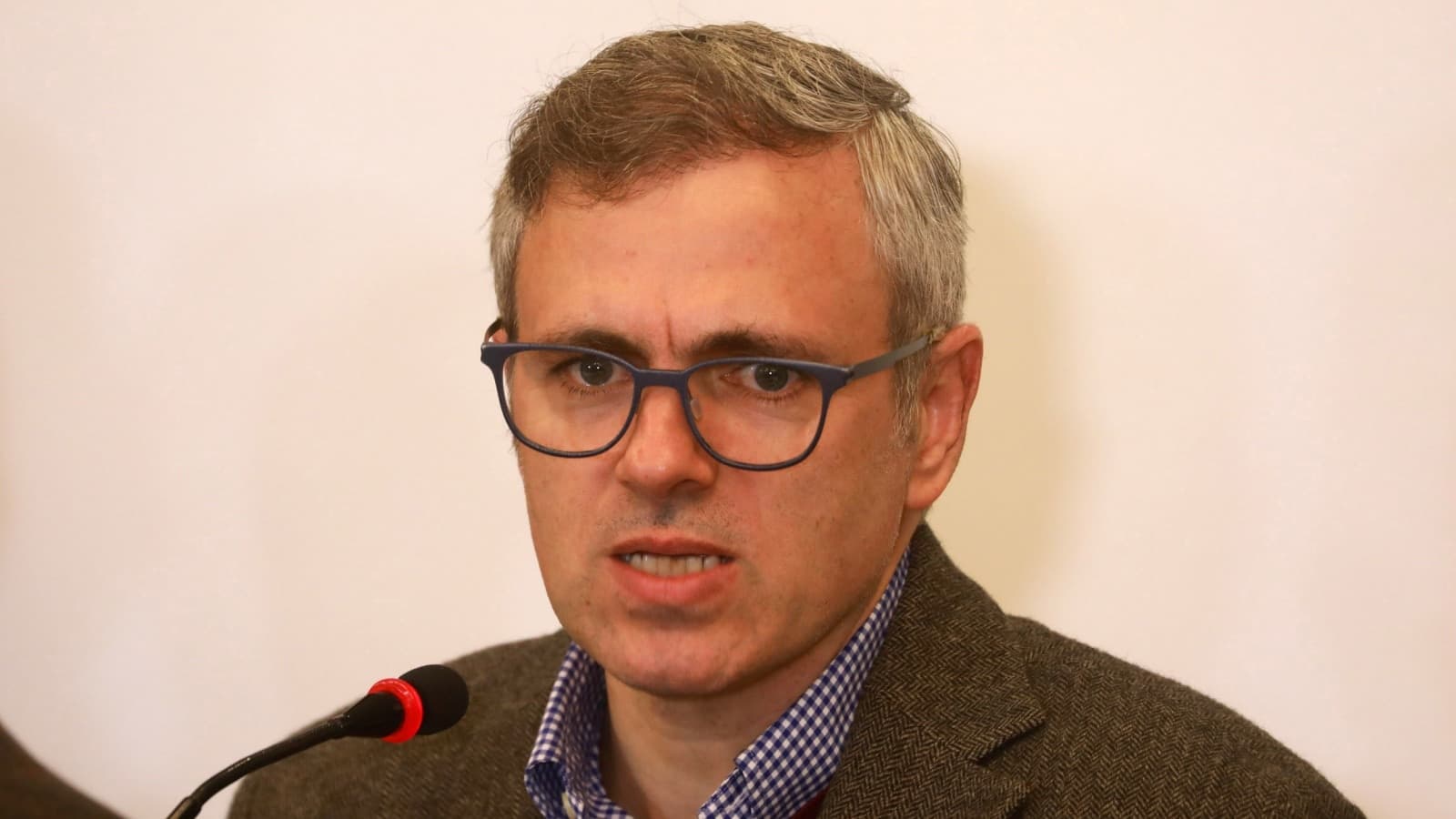
Former J&K CM Omar Abdullah was guest at 'Adda'; no content available for event details.
Summary
The article title indicates former Jammu & Kashmir Chief Minister Omar Abdullah was a guest at an 'Adda' event. However, no content was provided to detail the discussions, purpose, or significance of his appearance. Therefore, specific exam-relevant facts or the implications for policy or regional developments cannot be extracted, limiting its utility for competitive exam preparation.
Key Points
- 1The article title mentions former Jammu & Kashmir Chief Minister Omar Abdullah.
- 2He was scheduled to be a guest at an event referred to as 'Adda'.
- 3No specific date or location for the 'Adda' event is available in the provided content.
- 4Details regarding the topics discussed or the purpose of Omar Abdullah's visit are missing.
- 5Due to the absence of article content, no further exam-relevant facts can be extracted.
In-Depth Analysis
The article title, mentioning former Jammu & Kashmir Chief Minister Omar Abdullah as a guest at an 'Adda' event, serves as a valuable prompt to delve into the intricate political landscape of Jammu & Kashmir (J&K) and the role of its mainstream political leaders. While the specific details of the 'Adda' event, its discussions, or its immediate implications are unavailable in the provided content, understanding the broader context of Omar Abdullah's political journey and J&K's evolving status is crucial for competitive exam aspirants.
**Background Context and Omar Abdullah's Political Trajectory:**
Jammu & Kashmir has a unique and often tumultuous history within the Indian Union, stemming from its accession in 1947. For decades, it enjoyed a special status under **Article 370** of the Indian Constitution, which granted it a significant degree of autonomy, and **Article 35A**, which defined permanent residents and their special rights. This special status fostered a distinct political environment, dominated by regional parties like the National Conference (NC), founded by Sheikh Abdullah. Omar Abdullah, a prominent scion of the Abdullah family, represents the third generation of this political dynasty. He served as the Chief Minister of J&K from 2009 to 2014, navigating a challenging period marked by youth unrest, security concerns, and demands for greater autonomy. His political career has seen him advocate for dialogue, peace, and the restoration of normalcy in the region, often walking a tightrope between regional aspirations and national interests.
**Key Developments: Post-August 2019:**
The most significant shift in J&K's constitutional status occurred on August 5, 2019, when the Government of India abrogated Article 370 and Article 35A. Concurrently, the **Jammu and Kashmir Reorganisation Act, 2019**, was passed, bifurcating the state into two Union Territories: Jammu & Kashmir (with a legislature) and Ladakh (without a legislature). This monumental decision fundamentally altered J&K's political and administrative framework. Following these changes, many mainstream political leaders, including Omar Abdullah, were detained for several months as a precautionary measure to prevent unrest. Their release marked a slow return to political activity, albeit within a new constitutional reality.
**Key Stakeholders and Their Roles:**
1. **Omar Abdullah and the National Conference (NC):** As a key mainstream political force, the NC, under leaders like Omar Abdullah, represents a segment of Kashmiri political opinion. They have traditionally advocated for the restoration of statehood and democratic rights, often expressing concerns about the implications of the 2019 changes on regional identity and autonomy. Their participation in future elections will be critical for re-establishing representative democracy.
2. **Government of India:** The central government is the primary driver of policy and development in the UT of J&K. Its focus is on integrating J&K more fully into the national mainstream, promoting economic development, ensuring security, and establishing a robust local governance system, including through the **Panchayati Raj Institutions**.
3. **People of J&K:** The citizens of Jammu, Kashmir, and Ladakh are the ultimate stakeholders. Their aspirations for peace, security, economic opportunities, and democratic participation are paramount. The success of any policy hinges on their acceptance and engagement.
4. **Security Forces:** Play a crucial role in maintaining law and order, counter-terrorism operations, and ensuring stability in the sensitive border region.
**Significance for India and Broader Themes:**
The situation in J&K is critical for India's national integration, internal security, and democratic fabric. The abrogation of Article 370 was presented by the government as a step towards greater integration and development, aiming to dismantle perceived barriers to investment and bring central laws, including those related to fundamental rights and socio-economic welfare, fully into force. It also seeks to counter cross-border terrorism more effectively. The future of J&K is a litmus test for Indian federalism, demonstrating how the central government handles regional aspirations within a unified national framework. The return of mainstream politicians like Omar Abdullah to public discourse, even in an 'Adda' event, signifies the ongoing process of political engagement and the potential for a renewed democratic process, including the much-anticipated assembly elections.
**Future Implications:**
The path ahead for J&K involves significant challenges and opportunities. The **Delimitation Commission** has already redrawn electoral constituencies, paving the way for assembly elections. These elections will be a crucial step towards restoring elected governance and empowering local voices. The role of leaders like Omar Abdullah will be vital in mobilizing public opinion, articulating regional concerns, and participating in the democratic process. Economic development, particularly in tourism, infrastructure, and job creation, remains a top priority to address youth unemployment and foster stability. The long-term implications include strengthening grassroots democracy, ensuring equitable development across all regions (Jammu, Kashmir, Ladakh), and fostering a sense of inclusion among all communities. The 'Adda' event, though unspecified, likely provided a platform for such discussions, reflecting the ongoing, dynamic political discourse surrounding J&K's future.
Exam Tips
This topic falls primarily under **General Studies Paper II (Polity & Governance)** and **General Studies Paper III (Internal Security & Economy)** for UPSC Civil Services Exam and State PSCs. Key areas include Indian Constitution, Federalism, Centre-State Relations, Regionalism, and Security Challenges.
When studying, focus on the **historical context of J&K's accession**, the **evolution and abrogation of Article 370 and 35A**, and the **Jammu and Kashmir Reorganisation Act, 2019**. Understand the constitutional validity arguments and the practical implications of these changes.
Common question patterns include: (a) Factual questions on dates (e.g., abrogation date), articles, and acts; (b) Analytical questions on the implications of Article 370 abrogation on J&K's development, security, or federal structure; (c) Policy-oriented questions on government initiatives for peace and development in the region; (d) Questions on the role of regional political parties and leaders like Omar Abdullah in J&K's political process.
Relate the political developments in J&K to broader themes like **national integration, border management, counter-terrorism strategies, and the challenges of democratic restoration** in conflict-affected regions. Pay attention to the role of the Election Commission and Delimitation Commission in the context of J&K.