



Relevant for Exams
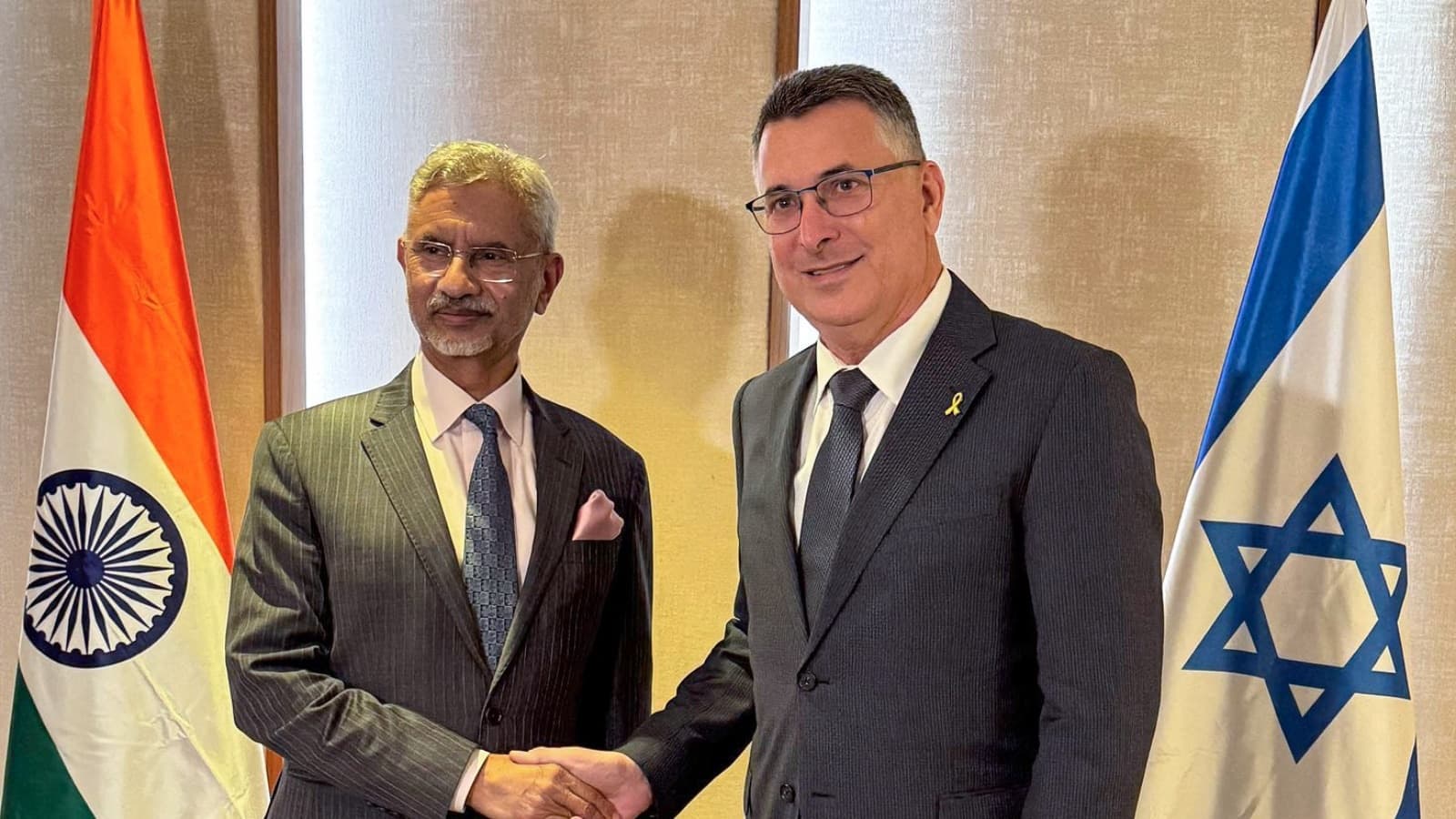
Jaishankar: India, Israel share 'zero tolerance policy' against terrorism.
Summary
External Affairs Minister S. Jaishankar has stated that India and Israel share a "zero tolerance policy" against terrorism. This declaration underscores the deep strategic partnership and strong bilateral cooperation between the two nations on critical security matters. For competitive exams, this highlights India's consistent stance on global terrorism and its key alliances in counter-terrorism efforts.
Key Points
- 1India's External Affairs Minister, S. Jaishankar, made the statement regarding counter-terrorism.
- 2The statement affirms a shared "zero tolerance policy" on terrorism between India and Israel.
- 3This policy highlights strong bilateral ties and cooperation in security matters between the two nations.
- 4Counter-terrorism forms a significant aspect of the strategic partnership between India and Israel.
- 5The stance reflects India's consistent position against global terrorism and its commitment to combating it.
In-Depth Analysis
External Affairs Minister S. Jaishankar's declaration that India and Israel share a "zero tolerance policy" against terrorism underscores a pivotal aspect of their burgeoning strategic partnership. This statement is not merely diplomatic rhetoric but reflects a deep-seated convergence of national interests and shared experiences in combating one of the most persistent global threats. For competitive exam aspirants, understanding this statement requires delving into the historical evolution of India-Israel relations, the nature of global terrorism, and India's broader foreign policy objectives.
**Background Context and Historical Evolution:**
India and Israel established full diplomatic relations in 1992, a landmark event that marked a significant shift in India's foreign policy, moving beyond its earlier non-aligned stance that often favoured the Palestinian cause. Initially, the relationship was low-key, primarily focusing on defence cooperation, a natural fit given Israel's advanced military technology and India's defence needs. Over the past three decades, this relationship has diversified and deepened, encompassing agriculture, water management, technology, and, crucially, counter-terrorism. Both nations have faced severe and sustained threats from various terrorist groups. India has been a victim of cross-border terrorism, particularly in Jammu & Kashmir, and witnessed devastating attacks like the 2008 Mumbai attacks. Israel, since its inception, has lived with constant security challenges and acts of terrorism. These shared vulnerabilities have forged a unique bond, leading to extensive intelligence sharing, joint training programs, and cooperation in developing counter-terrorism strategies and technologies.
**What Happened and Key Stakeholders:**
EAM Jaishankar's statement articulates a firm, unequivocal stance against terrorism, highlighting that both India and Israel view it as a non-negotiable threat that cannot be appeased or tolerated. This declaration typically emerges during high-level bilateral meetings, reinforcing mutual commitments. The key stakeholders involved are the governments of India (Ministry of External Affairs, Ministry of Home Affairs, defence and intelligence agencies) and Israel (Ministry of Foreign Affairs, security establishment). Beyond the governmental apparatus, the citizens of both nations are primary stakeholders, as they are the ultimate beneficiaries of enhanced security and stability. International bodies like the United Nations also play a role, as such bilateral declarations contribute to the broader global effort against terrorism, aligning with UN Security Council resolutions on counter-terrorism.
**Significance for India:**
This "zero tolerance policy" carries immense significance for India across multiple dimensions. **Firstly, in terms of national security,** it bolsters India's capabilities through access to Israeli expertise and technology in areas like border management, intelligence gathering, and anti-insurgency operations. Israel's innovation in defence and security offers valuable lessons and resources. **Secondly, from a foreign policy perspective,** it reinforces India's consistent position against terrorism as a global menace, irrespective of its origin or ideology. This partnership allows India to project strength and resolve on the international stage, aligning with its multi-alignment strategy where it engages with diverse partners based on mutual interests. **Thirdly, economically,** a stable security environment is crucial for investment and trade. Counter-terrorism cooperation helps create such an environment, fostering confidence among investors. Furthermore, collaboration in dual-use technologies (e.g., cyber security) can have significant economic benefits.
**Constitutional and Policy Framework:**
While there isn't a single constitutional article directly dictating counter-terrorism cooperation with specific countries, the Indian Constitution's Preamble, which enshrines the ideals of sovereignty and integrity, implicitly underpins the state's duty to protect its citizens from threats like terrorism. Article 51, a Directive Principle of State Policy, encourages the promotion of international peace and security, which includes cooperation in combating global threats. More directly, India's legal framework for combating terrorism is primarily governed by the **Unlawful Activities (Prevention) Act (UAPA), 1967**, which has been amended multiple times (notably in 2004, 2008, 2012, and 2019) to strengthen its provisions against terrorist acts and organizations. This domestic legislation provides the legal basis for India's internal counter-terrorism efforts and its engagement with international partners. Globally, India has been a strong proponent of the **Comprehensive Convention on International Terrorism (CCIT)** at the UN since 1996, advocating for a universal definition of terrorism and a unified legal framework to prosecute terrorists.
**Future Implications:**
The deepening counter-terrorism partnership between India and Israel is likely to lead to further enhanced intelligence sharing, joint military and security exercises, and technology transfers. This collaboration could extend to emerging threats such as cyber terrorism, radicalization, and the use of drones by non-state actors. While beneficial for security, India also navigates a delicate balance in its foreign policy, maintaining strong ties with Arab nations and Iran. This strategic balancing act will continue to be a crucial aspect of India's West Asia policy. The partnership also sends a strong message to state and non-state actors who support or sponsor terrorism, indicating a united front against such activities. Ultimately, this collaboration strengthens India's overall security architecture and its position as a responsible global actor committed to combating terrorism.
Exam Tips
This topic primarily falls under GS-II (International Relations: Bilateral, Regional and Global Groupings and Agreements involving India and/or affecting India's interests; Effect of policies and politics of developed and developing countries on India's interests, Indian diaspora) and GS-III (Internal Security: Linkages between development and spread of extremism; Role of external state and non-state actors in creating challenges to internal security; Challenges to internal security through communication networks, role of media and social networking sites in internal security challenges, basics of cyber security; money-laundering and its prevention; security challenges and their management in border areas; linkages of organized crime with terrorism).
When studying, focus on the historical evolution of India-Israel relations (e.g., 1992 diplomatic ties), key areas of cooperation (defence, agriculture, water, counter-terrorism), and the strategic rationale behind India's 'Look West' policy. Understand the nuances of India's multi-alignment foreign policy.
Common question patterns include: Direct questions on India-Israel bilateral relations and their significance; Analytical questions on India's counter-terrorism strategy and its international partnerships; Essay questions on the challenges of global terrorism and India's role in combating it; and short notes on specific acts like UAPA or initiatives like CCIT.