



Relevant for Exams
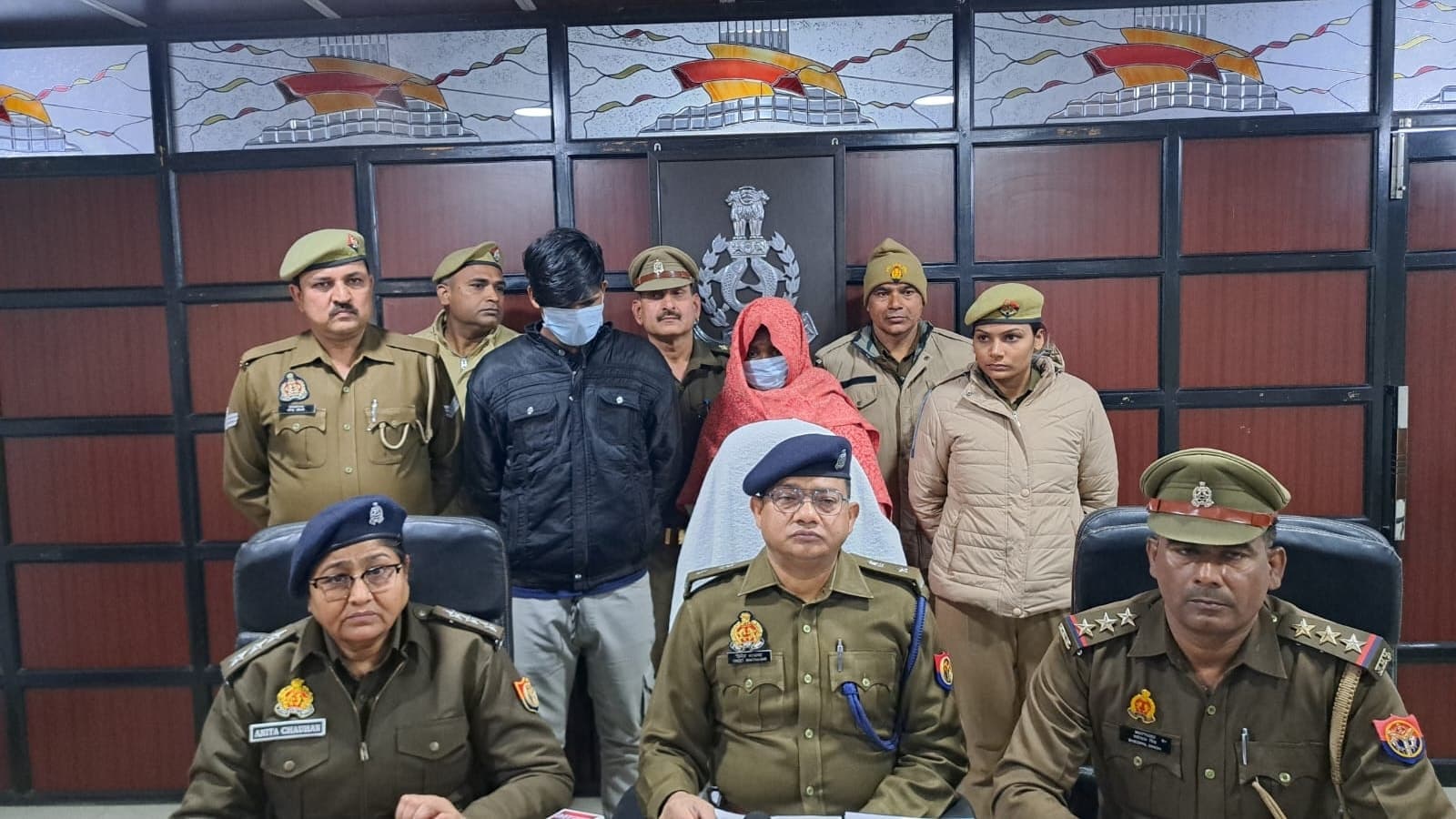
Content missing: Unable to summarize domestic work racket and tribal woman's murder.
Summary
The article's content is unavailable, preventing a detailed summary of the domestic work racket and the murder of a Jharkhand tribal woman. Without specifics on the incident, its impact, or legal implications, a comprehensive analysis for competitive exams cannot be provided from this input.
Key Points
- 1The article's content is explicitly marked as 'No content available' for analysis.
- 2Specific details such as dates, names of individuals, or locations of the incident cannot be extracted.
- 3No numerical data, percentages, or constitutional/legal provisions are present for analysis.
- 4Information regarding the nature of the domestic work racket or the murder circumstances is absent.
- 5Consequently, precise exam-focused facts for competitive exam MCQs cannot be identified from this input.
In-Depth Analysis
While the specific details of the domestic work racket leading to the murder of a Jharkhand tribal woman are unavailable from the provided content, this tragic headline points to a pervasive and deeply concerning issue in India: the exploitation and trafficking of vulnerable individuals, particularly tribal women and girls, into the informal domestic labor sector. Understanding this systemic problem is crucial for competitive exam aspirants, as it touches upon social justice, human rights, internal security, and governance.
The background context for such incidents is rooted in India's socio-economic disparities and developmental challenges. Many tribal regions, including parts of Jharkhand, face chronic poverty, lack of educational opportunities, inadequate healthcare, land alienation, and environmental degradation. These factors compel individuals, especially women who often bear the brunt of economic hardship, to migrate in search of livelihoods. Urban centers, with their burgeoning middle and upper classes, offer a demand for cheap domestic labor. This demand-supply gap is often exploited by unscrupulous middlemen, placement agencies (both registered and unregistered), and human traffickers.
What typically happens in these rackets is a systematic process of deception and exploitation. Agents, often from the same community as the victims, promise attractive salaries, good working conditions, and a better life in cities like Delhi, Mumbai, or Bengaluru. Lured by these promises, often desperate families send their daughters. Upon arrival, the reality is starkly different. Wages are often withheld, movement restricted, and communication with families cut off. Victims are subjected to long working hours, poor living conditions, physical abuse, and sometimes sexual assault. They are often trapped in debt bondage, with their 'advances' or 'fees' constantly escalating. The murder of a tribal woman in such circumstances is the most extreme manifestation of this exploitation, often occurring to silence victims, prevent escape, or cover up severe abuse. It underscores the utter dehumanization that occurs within these exploitative networks.
Key stakeholders involved in this complex issue include the victims themselves – vulnerable tribal women and girls – who are often marginalized and lack awareness of their rights or legal recourse. The perpetrators are a network of traffickers, exploitative placement agencies, and sometimes even the employers who, either directly or indirectly, benefit from and perpetuate the exploitative conditions. On the governance side, state governments (both source states like Jharkhand and destination states), local police, the judiciary, and various central ministries (e.g., Ministry of Women & Child Development, Ministry of Labour & Employment) are key stakeholders. Civil society organizations and NGOs play a vital role in rescue, rehabilitation, legal aid, and advocacy, often filling gaps where government machinery falls short.
This issue matters profoundly for India. Firstly, it represents a grave violation of fundamental human rights, including the right to life and personal liberty (Article 21) and the prohibition of traffic in human beings and forced labor (Article 23) of the Indian Constitution. Secondly, it highlights deep-seated social injustices, perpetuating cycles of poverty and discrimination against marginalized communities, particularly Scheduled Tribes. Thirdly, it poses a significant challenge to the rule of law and internal security, as organized crime syndicates are often involved in human trafficking. Economically, while domestic work contributes significantly to the urban economy, its informal and unregulated nature means workers are denied basic labor rights and social security. The lack of formalization also makes it difficult to track and address exploitation.
Historically, distress migration and labor exploitation have been prevalent in India. Post-independence, various laws were enacted to address these issues. The Bonded Labour System (Abolition) Act, 1976, aimed to eliminate debt bondage. The Immoral Traffic (Prevention) Act, 1956 (ITPA), addresses trafficking for commercial sexual exploitation, though its scope has been debated in cases of labor trafficking. More recently, the Criminal Law (Amendment) Act, 2013, specifically inserted Section 370 into the Indian Penal Code, making human trafficking a distinct and punishable offense. Despite these legal frameworks, enforcement remains a challenge due to the clandestine nature of these operations, corruption, and lack of adequate resources and coordination among different agencies. Article 39(e) and (f) also direct the state to protect workers and children from exploitation and moral abandonment, while Article 42 mandates just and humane conditions of work.
The future implications are clear: without robust legal frameworks, stringent enforcement, and proactive measures to address the root causes of vulnerability, such tragedies will continue. India needs a comprehensive National Policy for Domestic Workers, which has been in draft stages for years, to formalize the sector, ensure minimum wages, social security, and grievance redressal mechanisms. Enhanced inter-state coordination between police forces, better intelligence gathering, and public awareness campaigns in source regions are critical. Furthermore, investment in education, skill development, and local livelihood generation in tribal areas is essential to reduce distress migration and empower communities. The judiciary also has a crucial role in ensuring swift justice for victims and severe punishment for perpetrators, acting as a deterrent against such heinous crimes.
Exam Tips
This topic falls under GS Paper I (Indian Society, Social Issues) and GS Paper II (Social Justice, Governance, Vulnerable Sections) for UPSC CSE. For SSC/State PSC, it's relevant for General Awareness, Current Affairs, and Social Issues sections.
Study related topics like human trafficking (Section 370 IPC, ITPA), bonded labor (Bonded Labour System (Abolition) Act, 1976), child labor (Child Labour (Prohibition and Regulation) Act, 1986), inter-state migration, and the rights of tribal communities (Panchayats (Extension to Scheduled Areas) Act (PESA), 1996, Forest Rights Act, 2006).
Common question patterns include: analytical questions on the root causes of exploitation, the role of various stakeholders, government initiatives to combat trafficking and protect vulnerable workers, and the constitutional provisions safeguarding human rights. Be prepared to discuss challenges in implementation and suggest policy reforms.
Focus on Constitutional Articles: 21 (Right to Life), 23 (Prohibition of Forced Labour), 24 (Prohibition of Child Labour), 39(e) & (f) (DPSP on worker protection), 42 (Just and humane conditions of work). Memorize key provisions and their implications.
Practice essay writing on topics like 'Human Trafficking: A blot on India's social fabric' or 'Challenges in ensuring social justice for marginalized communities in India' to integrate facts, policies, and constitutional references.