



Relevant for Exams
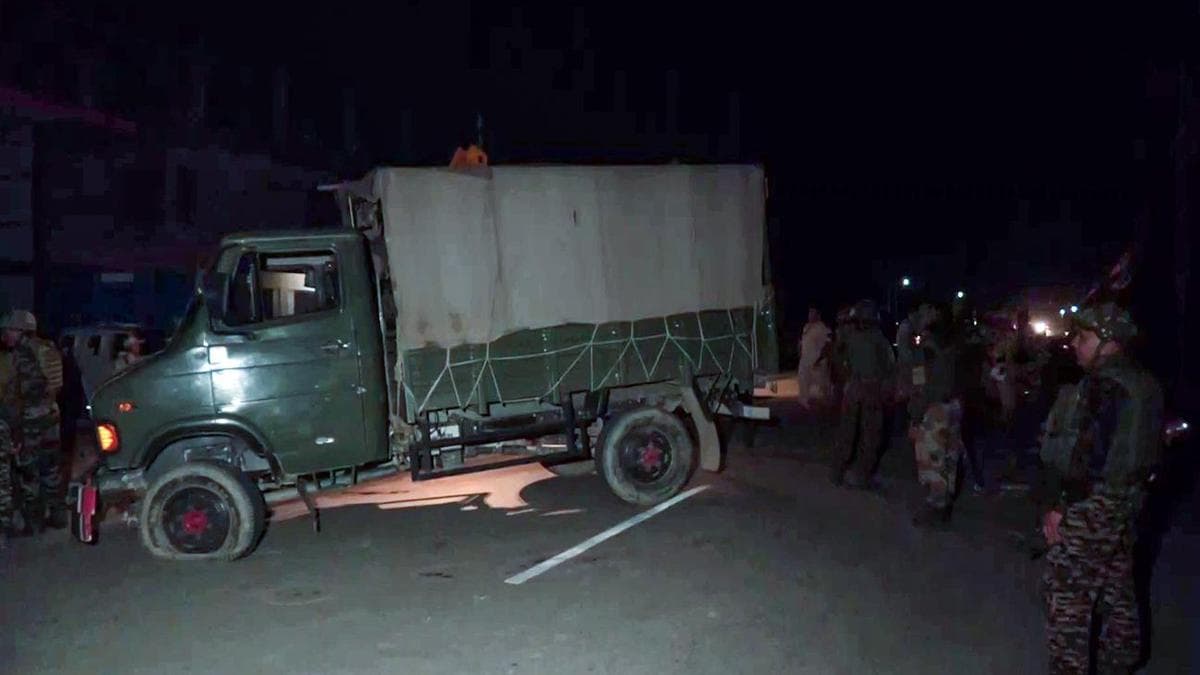
Gunfire sparks fresh tension in Manipur after 389 displaced persons return, highlighting fragile peace.
Summary
Gunfire has reignited tension in Manipur, specifically near the border of Bishnupur and Churachandpur districts, a day after 389 internally displaced persons returned home. This incident underscores the fragile peace and persistent ethnic conflict in the state. It is crucial for competitive exams to understand the ongoing internal security challenges and the humanitarian aspects of displacement in Manipur, including the specific districts affected.
Key Points
- 1Fresh tension erupted in the Indian state of Manipur due to gunfire.
- 2The incident occurred in an area bordering Bishnupur and Churachandpur districts.
- 3It happened a day after 389 internally displaced persons (IDPs) returned to their homes.
- 4The return of IDPs is a critical and sensitive aspect of the ongoing ethnic conflict in Manipur.
- 5The event highlights the volatile security situation and challenges to peace in the region.
In-Depth Analysis
The recent incident of gunfire in Manipur, particularly near the border of Bishnupur and Churachandpur districts, a day after 389 internally displaced persons (IDPs) returned home, is a stark reminder of the deep-seated ethnic fault lines and persistent instability plaguing the northeastern state. This event is not an isolated occurrence but a symptom of a much larger, complex crisis that erupted in May 2023 and continues to challenge India's internal security and social fabric.
**The Volatile Landscape of Manipur: A Historical Perspective**
Manipur is a mosaic of diverse ethnic communities, primarily the Meiteis, who are predominantly Hindus and reside in the Imphal Valley, and various Kuki-Zo and Naga tribes, who are mostly Christians and inhabit the surrounding hill districts. The current conflict, which began on May 3, 2023, during a 'Tribal Solidarity March' organized by the Kuki-Zo community, stems from long-standing historical grievances, land disputes, and demographic concerns. The immediate trigger was the Manipur High Court's directive to the state government in April 2023 to consider including the Meitei community in the Scheduled Tribes (ST) list. This demand by the Meiteis, who constitute about 53% of the state's population but are confined to approximately 10% of its land area (the valley), was vehemently opposed by the Kuki-Zo and Naga tribes. They argued that granting ST status to Meiteis would allow them to purchase land in the hill areas, encroaching upon tribal lands and resources, and dilute the existing tribes' reservation benefits.
Historically, the Meiteis have felt marginalized, citing illegal immigration from Myanmar as a threat to their demography and culture, and the inability to acquire land in hill areas as a constraint. Conversely, the Kuki-Zo tribes feel their traditional lands are under threat from state policies, including eviction drives from forest areas (which they perceive as targeting their communities), and the potential loss of their constitutional protections under Article 371C, which grants special provisions to Manipur, including the protection of hill areas. This article allows for a committee of the Legislative Assembly, composed of members from the hill areas, to oversee legislation related to those regions, providing a degree of autonomy.
**The Recent Spark: Gunfire Amidst Fragile Returns**
The incident described – gunfire erupting shortly after the return of IDPs – highlights the extreme fragility of peace efforts. The return of displaced persons to their homes is a critical step towards normalcy, but it is also a highly sensitive process. It often involves crossing contested zones or returning to areas where ethnic tensions remain high, making them vulnerable to renewed violence. The specific mention of Bishnupur and Churachandpur districts is significant, as these areas lie on the geographical and ethnic fault lines, witnessing some of the most intense clashes in the past year. Such incidents demonstrate that merely facilitating returns without robust security guarantees and a comprehensive reconciliation process can inadvertently reignite conflict.
**Key Players and Their Stakes**
* **Meitei Community:** Seeks ST status to protect land, culture, and address perceived demographic threats. Fears marginalization and loss of identity.
* **Kuki-Zo Community:** Opposes Meitei ST status, fearing land alienation and loss of constitutional protections. Demands separate administration for their areas.
* **Manipur State Government:** Led by Chief Minister N. Biren Singh, the government has been criticized for its handling of the crisis, often accused of bias towards the Meitei community. Its authority and legitimacy have been severely tested.
* **Central Government:** Under Prime Minister Narendra Modi, the Union government has deployed significant central armed police forces (CAPF) and the Indian Army, but has faced criticism for perceived delays in intervention and for not proactively initiating a political dialogue. Its primary stake is maintaining internal security and territorial integrity.
* **Security Forces:** The Indian Army, Assam Rifles, and various CAPF units are on the ground, attempting to maintain law and order, buffer warring communities, and facilitate humanitarian aid. They operate under immense pressure in a complex terrain.
**Why This Matters for India: A Multifaceted Crisis**
The Manipur crisis poses severe challenges for India. Firstly, it is a grave **internal security** threat, diverting significant military and paramilitary resources. The prolonged ethnic strife impacts national cohesion and sets a dangerous precedent for other diverse regions. Secondly, it represents a significant **humanitarian crisis**, with thousands displaced, numerous lives lost, and immense property destruction. The breakdown of law and order also allows for the proliferation of illegal arms and potentially fuels insurgent groups. Thirdly, it tests India's **federal structure** and the Centre-state relationship, particularly regarding the application of **Article 355**, which empowers the Union government to protect a state from internal disturbance. The Centre's role in mediation and providing security is crucial. Economically, the conflict has crippled local trade, disrupted supply chains, and deterred investment in a strategically important border state. Geopolitically, Manipur shares a porous border with Myanmar, making it susceptible to cross-border illegal activities, including drug trafficking and illegal immigration, which further complicate the ethnic dynamics and security situation. The instability also impacts India's 'Act East Policy,' which relies on a peaceful and connected Northeast for regional engagement.
**Future Implications and Way Forward**
The future of Manipur hinges on a comprehensive approach that addresses both immediate security concerns and the underlying causes of the conflict. This includes establishing genuine dialogue between the warring communities, ensuring impartial law enforcement, and providing robust rehabilitation and resettlement for IDPs. The Central Government's role in facilitating a political solution, potentially involving constitutional amendments or special administrative arrangements under Article 371C, will be critical. Restoring trust between communities and with the state machinery is paramount. Failure to achieve lasting peace could lead to further radicalization, prolonged instability, and continued human suffering, severely impacting India's internal stability and its aspirations for regional leadership.
Exam Tips
This topic falls under **GS Paper III: Internal Security** (Challenges to internal security through ethnic conflicts, insurgency in border areas) and **GS Paper I: Indian Society** (Diversity, role of women, population and associated issues, poverty and developmental issues, urbanization, their problems and remedies).
Study related topics like North-East insurgencies, the history of tribal movements in India, the role of Article 371 in special provisions for states, border management challenges, and the impact of illegal immigration.
Expect questions on the causes and consequences of ethnic conflicts, the role of state and non-state actors, the challenges to internal security in border regions, and the constitutional provisions related to special status for states (e.g., Article 371, 371A, 371C, 371G).
Be prepared for questions analyzing the humanitarian crisis (IDPs), the government's response, and potential solutions for peace and rehabilitation. Map-based questions on the location of districts (Bishnupur, Churachandpur) and their significance are also possible.
Understand the difference between various communities (Meitei, Kuki-Zo, Naga) and their respective demands and grievances, as well as the significance of the Scheduled Tribe status debate.
Related Topics to Study
Full Article
The incident occurred a day after 389 internally displaced persons returned to their homes in an area bordering Bishnupur and Churachandpur districts