



Relevant for Exams
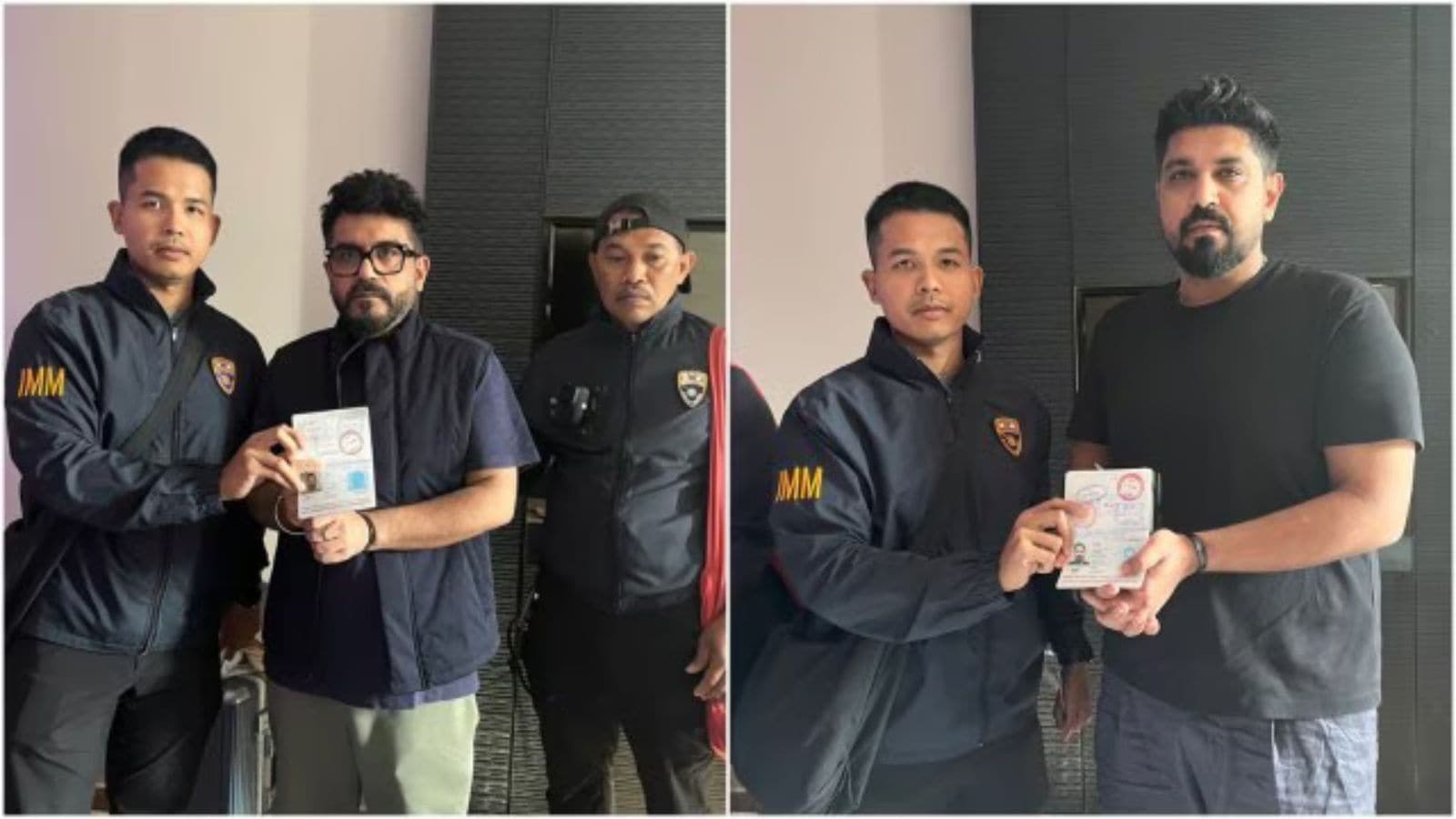
Luthra brothers, linked to Goa hotel blaze, deported from Thailand; being brought to Goa.
Summary
The Luthra brothers, implicated in a hotel blaze incident in Goa, have been deported from Thailand and are being brought back to Goa. This event highlights international cooperation in law enforcement and the process of deportation for individuals facing criminal charges abroad. While a specific criminal case, it underscores the mechanisms for bringing fugitives to justice, which is relevant for understanding judicial processes.
Key Points
- 1The Luthra brothers were deported from Thailand.
- 2They are being brought to Goa, India, in connection with a hotel blaze.
- 3The incident involves a hotel fire that occurred in Goa.
- 4The deportation signifies international legal cooperation between Thailand and India.
- 5The case pertains to criminal proceedings following the Goa hotel blaze.
In-Depth Analysis
The recent deportation of the Luthra brothers from Thailand to Goa, India, in connection with a hotel blaze incident, offers a compelling case study for competitive exam aspirants, highlighting critical aspects of international law enforcement cooperation, India's judicial system, and its commitment to the rule of law. While the immediate focus is on a specific criminal case, the underlying mechanisms and principles have far-reaching implications for governance and international relations.
**Background Context and What Happened:**
The Luthra brothers were implicated in a significant hotel blaze that occurred in Goa. Details of the specific incident, including the exact date and nature of the fire, are not provided in the summary, but such events typically involve investigations into potential negligence, arson, or other criminal acts leading to loss of life or property. Following the incident, the brothers reportedly left India, becoming fugitives from justice. Indian authorities, likely the Goa Police working with central agencies, initiated proceedings to locate and apprehend them. Their presence was eventually traced to Thailand, a country with which India shares robust diplomatic and economic ties. The subsequent action involved a request from Indian authorities to their Thai counterparts for the brothers' return. This process culminated in their deportation from Thailand, an administrative act by the Thai government, distinct from a formal extradition, which is governed by treaties. They are now being brought back to Goa to face legal proceedings related to the hotel fire.
**Key Stakeholders Involved:**
Several entities played crucial roles in this development. On the Indian side, the **Goa Police** are the primary investigating agency, responsible for the initial probe and filing charges. The **Ministry of External Affairs (MEA)** would have been instrumental in facilitating diplomatic communication with Thailand, especially concerning the request for deportation. Central agencies like the **Central Bureau of Investigation (CBI)** or **Interpol's National Central Bureau in India** might have been involved in tracking the fugitives and coordinating the international request. On the Thai side, the **Thai Police** and their **Ministry of Foreign Affairs** would have processed the request and executed the deportation. The **Luthra brothers** themselves are the accused individuals, whose legal fate will now be decided in Indian courts. Finally, the **victims** of the hotel blaze and the **hotel management** are also key stakeholders, awaiting justice and closure.
**Significance for India:**
This incident underscores several critical aspects for India. Firstly, it reaffirms India's unwavering commitment to the **rule of law** and its pursuit of justice, irrespective of where fugitives seek refuge. It sends a strong message that individuals cannot escape accountability by fleeing the country. Secondly, it highlights the increasing **effectiveness of international cooperation** in law enforcement. The successful deportation demonstrates robust bilateral ties between India and Thailand and the efficacy of global networks like Interpol, which often plays a crucial role in tracking and locating international fugitives through mechanisms like Red Corner Notices. Such cooperation is vital in an interconnected world where transnational crime is a growing concern. For a state like Goa, heavily reliant on tourism, maintaining law and order and ensuring justice is paramount for preserving its image as a safe destination for visitors and investors. This case also sets a precedent, reinforcing India's capability to bring back individuals facing charges, thereby bolstering confidence in its judicial system.
**Historical Context and Constitutional Provisions:**
India has a long history of seeking the return of fugitives, from economic offenders to those accused of serious crimes. While this specific case involves deportation, it is often juxtaposed with **extradition**, a more formal legal process governed by the **Extradition Act, 1962**. Extradition typically requires a bilateral treaty between two nations and involves a judicial review process in the requested state. Deportation, on the other hand, is generally an administrative act by the host country, often based on immigration laws or a decision that the individual's presence is undesirable. India has extradition treaties with many countries and is also a signatory to various international conventions that facilitate mutual legal assistance. The successful return of individuals like the Luthra brothers, whether through extradition or deportation, is a testament to India's persistent diplomatic efforts and its legal framework. The subsequent judicial proceedings in India will be governed by the **Criminal Procedure Code (CrPC), 1973**, and other relevant penal laws, ensuring due process under **Article 21 of the Indian Constitution** (Protection of Life and Personal Liberty).
**Future Implications:**
The immediate future will see the Luthra brothers undergo the Indian judicial process, facing trial in Goa. This case will be closely watched for its legal implications and the speed of justice delivery. More broadly, such successful operations strengthen India's resolve and capacity to pursue fugitives globally, potentially leading to increased efforts to bring back other high-profile individuals who have absconded. It also signals to other nations India's reliability as a partner in international crime fighting, potentially fostering deeper collaboration on issues of mutual legal assistance, intelligence sharing, and combating transnational organized crime. This enhances India's standing on the global stage as a nation committed to upholding justice and international legal norms.
Exam Tips
This topic falls under 'Indian Polity & Governance' (specifically Criminal Justice System, International Relations aspects) and 'Current Events of National and International Importance'. Focus on understanding the difference between extradition and deportation.
Study related topics like the Extradition Act, 1962, the role of Interpol (Red Corner Notices), bilateral agreements for mutual legal assistance, and the functions of the Ministry of External Affairs (MEA) in such cases.
Common question patterns include definitional questions (e.g., 'What is the difference between extradition and deportation?'), questions on the roles of various agencies (e.g., 'What is Interpol's role in tracing fugitives?'), and case-based questions on international cooperation in law enforcement.