



Relevant for Exams
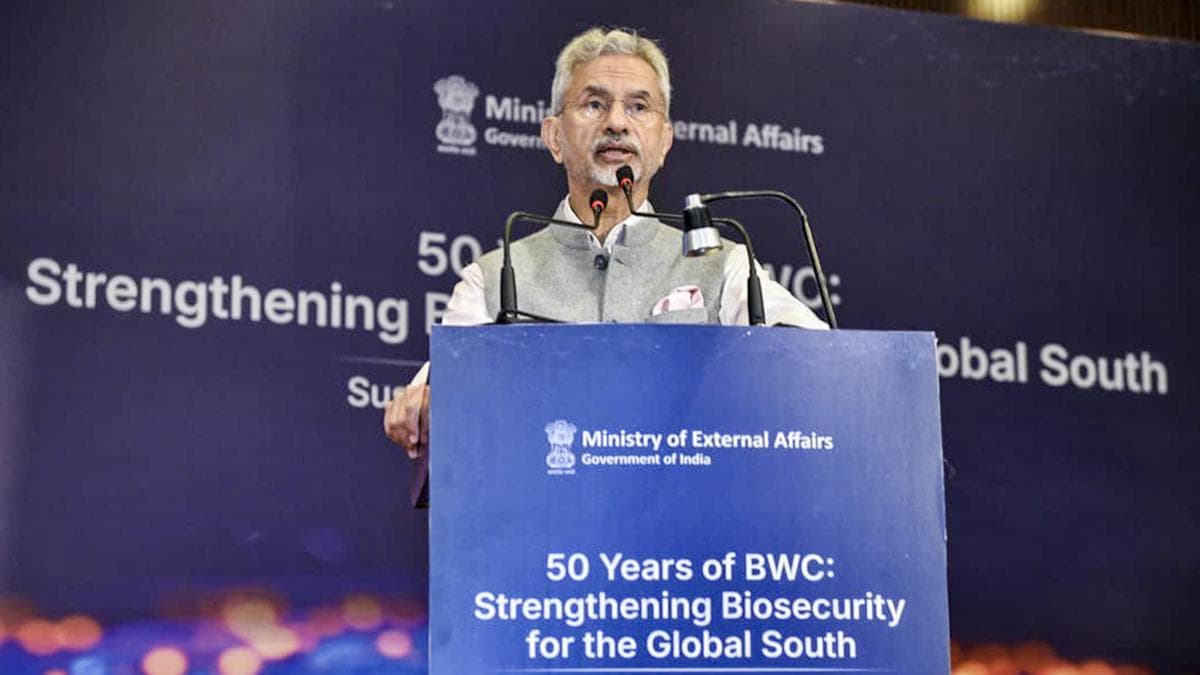
India reviews biosecurity, focusing on BWC and non-state actor threats to national security.
Summary
India is assessing its biosecurity measures in light of evolving global threats, including the potential for non-state actors to misuse biological tools. This discussion highlights the critical role of international frameworks like the Biological Weapons Convention (BWC) in preventing the proliferation of biological weapons. Understanding these aspects is vital for competitive exams, covering national security, international relations, and science & technology.
Key Points
- 1The Biological Weapons Convention (BWC) was opened for signature on April 10, 1972.
- 2The BWC officially entered into force on March 26, 1975, establishing a global norm against biological weapons.
- 3As of recent updates, the BWC has 185 States Parties, demonstrating widespread international commitment.
- 4India ratified the Biological Weapons Convention in 1974, underscoring its dedication to global disarmament efforts.
- 5The BWC is the first multilateral disarmament treaty banning an entire category of weapons of mass destruction (WMD).
In-Depth Analysis
The discussion around India's biosecurity measures, particularly in the context of the Biological Weapons Convention (BWC) and the threat from non-state actors, is crucial for understanding national security, international relations, and public health. This multifaceted issue demands a comprehensive analysis for competitive exam aspirants.
**Background Context and Historical Journey:**
The spectre of biological warfare has haunted humanity for centuries, with early instances of using diseased carcasses to contaminate enemy water sources. However, the 20th century, marked by advancements in biology and industrial-scale production, elevated biological agents to the terrifying status of Weapons of Mass Destruction (WMDs). The horrors of chemical warfare in World War I spurred initial international efforts, leading to the 1925 Geneva Protocol, which banned the use of chemical and biological weapons but not their development or stockpiling. The Cold War era further intensified concerns, pushing nations to develop such weapons, albeit secretly. This precarious situation underscored the urgent need for a more comprehensive legal framework.
**The Biological Weapons Convention (BWC): A Landmark Treaty:**
The international community responded by drafting the Convention on the Prohibition of the Development, Production and Stockpiling of Bacteriological (Biological) and Toxin Weapons and on their Destruction, commonly known as the Biological Weapons Convention (BWC). This landmark treaty was opened for signature on April 10, 1972, and officially entered into force on March 26, 1975. The BWC holds a unique position as the first multilateral disarmament treaty to ban an entire category of WMDs. Its core commitment requires States Parties never in any circumstances to develop, produce, stockpile, or otherwise acquire or retain microbial or other biological agents, or toxins whatever their origin or method of production, of types and in quantities that have no justification for prophylactic, protective or other peaceful purposes. As of recent updates, the BWC boasts 185 States Parties, demonstrating a widespread global commitment to preventing biological warfare.
**Key Stakeholders and India's Role:**
Several key stakeholders are involved in the BWC's implementation and the broader biosecurity landscape. The **States Parties**, including India, are the primary actors, responsible for adhering to the convention's provisions and enacting national legislation. The **United Nations** plays a facilitating role, hosting review conferences and providing secretariat support. **India's ratification of the BWC in 1974**, even before its entry into force, underscores its long-standing dedication to global disarmament and non-proliferation efforts. India has consistently advocated for strengthening the BWC, particularly for a robust verification mechanism that the treaty currently lacks. The **scientific community** is another critical stakeholder, grappling with the 'dual-use dilemma' – where scientific research intended for peaceful purposes (e.g., vaccine development) could potentially be misused for hostile aims. Finally, the rise of **non-state actors** (e.g., terrorist groups) pursuing biological tools represents a significant and evolving threat, complicating traditional state-centric arms control frameworks due to their clandestine nature and ideological motivations.
**Significance for India and Broader Implications:**
For India, upgrading biosecurity measures and adhering to the BWC is paramount. From a **national security** perspective, it safeguards the nation against potential biological attacks, whether from state adversaries or non-state entities. Robust biosecurity is directly linked to **public health**, as it involves strengthening disease surveillance, diagnostic capabilities, and rapid response mechanisms, lessons starkly highlighted by the COVID-19 pandemic. A biological attack could have devastating **economic impacts**, disrupting trade, agriculture, and daily life, leading to significant financial losses and societal panic. India's active participation in the BWC also enhances its **international standing** as a responsible global power committed to multilateralism and disarmament, aligning with its foreign policy objectives.
**Constitutional and Policy Frameworks:**
While the BWC is an international treaty, India's commitment is reflected in its domestic policies and constitutional ethos. **Article 51 of the Directive Principles of State Policy (DPSP)**, which encourages the promotion of international peace and security and respect for international law and treaty obligations, provides the overarching constitutional backing for India's adherence to conventions like the BWC. Domestically, the **Disaster Management Act, 2005**, and the **National Disaster Management Authority (NDMA)** are crucial for preparing for and responding to all forms of disasters, including CBRN (Chemical, Biological, Radiological, and Nuclear) emergencies. The **Epidemic Diseases Act, 1897**, though archaic, has been invoked and amended during health crises (like COVID-19) to provide legal powers for disease control, highlighting the need for a modern, comprehensive public health law. India's various health policies and infrastructure development, like Ayushman Bharat, indirectly contribute to biosecurity by strengthening the public health system's capacity to detect and respond to biological threats.
**Future Implications:**
The future of biosecurity is shaped by rapid advancements in biotechnology, such as gene editing (CRISPR) and synthetic biology, which present both immense benefits and significant 'dual-use' challenges. India needs to invest heavily in **biodefense research and development**, enhance its **biosafety and biosecurity regulations**, and foster greater **international cooperation** to counter these evolving threats. The lack of a strong verification protocol within the BWC remains a concern, and India continues to advocate for its strengthening. Furthermore, integrating biosecurity with broader **pandemic preparedness strategies** is vital, recognizing that natural outbreaks and deliberate attacks often require similar response mechanisms. India's leadership in global health initiatives will be crucial in shaping future international norms and capabilities against biological threats.
Exam Tips
This topic primarily falls under GS-II (International Relations, Treaties, India's Foreign Policy) and GS-III (Internal Security, Science & Technology, Disaster Management) for UPSC. For SSC/State PSC exams, expect factual questions on the BWC (dates, India's ratification).
When studying, focus on the 'why' behind the BWC, its key provisions, India's stance and commitment, and the challenges it faces (e.g., non-state actors, verification issues, dual-use technology).
Common question patterns include: MCQs on BWC facts (year of signature/entry, number of parties), Mains questions on India's biosecurity challenges and policy responses, the role of international conventions in global security, or the ethical dilemmas posed by dual-use technologies.
Relate the BWC to India's broader disarmament policy and its commitment to a rules-based international order. Understand how domestic acts like the Disaster Management Act complement international obligations.
Pay attention to current events related to biological threats, pandemics, and advancements in biotechnology, as these often form the basis for contemporary application-based questions.
Related Topics to Study
Full Article
What is the Biological Weapons Convention? Are non-state actors also pursuing biological tools?