



Relevant for Exams
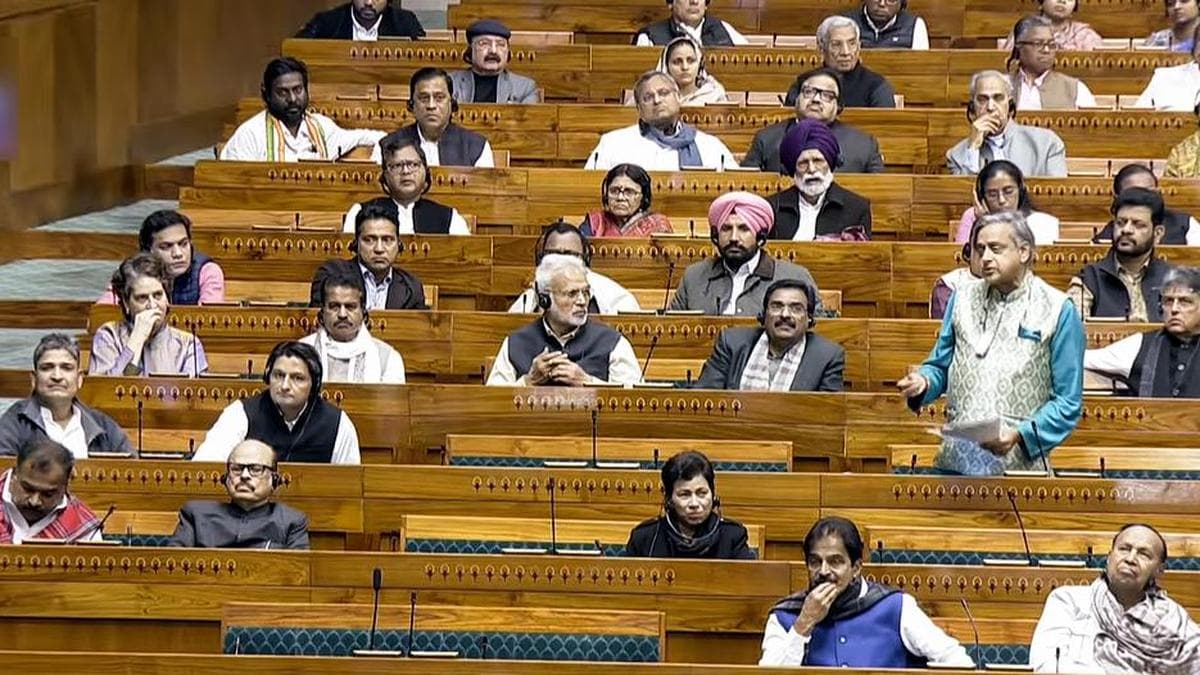
Congress issues whip for Lok Sabha MPs ahead of crucial civil nuclear and other key legislation.
Summary
Congress issued a whip to its Lok Sabha MPs, mandating their presence for three days to ensure participation in crucial legislative discussions. This action highlights the imminent consideration and passage of significant bills, including one to overhaul India's civil nuclear sector laws, which is vital for national policy and energy security. For competitive exams, understanding parliamentary procedures like whips and the implications of major legislation like the nuclear bill is crucial.
Key Points
- 1Congress issued a whip to its Members of Parliament (MPs) in the Lok Sabha.
- 2The whip mandates the presence of all Congress MPs in the House for the next three days.
- 3The primary reason for the whip is the consideration and passage of key legislation.
- 4One significant legislation expected is a new Bill aimed at overhauling laws governing India's civil nuclear sector.
- 5Another key legislation mentioned as likely to come up for consideration is the 'VB-G RAM G' Bill.
In-Depth Analysis
The issuance of a whip by a major political party like the Congress in the Lok Sabha is a significant event in parliamentary democracy, signaling that crucial legislative business is at hand. A parliamentary whip is an instruction issued by a political party to its members in the legislature to adhere to a specific line of action, particularly regarding voting. Whips are typically issued to ensure party discipline and to guarantee the presence of members for important votes, preventing absenteeism and ensuring the party's stance is reflected in legislative outcomes. In this instance, the Congress mandated the presence of its Members of Parliament (MPs) for three days, indicating the imminent consideration and passage of key legislation.
At the heart of this parliamentary manoeuvre is the anticipated introduction and passage of significant bills. While one bill was mentioned as 'VB-G RAM G' (which appears to be a placeholder or garbled reference, thus focusing on the concrete example), the most prominent and impactful legislation highlighted is a new Bill aimed at overhauling laws governing India's civil nuclear sector. This particular legislation holds immense importance for India's energy security, technological advancement, and international standing. The existing framework, primarily the Atomic Energy Act of 1962, has served India for decades, but evolving global standards, technological advancements, and the need for greater private sector participation necessitate a modern, comprehensive legal framework.
Key stakeholders in this legislative process include the ruling government (currently led by the BJP-NDA alliance), which is introducing the bill; the Congress party, as the principal opposition, which will scrutinize and debate the bill; and all other Members of Parliament who will participate in the legislative process. Beyond Parliament, the Department of Atomic Energy (DAE), the Atomic Energy Regulatory Board (AERB), and various public sector undertakings like Nuclear Power Corporation of India Limited (NPCIL) are critical stakeholders. The scientific community, industry players (both domestic and international), and ultimately, the Indian public, whose energy needs and safety concerns are paramount, are also deeply invested.
This legislative move matters profoundly for India. Economically, an overhauled nuclear law can attract greater domestic and foreign investment into India's civil nuclear energy sector, fostering job creation and technological transfer. Politically, it reaffirms India's commitment to expanding its clean energy portfolio, aligning with its climate change goals and international commitments under agreements like the Paris Agreement. Socially, a robust regulatory framework ensures enhanced safety standards and public confidence in nuclear power generation, which is crucial for a densely populated nation. Historically, India's nuclear journey began with Dr. Homi J. Bhabha and saw significant milestones like the Pokhran tests (1974 and 1998), leading to a unique position outside the Nuclear Non-Proliferation Treaty (NPT) but eventually securing a waiver from the Nuclear Suppliers Group (NSG) in 2008, largely due to the Indo-US Civil Nuclear Agreement.
The future implications of such a bill are far-reaching. It could streamline the process for setting up new nuclear power plants, facilitate the development of advanced reactor technologies, and address issues of civil nuclear liability more comprehensively than the Civil Liability for Nuclear Damage Act, 2010. A modern law could also encourage private sector involvement, potentially reducing the financial burden on the government and accelerating capacity addition. This is critical as India aims to significantly increase its nuclear power capacity to meet growing energy demands and reduce reliance on fossil fuels. Such reforms would also bolster India's credentials as a responsible nuclear power on the global stage, potentially easing its path towards full NSG membership.
From a constitutional perspective, the Parliament derives its power to legislate on atomic energy from **Entry 6** of the Union List (List I) in the Seventh Schedule of the Constitution, which covers 'Atomic energy and mineral resources necessary for its production.' The process of passing a bill is governed by **Articles 107 to 111** of the Constitution, detailing the introduction, passage, and assent to bills. The role of a whip, while not explicitly mentioned in the Constitution, is an established parliamentary convention crucial for the functioning of the Westminster system. The existing **Atomic Energy Act, 1962**, and the **Civil Liability for Nuclear Damage Act, 2010**, are the primary legal frameworks currently governing this sector, and the new bill will either amend or supersede parts of these. Understanding these constitutional provisions and relevant acts is essential for grasping the legal underpinnings of such policy changes.
Exam Tips
For UPSC Civil Services Exam (General Studies Paper II - Polity & Governance; Paper III - Economy, Science & Technology), focus on parliamentary procedures (whips, legislative process, types of bills), India's energy policy (nuclear energy's role, challenges, prospects), and relevant acts like the Atomic Energy Act, 1962, and the Civil Liability for Nuclear Damage Act, 2010. Common questions include MCQs on constitutional articles related to Parliament and descriptive questions on India's energy security strategy.
For SSC, Banking, and Railway exams, concentrate on factual aspects such as the functions of Parliament, key constitutional articles (e.g., Article 107-111 for legislative procedure, Union List Entry 6), and basic information about India's nuclear power program (e.g., first nuclear power plant, current capacity). Questions are typically direct and fact-based.
Study the concept of 'whip' in detail: its purpose, types (one-line, two-line, three-line), and consequences of defying a whip (disqualification under Anti-Defection Law, Tenth Schedule). This is a frequent topic in Polity sections across various exams.
Understand the broader context of India's energy mix. Compare nuclear energy with other sources (thermal, hydro, solar, wind) in terms of cost, environmental impact, and security. This interdisciplinary approach is vital for comprehensive understanding and essay writing in competitive exams.
Familiarize yourself with the history of India's nuclear program, including key dates (Pokhran tests), agreements (Indo-US Civil Nuclear Deal), and institutions (DAE, AERB, NPCIL). This provides essential background for both objective and subjective questions.
Related Topics to Study
Full Article
Key legislation such as the VB-G RAM G and a new Bill to overhaul laws governing India's civil nuclear sector are likely to come up for consideration and passage