



Relevant for Exams
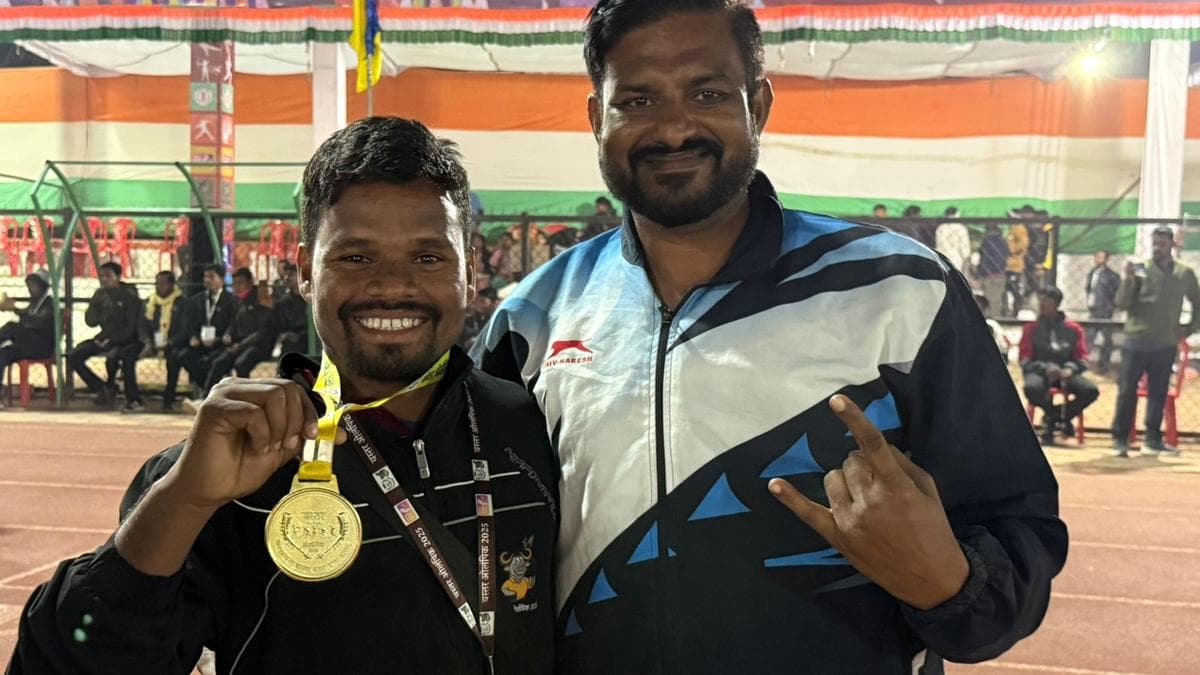
Chhattisgarh DRG jawan Kishan Kumar Hapka, injured in anti-Maoist ops, finds new life through archery.
Summary
Kishan Kumar Hapka, a jawan from Chhattisgarh's District Reserve Guard (DRG), lost his leg during a critical anti-Maoist operation. His personal journey highlights the profound sacrifices made by security personnel in combating Left-Wing Extremism. The story emphasizes resilience and the role of activities like archery in the rehabilitation and reintegration of injured jawans, a significant aspect for understanding internal security challenges and personnel welfare in competitive exams.
Key Points
- 1Kishan Kumar Hapka is the DRG jawan featured in the news.
- 2He belongs to the District Reserve Guard (DRG) of Chhattisgarh.
- 3He sustained an injury, specifically losing a leg, during an anti-Maoist operation.
- 4The incident occurred in Chhattisgarh, a state affected by Left-Wing Extremism.
- 5Archery is highlighted as the activity that provided him a new lease of life post-injury.
In-Depth Analysis
The story of Kishan Kumar Hapka, a jawan from Chhattisgarh's District Reserve Guard (DRG) who lost his leg in an anti-Maoist operation and found a new lease of life through archery, offers a poignant glimpse into the complex challenges of Left-Wing Extremism (LWE) in India and the profound sacrifices made by security forces. This incident is not merely an individual's tale of resilience but a microcosm of the broader internal security landscape, highlighting the human cost of conflict and the critical importance of rehabilitation.
**Background Context: The Scourge of Left-Wing Extremism**
Left-Wing Extremism, often referred to as Naxalism or Maoism, is one of the gravest internal security threats India faces. Rooted in the Naxalbari uprising of 1967 in West Bengal, the movement, espousing Maoist ideology, aims to overthrow the democratic state through armed struggle. Over the decades, it has spread to several states, forming a 'Red Corridor' primarily in the forested and tribal-dominated regions of Chhattisgarh, Jharkhand, Odisha, Bihar, Maharashtra, and Andhra Pradesh. These areas are often characterized by historical grievances, underdevelopment, lack of governance, and exploitation of tribal populations, which Maoist groups exploit to gain support. Chhattisgarh, particularly the Bastar region, remains one of the most affected states, witnessing frequent violent clashes between security forces and Maoist cadres. The District Reserve Guard (DRG), to which Kishan Kumar Hapka belongs, is a highly effective local force comprising trained tribal youth, including surrendered Maoists, who possess intimate knowledge of the terrain and local dynamics, making them crucial in anti-Maoist operations.
**The Human Cost and Rehabilitation**
Kishan Kumar Hapka's injury underscores the ever-present danger faced by security personnel. Anti-Maoist operations are fraught with risks, from improvised explosive device (IED) blasts to direct firefights. The loss of a limb or life is a devastating consequence, not just for the individual but for their families. Such injuries often lead to physical and psychological trauma, social stigma, and economic hardship. The emphasis on activities like archery in Hapka's rehabilitation is significant. It represents a progressive approach to reintegration, moving beyond mere financial compensation to fostering physical fitness, mental well-being, and a sense of purpose. Sports, vocational training, and psychological counseling are vital components of a holistic rehabilitation strategy, enabling injured personnel to lead fulfilling lives and contribute to society.
**Key Stakeholders Involved**
Several stakeholders are deeply invested in addressing LWE and supporting affected personnel. The **Government of India**, primarily through the Ministry of Home Affairs (MHA), formulates national policies and provides financial and logistical support to states. The **State Governments**, like Chhattisgarh, are on the front lines, deploying their police forces, including specialized units like DRG, and implementing development schemes. **Security Forces**, including Central Armed Police Forces (CAPFs) like CRPF, BSF, ITBP, and state police, are the primary combatants. **Maoist groups** themselves are key stakeholders, acting as the adversaries, perpetuating violence and hindering development. Finally, the **local population** in affected areas, often caught between the state and the Maoists, and the **injured security personnel and their families**, are crucial stakeholders whose welfare and security are paramount.
**Significance for India**
Combating LWE is critical for India's internal security, economic development, and social justice. The conflict diverts significant resources, hinders infrastructure development, and creates a climate of fear, especially in tribal areas. The sacrifices of jawans like Hapka highlight the constant threat to national integrity and the rule of law. Effective rehabilitation policies for security personnel are crucial for maintaining morale, attracting talent, and demonstrating the state's commitment to its protectors. It also reflects a broader societal responsibility towards those who serve.
**Historical Context and Policy Framework**
The Naxalite movement gained significant traction in the 1980s and 90s, expanding its influence and establishing a parallel administration in some areas. The government's response has evolved from a purely law-and-order approach to a multi-pronged strategy encompassing security measures, development initiatives, and ensuring the rights of tribal communities. The **National Policy and Action Plan to Combat Left Wing Extremism (2015)** outlines this strategy, focusing on robust security responses, improved governance and development, and ensuring the rights and entitlements of local communities. Schemes like the Security Related Expenditure (SRE) Scheme, Special Infrastructure Scheme (SIS), and Road Requirement Plan (RRP) for LWE Areas are examples of this comprehensive approach. Constitutionally, **Article 355** places a duty on the Union to protect states against internal disturbance. While 'law and order' is a State subject under **Entry 2 of List II (State List)** of the Seventh Schedule, the Centre plays a crucial coordinating and supporting role, deploying CAPFs and providing resources. The welfare of security personnel falls under the broader ambit of social justice and state responsibility.
**Future Implications**
The future of LWE combat will likely see continued emphasis on intelligence-led operations, technological advancements in surveillance, and targeted development in affected regions. The 'whole of government' approach will be crucial, integrating security operations with initiatives for education, healthcare, and livelihood generation to address the root causes of extremism. Furthermore, robust and innovative rehabilitation programs for injured personnel will become increasingly vital. Investing in physical and mental health support, vocational training, and opportunities for social reintegration, perhaps through adaptive sports like archery, will not only honor their sacrifices but also ensure that these brave individuals continue to be valuable assets to society. The story of Kishan Kumar Hapka serves as a powerful reminder that while the fight against LWE is arduous, the spirit of those who defend the nation remains indomitable, and their well-being is a national priority.
Exam Tips
This topic primarily falls under **GS Paper III: Internal Security** for UPSC Civil Services Exam. For State PSCs and SSC, it's relevant for General Awareness/General Studies sections on Indian Polity and Governance.
When studying LWE, focus on its causes (socio-economic, governance gaps), government strategies (security, development, rights-based approach), and the role of various security forces (CAPFs, State Police, specialized units like DRG). Also, understand the impact on development and human rights.
Be prepared for questions on the effectiveness of government policies in LWE-affected areas, challenges faced by security forces, rehabilitation measures for injured personnel, and the role of local communities in combating extremism. Case studies like Kishan Kumar Hapka's can be used to illustrate points in descriptive answers.
Relate the topic to constitutional provisions like Article 355, the Seventh Schedule (State List for law and order), and welfare policies for armed forces personnel. Understand how these legal frameworks guide the state's response.
Common question patterns include: 'Analyze the causes and consequences of Left-Wing Extremism in India and suggest measures for its eradication.' or 'Discuss the challenges faced by security forces in combating LWE and the importance of rehabilitation programs for injured personnel.'
Related Topics to Study
Full Article
Kishan Kumar Hapka lost his leg in an anti-maoist operation