



Relevant for Exams
Bombay HC allows activist Gautam Navlakha to temporarily shift to Delhi due to stalled trial and personal reasons.
Summary
The Bombay High Court has granted relief to activist Gautam Navlakha, allowing him to temporarily shift to Delhi. The court noted that Navlakha, in his 70s, feels uprooted in Mumbai, is facing financial strain, and his trial has been stalled since 2018. This decision highlights judicial consideration for undertrials' personal circumstances and the delays in the justice system, making it relevant for understanding judicial processes and rights in competitive exams.
Key Points
- 1Bombay High Court granted relief to activist Gautam Navlakha.
- 2Navlakha has been permitted to temporarily shift from Mumbai to Delhi.
- 3The court observed that Navlakha is in his 70s and feels 'uprooted' in Mumbai.
- 4Key reasons cited include financial strain and the trial being stalled since 2018.
- 5The decision was made by the Bombay High Court.
In-Depth Analysis
The recent decision by the Bombay High Court, granting activist Gautam Navlakha temporary permission to shift from Mumbai to Delhi, offers a crucial lens through which to examine India's criminal justice system, the rights of undertrials, and the challenges posed by prolonged legal proceedings. This development is particularly significant for competitive exam aspirants, as it touches upon fundamental rights, judicial processes, and the application of stringent laws.
**Background Context and What Happened:**
Gautam Navlakha, a prominent human rights activist and journalist, was arrested in August 2018 in connection with the Bhima Koregaon case. He was accused under the Unlawful Activities (Prevention) Act (UAPA), 1967, for alleged links to the Elgar Parishad conclave held on December 31, 2017, which police claimed led to violence the following day at Bhima Koregaon, Maharashtra. After initial house arrest, he was taken into judicial custody. In April 2023, the Supreme Court allowed him to be placed under house arrest due to his advanced age and health conditions. The latest ruling by the Bombay High Court, delivered in late 2023, permits Navlakha, who is in his 70s, to temporarily relocate to Delhi. The court cited several compelling reasons: his feeling 'uprooted' in Mumbai, significant financial strain, and the fact that his trial has remained stalled since 2018. This decision reflects a judicial acknowledgment of the personal hardships faced by undertrials, especially the elderly, amidst protracted legal battles.
**Key Stakeholders Involved:**
1. **Gautam Navlakha:** The primary petitioner, an activist and undertrial facing charges under UAPA. His personal circumstances (age, health, financial strain, feeling uprooted) were central to the court's decision.
2. **Bombay High Court:** The judicial body that heard Navlakha's plea and granted the temporary relief. Its role underscores the judiciary's power to interpret laws and provide relief based on humanitarian grounds and the principles of justice.
3. **National Investigation Agency (NIA):** The central agency prosecuting the Bhima Koregaon case. As the investigating and prosecuting body, the NIA typically opposes such pleas, arguing potential flight risk or tampering with evidence.
4. **The State (Prosecution):** Represented by the public prosecutor, opposing the plea on grounds related to the seriousness of the charges and potential implications for the trial.
5. **Civil Society and Human Rights Organizations:** These groups often advocate for the rights of political prisoners and undertrials, highlighting issues of due process and humane treatment within the justice system.
**Why This Matters for India:**
This case highlights several critical issues for India. Firstly, it brings to the fore the plight of **undertrials**, who constitute a vast majority of the prison population. The prolonged detention of individuals without conviction, often for years, raises serious concerns about the right to a speedy trial, which is an integral part of **Article 21 of the Indian Constitution (Right to Life and Personal Liberty)**. The court's observation about the trial being stalled since 2018 underscores the systemic issue of judicial delays that plague India's justice delivery system.
Secondly, the decision, while not granting outright bail, provides humanitarian relief, setting a potential precedent for how courts might consider the personal circumstances of elderly or infirm undertrials, even in cases involving stringent laws like UAPA. The **Unlawful Activities (Prevention) Act, 1967**, particularly its Section 43D(5), makes bail extremely difficult to obtain, requiring the court to be satisfied that there are reasonable grounds for believing that the accusation against the person is *prima facie* true. This case, by modifying conditions of house arrest based on personal hardship, subtly yet significantly navigates the strictures of such laws.
Thirdly, it reignites the broader debate on **prison reforms** and the humane treatment of prisoners, as enshrined in various international conventions and national policies. The court's consideration of Navlakha's age and health aligns with principles of justice that advocate for compassion, especially when procedural delays exacerbate suffering.
**Historical Context and Future Implications:**
The Bhima Koregaon case itself has been controversial, leading to the arrest of several prominent activists, lawyers, and academics, often referred to as the 'Bhima Koregaon 16'. The arrests and charges under UAPA have drawn criticism from human rights groups, who allege the law is being used to stifle dissent. This case fits into a pattern of increasing application of UAPA against critics of the government, raising questions about freedom of expression and political dissent. Historically, laws like UAPA have been debated for their potential to be misused, impacting fundamental freedoms. The Supreme Court's earlier decision to allow house arrest for Navlakha, and now the Bombay HC's decision, indicate a judicial willingness to provide some relief, even within the confines of stringent laws, based on individual circumstances.
Looking ahead, this ruling could empower other undertrials, especially those facing similar challenges of age, health, and prolonged trials, to seek similar relief. It might prompt greater scrutiny of the pace of trials in sensitive cases and could contribute to the ongoing discourse on the need for judicial reforms to ensure timely justice. The decision reinforces the judiciary's role as a protector of fundamental rights, even against the backdrop of national security legislation, by balancing state interests with individual liberties. It may also fuel further calls for reviewing the stringent provisions of UAPA to prevent prolonged incarceration without conviction.
Exam Tips
This topic falls under GS Paper II (Indian Polity, Governance, Social Justice) for UPSC, and general awareness sections for SSC and State PSC exams. Focus on Fundamental Rights (Article 21, 22), the role of the judiciary, and criminal justice system reforms.
Study related topics like the Unlawful Activities (Prevention) Act (UAPA), bail jurisprudence in India, rights of undertrials, and the issue of judicial delays. Understand the distinction between regular bail and special provisions under UAPA.
Common question patterns include analytical questions on the balance between national security laws and individual liberties, the implications of judicial delays on fundamental rights, and the role of High Courts in upholding constitutional principles. Be prepared for case-study based questions related to specific constitutional articles.
Familiarize yourself with the concept of 'speedy trial' as an implicit part of Article 21 and landmark judgments that have reinforced this right (e.g., Hussainara Khatoon v. Home Secretary, State of Bihar).
Understand the hierarchy of courts and their respective powers, specifically the High Court's jurisdiction under Articles 226 and 227 for issuing writs and superintendence.
Related Topics to Study
Full Article
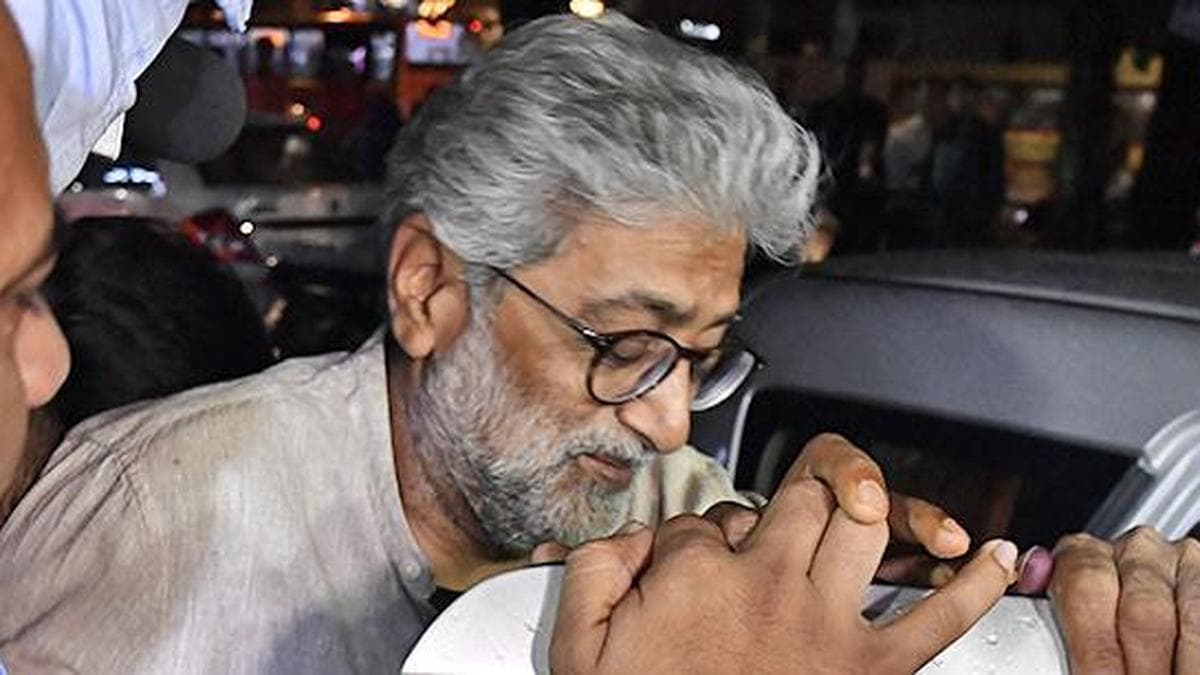
Bombay High Court observes that the activist feels uprooted in Mumbai, is in the 70s, facing financial strain; trial has remained stalled since 2018.