



Relevant for Exams
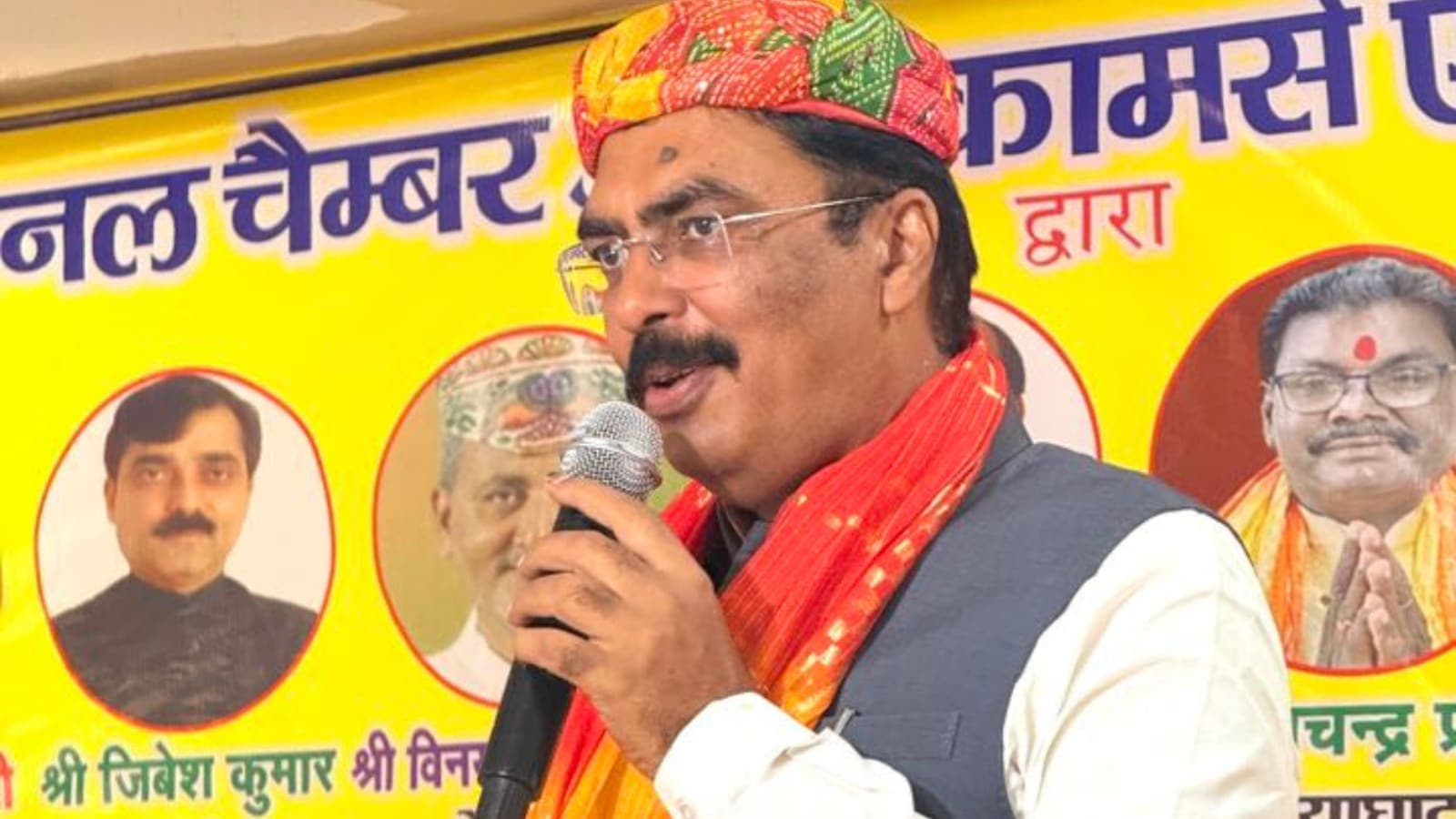
Sanjay Saraogi appointed new BJP Bihar state president after recent election win, signaling party reset.
Summary
The BJP has appointed Sanjay Saraogi as its new state president for Bihar, marking a significant organizational 'reset' a month after a 'landslide win'. This leadership change is crucial for understanding internal party dynamics and future political strategies in Bihar. For competitive exams, knowing key political appointments and party structures is important, especially for state-level examinations.
Key Points
- 1Sanjay Saraogi has been appointed as the new State President of the BJP in Bihar.
- 2This appointment signifies a 'reset' for the Bharatiya Janata Party's organizational structure in Bihar.
- 3The change in leadership occurred approximately one month after the party's recent 'landslide win'.
- 4The news focuses on the profile and background of the new state president, Sanjay Saraogi.
- 5The development indicates internal party changes within the BJP at the state level in Bihar.
In-Depth Analysis
The appointment of Sanjay Saraogi as the new State President of the Bharatiya Janata Party (BJP) in Bihar marks a significant organizational "reset" for the party, coming approximately a month after what has been described as a "landslide win." This development is not merely an internal party reshuffle but a strategic move with profound implications for Bihar's political landscape and, by extension, national politics.
**Background Context:** Bihar is a politically vital state, holding 40 Lok Sabha seats and known for its complex caste dynamics and coalition politics. The BJP has been a significant player in the state, often in alliance with the Janata Dal (United) - JDU, forming the National Democratic Alliance (NDA). The "landslide win" mentioned likely refers to the BJP's strong performance, perhaps within the NDA, in a recent electoral contest, such as the 2024 Lok Sabha elections where the NDA secured 30 out of 40 seats in Bihar, with BJP winning 17. Even after a strong electoral showing, political parties often undertake organizational changes to consolidate gains, address internal dynamics, prepare for future elections, or infuse new energy into the state unit. Such changes are particularly crucial in states like Bihar, where the political narrative can shift rapidly.
**What Happened:** Sanjay Saraogi, a seasoned politician and a four-time MLA from Darbhanga, has been appointed to lead the BJP's Bihar unit. This appointment signals a deliberate effort by the central leadership to bring in a new face and potentially a new approach to steer the party's agenda in the state. Saraogi's long tenure as an MLA suggests deep roots and understanding of Bihar's ground realities. His appointment implies a move to strengthen the party's organizational structure, possibly with an eye on the upcoming Bihar Assembly elections, which are typically held in late 2025.
**Key Stakeholders Involved:** The primary stakeholders include the **Bharatiya Janata Party's national leadership**, which makes such strategic appointments, and the **Bihar state unit of the BJP**, whose direction and morale will be shaped by the new president. **Sanjay Saraogi** himself is a key stakeholder, now tasked with unifying the party, expanding its base, and coordinating with alliance partners. The **Janata Dal (United) (JDU)** and other NDA constituents are also stakeholders, as the BJP's internal dynamics can impact the strength and cohesion of the ruling alliance. **Opposition parties**, primarily the Rashtriya Janata Dal (RJD) and the Congress, will closely observe these changes to calibrate their own strategies. Finally, the **electorate of Bihar** is the ultimate stakeholder, whose aspirations and political choices will be influenced by the effectiveness of the new leadership.
**Why This Matters for India:** Bihar's political stability and development have significant implications for India. As one of the most populous states, its trajectory impacts national demographic trends, economic indicators, and social development goals. A strong BJP unit in Bihar, effectively led, can contribute to the NDA's national strength and governance agenda. Politically, Bihar is a bellwether state, and the BJP's strategy here often reflects its broader approach to regional challenges and coalition management. Economically, a stable political environment is conducive to attracting investment and implementing central schemes, which can accelerate Bihar's development and contribute to India's overall growth. Socially, the BJP's outreach and policies under new leadership could influence caste equations and social harmony, critical aspects in a diverse state like Bihar.
**Historical Context:** Bihar has a rich history of socialist movements and coalition governments. The BJP's journey in Bihar has been marked by its gradual growth, often leveraging its alliance with the JDU. The state has seen numerous political realignments, with leaders like Nitish Kumar frequently changing alliances. The BJP's strategy has evolved from being a junior partner to becoming a dominant force within the NDA in Bihar. Organizational changes like Saraogi's appointment are part of this ongoing evolution, aimed at consolidating its position and expanding its independent strength, rather than solely relying on alliance partners.
**Future Implications:** Sanjay Saraogi's leadership will be tested in several areas. His immediate task will be to energize the party cadres, address any internal dissent, and prepare for the upcoming Assembly elections. His ability to navigate the complex alliance dynamics with the JDU and other partners will be crucial for maintaining NDA's dominance. The appointment could also signal a shift in the party's focus towards specific regions or social groups within Bihar. Success in Bihar under Saraogi's leadership could further solidify the BJP's national footprint, while challenges could force a re-evaluation of strategies. This reset is a proactive step by the BJP to ensure long-term political dominance and effective governance in a critical state.
**Related Constitutional Articles, Acts, or Policies:** While the appointment of a party president is an internal organizational matter, its broader context touches upon several constitutional and legal frameworks. The **Representation of the People Act, 1951**, governs the registration and regulation of political parties, ensuring democratic functioning and accountability. The concept of **federalism**, enshrined in the Indian Constitution, highlights the importance of state-level political developments impacting the national structure. **Article 170** deals with the composition of Legislative Assemblies, underscoring the significance of state elections. The role of political parties, though not explicitly defined in a single article, is fundamental to India's multi-party democratic system, as envisioned by the Constitution. Furthermore, the **Tenth Schedule (Anti-defection Law)**, while not directly related to appointments, plays a role in maintaining the stability of governments formed by alliances, which is a common feature in Bihar's political landscape.
Exam Tips
This topic falls under 'Indian Polity and Governance' (UPSC GS-II, State PSCs) and 'Current Affairs' (all competitive exams). Focus on the structure and functioning of political parties, the role of state units, and the significance of state elections.
Study related topics such as the electoral system in India, coalition politics, federalism, and the powers and functions of the Election Commission of India. Understand how state-level political changes can influence national dynamics.
Common question patterns include direct questions on major political appointments, analytical questions on the implications of such changes for party strategy or governance, and questions testing knowledge of constitutional provisions related to elections and political parties.