



Relevant for Exams
UPA, like NDA, weighed pausing MGNREGA work during farm season and state cost-sharing.
Summary
The news indicates that both the UPA and NDA governments have, at different times, considered significant policy adjustments for the Mahatma Gandhi National Rural Employment Guarantee Act (MGNREGA). These discussions included potentially pausing work during the agricultural season to address labour availability for farming and revising the cost-sharing mechanism with states. This highlights a long-standing policy debate on MGNREGA's implementation, financial sustainability, and its impact on the rural economy, making it crucial for understanding social welfare schemes for competitive exams.
Key Points
- 1The Mahatma Gandhi National Rural Employment Guarantee Act (MGNREGA) is a flagship rural employment scheme in India.
- 2Both the UPA and NDA governments have explored policy changes for MGNREGA, as per the article's title.
- 3One key policy consideration was pausing MGNREGA work during the peak agricultural season to ensure labour availability for farming.
- 4Another significant aspect discussed was the revision of the cost-sharing model between the Central government and state governments for MGNREGA implementation.
- 5MGNREGA guarantees 100 days of wage employment in a financial year to adult members of rural households willing to do unskilled manual work.
In-Depth Analysis
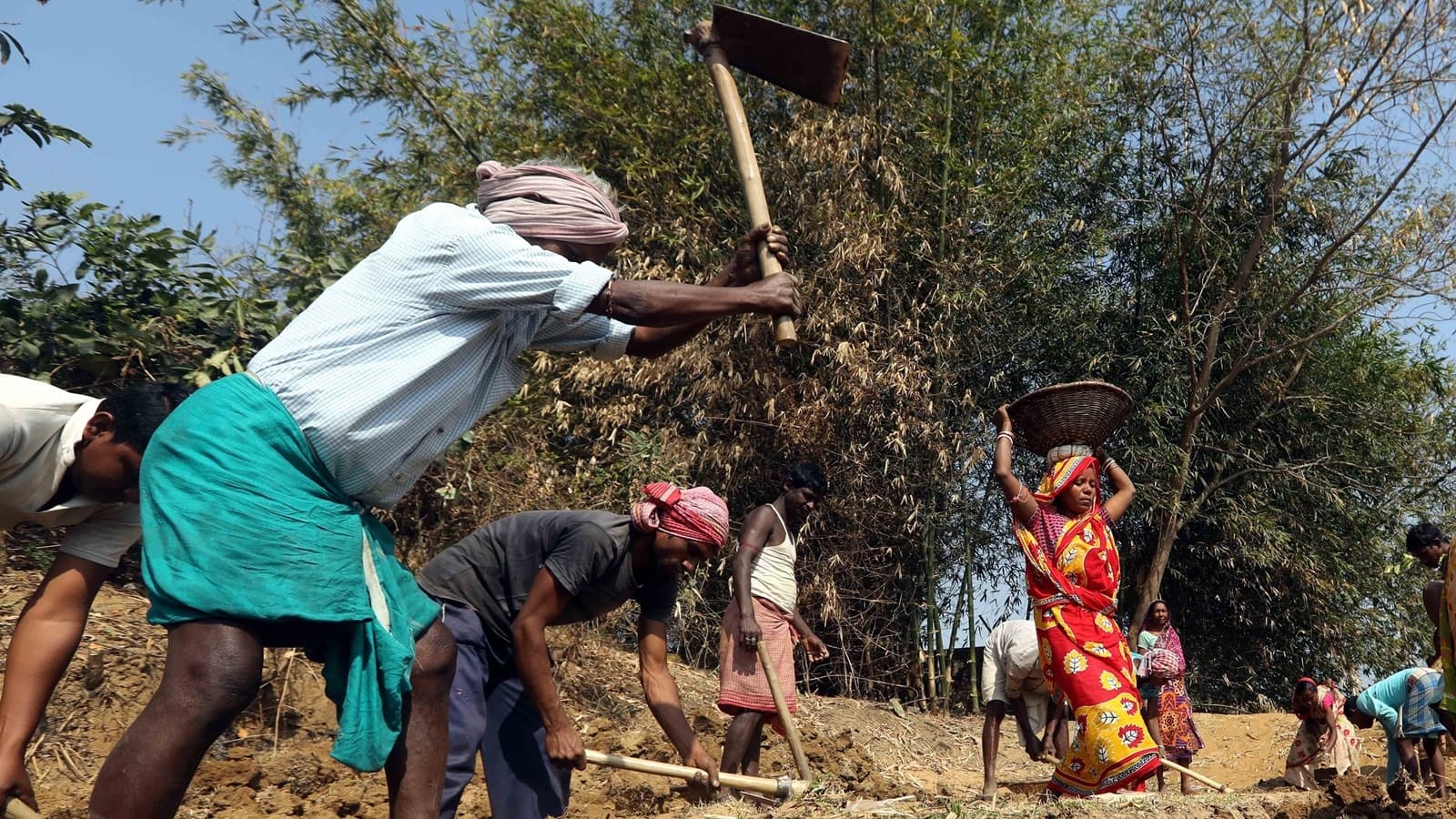
The Mahatma Gandhi National Rural Employment Guarantee Act (MGNREGA), enacted in 2005, stands as one of India's most ambitious and far-reaching social welfare programs. It guarantees 100 days of wage employment in a financial year to adult members of every rural household who volunteer to do unskilled manual work. Born out of the National Rural Employment Guarantee Act, 2005, the scheme aimed to address rural poverty, reduce distress migration, and create durable assets in rural areas. Its genesis lies in the long-standing demand for a 'right to work' and a social safety net, evolving from earlier employment generation schemes like the 'Food for Work Programme'.
The recent discussions, as highlighted, indicate that both the United Progressive Alliance (UPA) and National Democratic Alliance (NDA) governments have, at different junctures, considered significant policy recalibrations for MGNREGA. Two primary areas of deliberation were: first, the potential pausing of MGNREGA work during the peak agricultural season; and second, a revision of the cost-sharing mechanism between the Central and state governments. The rationale behind pausing work during agricultural seasons stems from concerns raised by the farming community and some economists about MGNREGA potentially drawing labour away from agriculture, leading to labour shortages and increased wage costs for farmers. This debate often pits the objective of providing a social safety net against the need to ensure adequate labour for agricultural productivity, especially during critical sowing and harvesting periods. The second point, cost-sharing, touches upon the fiscal federalism of India. Currently, the Central government bears 100% of the wage costs and 75% of the material costs, while state governments cover the remaining 25% of material costs and unemployment allowances. Discussions around revising this model often involve arguments about the financial sustainability of the scheme for the Centre, the need for greater state ownership and accountability, and the varying fiscal capacities of different states.
Key stakeholders in this policy debate include the Central Government, primarily the Ministry of Rural Development, which is responsible for policy formulation, funding, and overall oversight. State governments are crucial implementers, managing the scheme at the district and block levels, and bearing a part of the financial burden. Rural households and workers are the primary beneficiaries, whose livelihoods and access to guaranteed employment are directly affected by any policy changes. Farmers and the broader agricultural sector represent another significant stakeholder group, concerned about labour availability and agricultural wages. Economists and policy analysts contribute to the debate by providing data-driven insights on the scheme's impact, fiscal implications, and market distortions. Lastly, Panchayati Raj Institutions (PRIs) play a vital role at the grassroots level in identifying projects, mobilizing workers, and ensuring transparency in implementation, making them critical to the scheme's success.
This debate holds immense significance for India. Economically, MGNREGA has been credited with increasing rural wages, empowering women by providing independent income, and reducing distress migration. Any changes could profoundly impact rural incomes and potentially agricultural productivity. Socially, it serves as a critical safety net, particularly for vulnerable populations, and changes could affect their resilience to economic shocks. Politically, MGNREGA is a popular scheme with significant electoral implications, and any perceived dilution could face public backlash. The cost-sharing discussion also highlights the broader theme of fiscal federalism, impacting Centre-state financial relations and the allocation of resources for social sector schemes.
The historical context of MGNREGA is rooted in India's constitutional commitment to social justice and welfare. While the 'right to work' is not an explicitly enforceable fundamental right, it is enshrined in the Directive Principles of State Policy (DPSP). Specifically, Article 39(a) directs the state to secure for citizens the right to an adequate means of livelihood, and Article 41 mandates the state to make effective provision for securing the right to work, to education, and to public assistance in cases of unemployment. The MGNREGA Act, 2005, gives statutory backing to this 'right to work' in rural areas. Furthermore, the 73rd Constitutional Amendment Act, 1992, which institutionalized Panchayati Raj, provides the local governance framework essential for the decentralized implementation of schemes like MGNREGA.
Future implications of such policy adjustments are substantial. Pausing work during agricultural seasons might alleviate labour shortages for farmers but could also deprive vulnerable rural households of their guaranteed income during critical periods, potentially leading to increased distress. Revisions in cost-sharing could either enhance state ownership and efficiency or, if not carefully designed, burden fiscally weaker states, leading to uneven implementation. The core challenge is to balance the scheme's social welfare objectives with economic realities, ensuring its financial sustainability and its impact on the broader rural economy. Any reform must carefully consider its potential to either strengthen or dilute the 'right to work' aspect, which is fundamental to the scheme's ethos.
Exam Tips
This topic falls under GS Paper II (Social Justice, Government Policies & Interventions) and GS Paper III (Indian Economy, Rural Development, Employment). Be prepared for questions on the scheme's objectives, features, implementation challenges, and impact.
Study related topics such as other poverty alleviation programs (e.g., PMGSY, NRLM), labour reforms, agricultural policies, and the concept of fiscal federalism in India to understand the broader context and interlinkages.
Common question patterns include direct questions on MGNREGA's provisions, analytical questions on its effectiveness and challenges (e.g., 'critically analyze the impact of MGNREGA on rural livelihoods'), and questions on Centre-state financial relations in the context of social welfare schemes. Be ready to present both pros and cons of the scheme and proposed changes.