



Relevant for Exams
Content unavailable for article on 'Desi Oon' reviving India's forgotten wool.
Summary
This article, titled 'Back to the roots: How ‘Desi Oon’ is reviving India’s forgotten wool,' could address traditional wool revival. However, a detailed summary and specific exam-relevant facts cannot be generated as the article content was explicitly marked as 'No content available,' preventing analysis of its specific details and significance.
Key Points
- 1Specific details regarding 'Desi Oon' revival, including dates, names, or numbers, are unavailable as no article content was provided.
- 2Information on constitutional/legal provisions or government schemes related to traditional wool cannot be extracted without the text.
- 3The article's specific impact, stakeholders, or geographical focus remain unknown due to the absence of content.
- 4No exam-focused facts, percentages, or locations can be identified from the title alone.
- 5Assessment of the article's significance for competitive exams is limited by the lack of textual information.
In-Depth Analysis
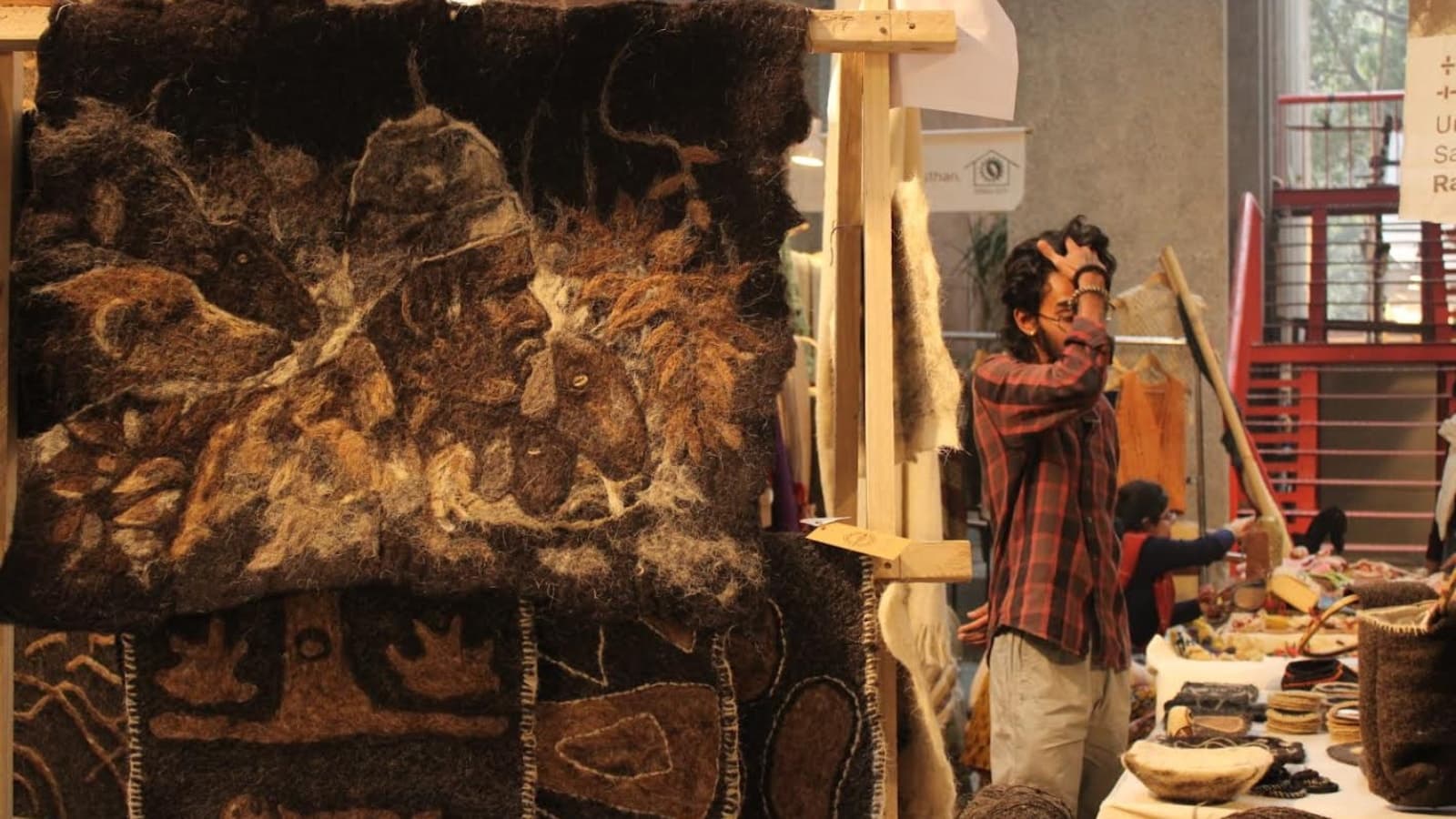
The article title, "Back to the roots: How ‘Desi Oon’ is reviving India’s forgotten wool," points to a significant movement aimed at rejuvenating India's indigenous wool industry. Despite the absence of specific article content, the theme itself is rich with implications for India's rural economy, cultural heritage, and sustainable development. This movement represents a crucial effort to bring back traditional practices that have long been overshadowed by industrialization and the influx of synthetic fibers.
**Background Context:** India boasts a rich legacy of sheep rearing and wool production, with diverse indigenous breeds like Marwari, Chokla, Malpura, and Deccani, each yielding unique wool types suited for various applications, from fine shawls to sturdy carpets. Historically, wool processing and weaving were integral to rural livelihoods, particularly in arid and semi-arid regions. However, this traditional sector faced a steep decline over the past few decades due to several factors: competition from cheaper, mass-produced synthetic fibers; lack of organized market linkages for indigenous wool; dwindling interest among younger generations in traditional crafts; and inadequate infrastructure for processing and value addition. The focus shifted towards fine merino wool imports for high-end textiles, leaving 'Desi Oon' largely unappreciated and its producers marginalized. The decline led to a loss of traditional skills, displacement of artisans, and economic hardship for pastoral communities.
**What is Happening (Implied Revival):** The 'Desi Oon' revival likely involves various initiatives to re-establish the entire value chain, from sheep rearing to finished products. This would include efforts to promote indigenous sheep breeds, improve wool collection and processing techniques, impart modern design and weaving skills to artisans, and create robust market access. Many non-governmental organizations (NGOs), social enterprises, and even some government-backed programs are working to connect pastoralists directly with weavers and designers, thereby ensuring fair prices and sustainable practices. The emphasis is on promoting the unique qualities of Indian wool – its warmth, durability, and eco-friendliness – to a discerning domestic and international market that increasingly values sustainable and ethically sourced products.
**Key Stakeholders Involved:** The revival of 'Desi Oon' involves a diverse group of stakeholders. **Shepherds and pastoral communities** are at the heart of this, as they are the primary producers of raw wool. **Artisans and weavers**, often women from rural Self-Help Groups (SHGs), transform the raw wool into finished products like blankets, carpets, apparel, and accessories. **NGOs and social enterprises** play a crucial role in skill development, design intervention, quality control, and market linkages. **Government bodies** such as the Ministry of Textiles, Ministry of Rural Development, and Animal Husbandry departments provide policy support, financial assistance through schemes like the National Handloom Development Programme, and promote breed improvement. **Designers and fashion brands** are also becoming significant stakeholders by incorporating 'Desi Oon' into their collections, thereby elevating its market appeal. Finally, **conscious consumers** who prioritize sustainability and ethical sourcing drive the demand for these products.
**Significance for India:** This movement holds immense significance for India. **Economically**, it promises to generate rural livelihoods, empower women artisans, and contribute to the 'Make in India' initiative by promoting local production. It can alleviate poverty in vulnerable pastoral and weaving communities. **Socially**, it helps preserve invaluable traditional knowledge, craftsmanship, and cultural heritage, preventing the erosion of unique regional identities. It also fosters community resilience and reduces migration from rural areas. **Environmentally**, 'Desi Oon' promotes sustainable practices, as it is a natural, biodegradable fiber, offering an eco-friendly alternative to synthetic textiles and reducing the carbon footprint of the textile industry.
**Historical Context and Constitutional Provisions:** India's textile traditions date back millennia, with wool featuring prominently in ancient texts and historical records. The post-independence era saw concerted efforts to support the handloom and handicraft sectors, recognizing their employment potential and cultural value, leading to the establishment of bodies like the All India Handloom Board. The constitutional framework also supports such initiatives. **Article 43** of the Directive Principles of State Policy (DPSP) mandates the state to endeavor to secure a living wage and conditions of work ensuring a decent standard of life for all workers, including promoting cottage industries. **Article 48** calls for organizing agriculture and animal husbandry on modern and scientific lines. Various government schemes under the **Ministry of Textiles** (e.g., SAMARTH Scheme for skill development, National Handloom Development Programme), **Ministry of Rural Development** (e.g., National Rural Livelihood Mission - NRLM), and **Ministry of Micro, Small & Medium Enterprises (MSME)** are directly relevant, aiming to empower artisans and boost rural economies. The **Geographical Indications of Goods (Registration and Protection) Act, 1999**, also offers a mechanism to protect and promote unique regional wool products, much like Pashmina or Kani shawls.
**Future Implications:** The 'Desi Oon' revival has the potential to transform India's rural economy and position the country as a leader in sustainable textile production. Future implications include creating a globally recognized brand for Indian indigenous wool, potentially leading to increased exports and foreign exchange earnings. However, challenges remain, such as ensuring consistent quality, scaling up production without compromising traditional methods, addressing climate change impacts on pastoralism, and competing with established global wool markets. The success of this movement hinges on sustained government support, innovative market strategies, and continued consumer awareness and demand for authentic, sustainable products. It also represents a broader trend towards valuing local resources and traditional knowledge in the face of globalization.
Exam Tips
This topic falls under GS Paper I (Art & Culture, Indian Society), GS Paper II (Government Policies & Interventions, Social Justice), and GS Paper III (Indian Economy, Agriculture, Environment & Ecology). Be prepared for questions across these areas.
Study related topics such as the Handloom and Handicraft sector, MSME policies, rural development schemes (e.g., NRLM), sustainable fashion, Geographical Indication (GI) tags, and pastoral communities in India. Understanding the challenges faced by traditional industries is crucial.
Common question patterns include direct questions on specific government schemes for artisans/rural development, analytical questions on the challenges and opportunities for traditional crafts, and essay-type questions on the role of cultural preservation in economic development or sustainable livelihoods. Focus on multi-dimensional analysis.
Memorize key constitutional articles like DPSP Article 43 and 48, and be aware of major ministries and their relevant schemes (Ministry of Textiles, Ministry of Rural Development, Ministry of MSME).
Understand the 'why' behind such initiatives – linking them to broader themes like inclusive growth, cultural preservation, environmental sustainability, and rural empowerment.