

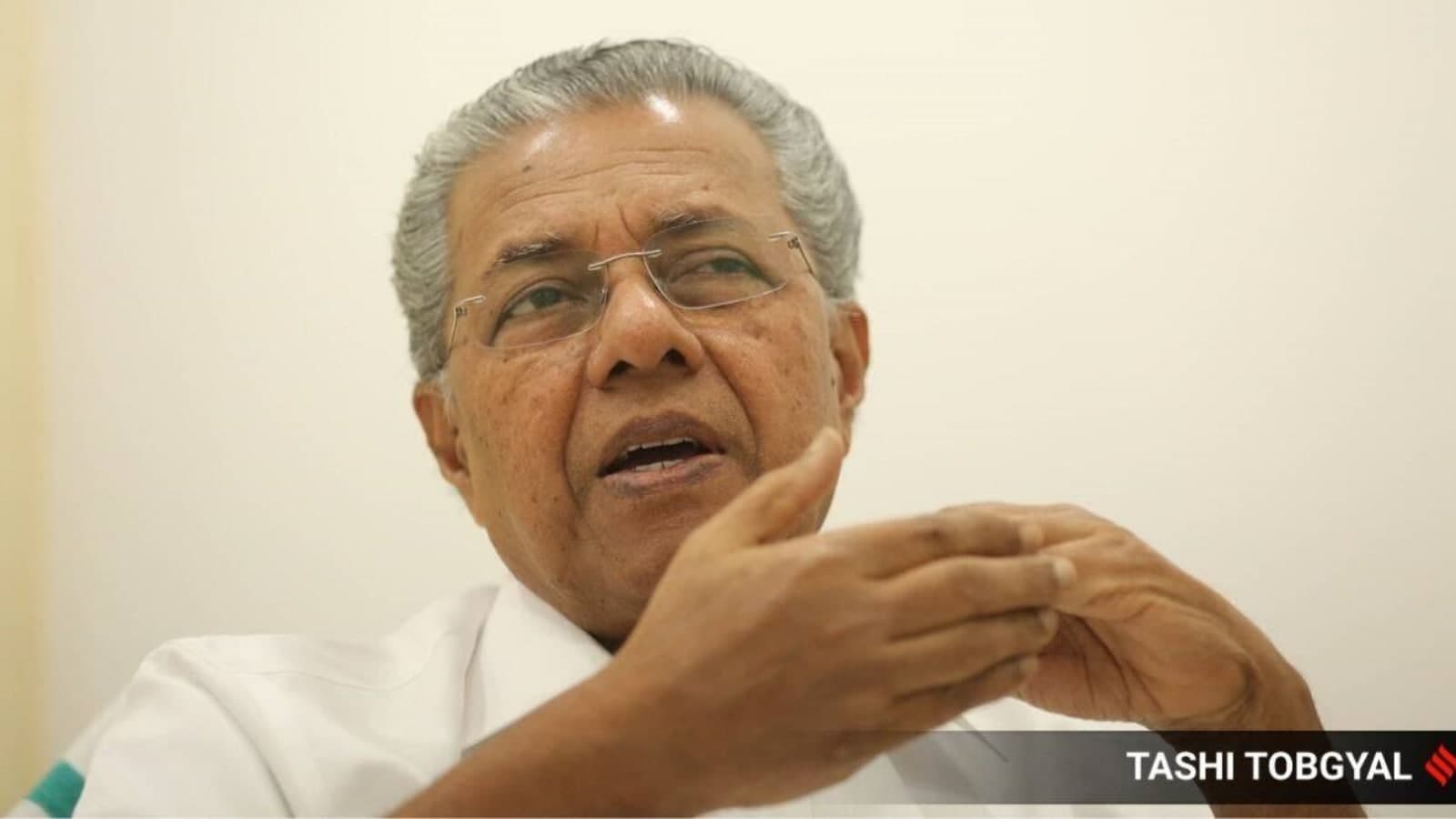


Content unavailable: CPI(M)'s decision on Congress alliance cannot be summarized.
Summary
The article explicitly states 'No content available', which prevents the generation of a detailed summary. Consequently, specific facts about the CPI(M)'s deliberation meeting, its decision to rule out an understanding with the Congress, or the political implications for competitive exam preparation cannot be extracted or analyzed.
Key Points
- 1No specific information available regarding the CPI(M)'s deliberation meeting.
- 2Details about the CPI(M)'s decision to rule out understanding with Congress are not provided.
- 3The article lacks facts on the reasons or implications of this political development.
- 4Specific dates, names, or constitutional provisions related to this news are absent.
- 5Due to missing content, no exam-relevant facts can be extracted for MCQs.
In-Depth Analysis
While the specific details of the CPI(M)'s recent deliberation meeting and its stated decision to rule out an understanding with the Congress are not provided in the article, this development, if true, represents a recurring pattern in India's complex multi-party democracy. The relationship between the Communist Party of India (Marxist) and the Indian National Congress has historically been characterized by an uneasy coexistence, marked by ideological friction, strategic alliances of convenience, and periodic estrangement. Understanding this dynamic is crucial for competitive exam aspirants.
**Background Context:**
The Communist movement in India, from which the CPI(M) emerged in 1964 following a split from the CPI, has always positioned itself as ideologically distinct from and often opposed to the centrist, capitalist-leaning Congress. The Congress, under Jawaharlal Nehru and later Indira Gandhi, pursued a socialist-inspired mixed economy, but the Left viewed these policies as insufficient and often contradictory to the interests of the working class and peasantry. In the initial decades post-independence, the Congress dominated national politics, while the Left carved out strongholds primarily in West Bengal, Kerala, and Tripura. Their political battles were often fierce, particularly in these states.
**What This Event Signifies (General Context):**
A decision by the CPI(M) to rule out an understanding with the Congress typically stems from a combination of ideological purity concerns and electoral strategy. The CPI(M) often fears that a close alliance with the Congress could dilute its distinct socialist identity and alienate its traditional voter base. From an electoral perspective, such a decision could be driven by the party's assessment of its own strength, the Congress's perceived weakness, or the specific political landscape in key states. For instance, in West Bengal, where both parties are significantly weakened, an alliance might be seen as mutually detrimental or, conversely, as a necessity to counter the dominant Trinamool Congress and BJP.
**Key Stakeholders Involved:**
1. **Communist Party of India (Marxist) (CPI(M)):** As a major Left party, its core ideology is Marxism-Leninism, advocating for a socialist transformation of society. Its decisions are guided by its Central Committee and Polit Bureau. Historically, it has been a significant force, particularly in states like West Bengal and Kerala, and its stance on alliances impacts the broader opposition strategy.
2. **Indian National Congress:** The grand old party of India, a centrist party with a broad ideological appeal. Facing significant electoral challenges nationally, the Congress often seeks alliances to consolidate anti-incumbency votes, particularly against the Bharatiya Janata Party (BJP).
3. **Other Opposition Parties:** Regional parties and other national parties often watch these developments closely, as the CPI(M)-Congress dynamic influences the formation of broader opposition fronts (like the erstwhile UPA or the more recent INDIA bloc) against the ruling BJP.
**Significance for India:**
This dynamic holds immense significance for Indian politics. Firstly, it impacts the **formation of opposition fronts**. For instance, the Left parties were crucial external supporters of the UPA-I government (2004-2008), providing a crucial majority, but withdrew support over the India-US Civil Nuclear Agreement. Such decisions can make or break potential coalitions aimed at challenging the ruling party. Secondly, it influences **electoral outcomes**, particularly in states where both parties have a presence. A lack of understanding can lead to a split in opposition votes, benefiting a third party. Thirdly, it highlights the **ideological fault lines** within India's political spectrum, demonstrating the challenges of forming a truly cohesive opposition when fundamental ideological differences persist. The inability to forge common ground often reflects deeper strategic disagreements on economic policies, foreign relations, and social issues.
**Historical Context:**
While often adversaries, the CPI(M) and Congress have also found common ground against a stronger common opponent. A notable instance was during the Emergency (1975-77), though the Left's opposition was nuanced. More recently, the CPI(M) provided crucial outside support to the Congress-led United Progressive Alliance (UPA) government from 2004 to 2008. This period saw policy influences from the Left, such as the push for the Mahatma Gandhi National Rural Employment Guarantee Act (MGNREGA). However, the relationship soured, leading to the Left's withdrawal of support over the nuclear deal, which they viewed as compromising India's independent foreign policy.
**Future Implications:**
Such a decision by the CPI(M) has significant implications for future elections, especially the upcoming Lok Sabha elections. It could complicate efforts to build a united opposition front against the BJP. If the CPI(M) maintains this stance, it might lead to multi-cornered contests in several constituencies, potentially fragmenting the anti-incumbency vote. This scenario often benefits the party with the largest consolidated vote share. It also forces other opposition parties to reassess their own strategies and potential alliances. Ideologically, it reinforces the CPI(M)'s commitment to its distinct political platform, even if it comes at the cost of broader electoral alliances. The constant flux in alliances underscores the fluid nature of Indian coalition politics and the challenges of balancing ideological principles with pragmatic electoral considerations.
**Related Constitutional Articles, Acts, or Policies:**
While no specific article directly governs party alliances, the broader framework of India's multi-party democracy is enshrined in the Constitution. The **Representation of the People Act, 1951**, governs the conduct of elections, registration of political parties, and electoral procedures, indirectly impacting alliance formation. The principles of **federalism** (Part XI of the Constitution) and the role of states are also relevant, as alliance decisions often have significant state-level implications. The very existence of diverse political parties and their right to form associations is an exercise of **Article 19(1)(c)** (Right to form associations or unions). The **Election Commission of India**, established under **Article 324**, plays a crucial role in regulating political parties and elections, including rules on party symbols and recognition, which are vital for alliance considerations.
Exam Tips
This topic falls under 'Indian Polity and Governance' in the UPSC Civil Services Syllabus (GS Paper II) and similar sections in State PSC exams. Focus on the structure and functioning of political parties, electoral reforms, and coalition politics.
Study the history of major political parties in India, their ideological bases, and significant alliances/fronts (e.g., National Front, United Front, UPA, NDA, INDIA bloc). Understand the factors that lead to party splits and mergers.
Common question patterns include: analyzing the reasons for the rise and fall of coalition governments; evaluating the impact of regional parties on national politics; discussing the challenges to opposition unity; and questions on electoral reforms and the role of the Election Commission. Be prepared to discuss the ideological differences between major parties and how they influence policy.
Pay attention to the role of Left parties in Indian politics – their historical influence, their decline in traditional strongholds, and their contemporary relevance in national and state politics. Understand their stance on economic policies and social issues.