



Relevant for Exams
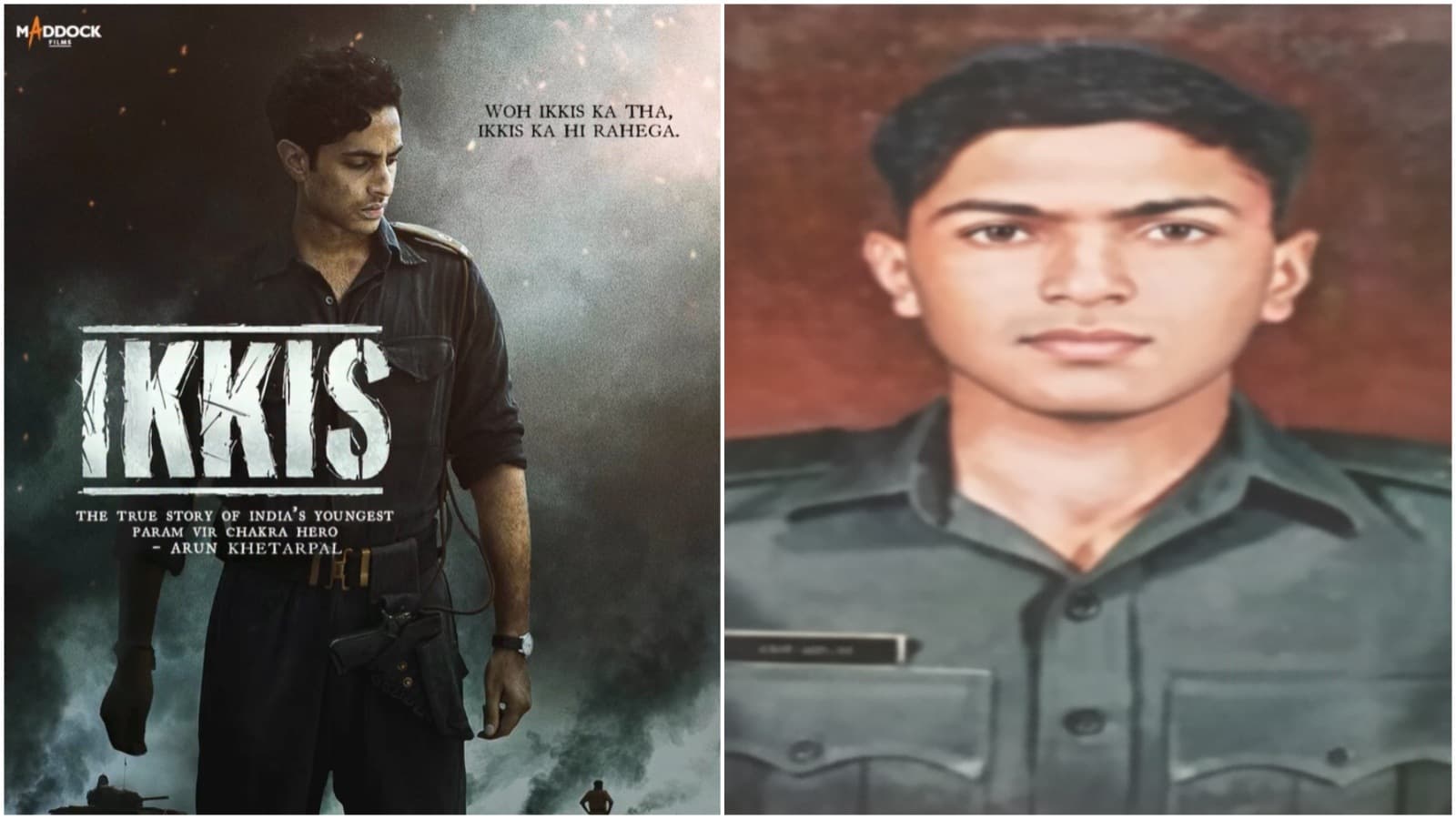
1971 War Param Vir Chakra hero's story to be adapted for silver screen, highlighting national bravery.
Summary
The news highlights the upcoming silver screen adaptation of a Param Vir Chakra awardee's story from the 1971 war. Such narratives are vital for competitive exams as they cover significant military history, national heroes, and India's highest gallantry awards. Understanding these stories provides insights into India's defence capabilities and historical conflicts, crucial for general awareness and specific defence-related exam sections.
Key Points
- 1The Param Vir Chakra (PVC) is India's highest military decoration, awarded for 'most conspicuous bravery or some daring or pre-eminent act of valour or self-sacrifice in the presence of the enemy'.
- 2The 1971 Indo-Pak War, also known as the Bangladesh Liberation War, was a pivotal conflict that led to the creation of Bangladesh.
- 3As of 2024, there have been 21 recipients of the Param Vir Chakra, with 14 awarded posthumously.
- 4Stories of PVC awardees from conflicts like the 1971 war are crucial for understanding India's military history and inspiring national pride.
- 5Such film adaptations help in preserving the legacy of national heroes and educating the public about their sacrifices.
In-Depth Analysis
The news of a silver screen adaptation of a Param Vir Chakra (PVC) awardee's story from the 1971 Indo-Pak War offers a crucial opportunity to delve into India's military history, national heroes, and the significance of gallantry awards. For competitive exam aspirants, understanding this topic goes beyond mere facts; it provides insights into India's strategic autonomy, defence capabilities, and the human element of warfare.
The 1971 Indo-Pak War, also known as the Bangladesh Liberation War, was a pivotal moment in South Asian history. Its background lies in the partition of British India in 1947, which created two wings of Pakistan – West Pakistan and East Pakistan – separated by over 1,600 km of Indian territory. Despite forming a majority of Pakistan's population, East Pakistan faced severe political, economic, and linguistic discrimination from the dominant West Pakistani establishment. The Bengali language movement, economic exploitation, and a lack of political representation fueled a strong sense of nationalism in East Pakistan. This culminated in the Awami League, led by Sheikh Mujibur Rahman, winning a landslide victory in the 1970 general elections, which the West Pakistani military junta refused to honour.
What followed was a brutal crackdown by the Pakistan Army, codenamed 'Operation Searchlight,' launched on March 25, 1971, against the Bengali population, leading to widespread atrocities and genocide. Millions of refugees poured into India, creating a massive humanitarian crisis and straining India's resources. India, under Prime Minister Indira Gandhi, initially provided humanitarian aid and covert support to the Mukti Bahini (Bengali guerrilla forces). As the refugee crisis escalated and international pressure mounted, India formally intervened in December 1971. The war lasted just 13 days, from December 3 to December 16, 1971. The Indian Armed Forces, demonstrating exceptional strategic planning and valour across land, air, and sea, achieved a decisive victory. This led to the unconditional surrender of approximately 93,000 Pakistani troops in Dhaka and the birth of a new nation, Bangladesh.
Key stakeholders in this conflict included India, led by Prime Minister Indira Gandhi and its formidable military under figures like Field Marshal Sam Manekshaw; Pakistan, under President General Yahya Khan and its military; and the people of East Pakistan, represented by the Mukti Bahini and political leadership like Sheikh Mujibur Rahman. Internationally, the United States, under President Richard Nixon, sided with Pakistan, even dispatching the USS Enterprise to the Bay of Bengal, while the Soviet Union provided crucial diplomatic and military support to India, reinforced by the Indo-Soviet Treaty of Peace, Friendship and Cooperation signed in August 1971.
This war holds immense significance for India. It established India as a dominant regional power and proved its strategic prowess. The successful liberation of Bangladesh was a major geopolitical achievement, enhancing India's credibility on the global stage. Domestically, it boosted national morale and solidified the image of the Indian Armed Forces. The war also highlighted India's commitment to humanitarian principles, as its intervention was largely driven by the refugee crisis and human rights violations. The Param Vir Chakra (PVC), instituted on January 26, 1950 (with retrospective effect from August 15, 1947), is India's highest military decoration for 'most conspicuous bravery or some daring or pre-eminent act of valour or self-sacrifice in the presence of the enemy.' As of 2024, there are 21 PVC recipients, with 14 awarded posthumously, many from the 1971 war and other post-independence conflicts. These awards are more than medals; they are symbols of the nation's gratitude and a source of inspiration for future generations.
From a constitutional perspective, the declaration of a National Emergency under Article 352 of the Indian Constitution was in effect during the 1971 war, allowing the Union government to exercise greater powers for national security. The President, as the Supreme Commander of the Armed Forces (Article 53), bestows gallantry awards, underscoring the state's recognition of military service. The subject of 'Defence of India' falls under Entry 2 of the Union List (List I) in the Seventh Schedule of the Constitution, granting the Parliament exclusive power to legislate on matters related to the armed forces.
Looking ahead, the retelling of such heroic stories through films and other media plays a vital role in preserving historical memory, educating the public, and inspiring youth to consider service to the nation. It reinforces national pride and an understanding of the sacrifices made to safeguard India's sovereignty and values. For India's defence policy, the lessons from 1971 continue to shape strategic thinking, emphasizing self-reliance, robust intelligence, and maintaining a strong military to address evolving security challenges in a complex geopolitical environment. The strong bilateral ties forged with Bangladesh post-1971 remain a cornerstone of India's 'Neighbourhood First' policy, while relations with Pakistan continue to be shaped by the unresolved issues and historical context of past conflicts.
Films like these ensure that the legacy of courage and sacrifice of PVC awardees continues to resonate, reminding us of the foundational values that underpin India's security and national identity.
Exam Tips
This topic primarily falls under General Studies Paper I (History - Post-Independence Consolidation and World History implications), General Studies Paper II (International Relations, Security, Constitutional Framework), and General Studies Paper III (Internal Security and Defence) for UPSC, SSC, and State PSC exams. For Defence exams, it is a core subject.
Study the causes, major events, and outcomes of all major Indo-Pak wars (1947-48, 1965, 1971, Kargil). Focus on key military operations, prominent leaders (both political and military), and the international context surrounding each conflict.
Memorize the names of all Param Vir Chakra recipients, especially those from the 1971 war, along with the specific acts of bravery for which they were awarded. Questions often involve matching PVC recipients with their respective wars or acts of valour.
Be prepared for analytical questions on the geopolitical impact of the 1971 war, India's role as a regional power, the humanitarian aspect of the conflict, and the evolution of India's foreign policy post-1971.
Understand the hierarchy of gallantry awards (PVC, MVC, VrC, Ashok Chakra, Kirti Chakra, Shaurya Chakra) and their respective criteria (wartime vs. peacetime, bravery vs. self-sacrifice).