



Relevant for Exams
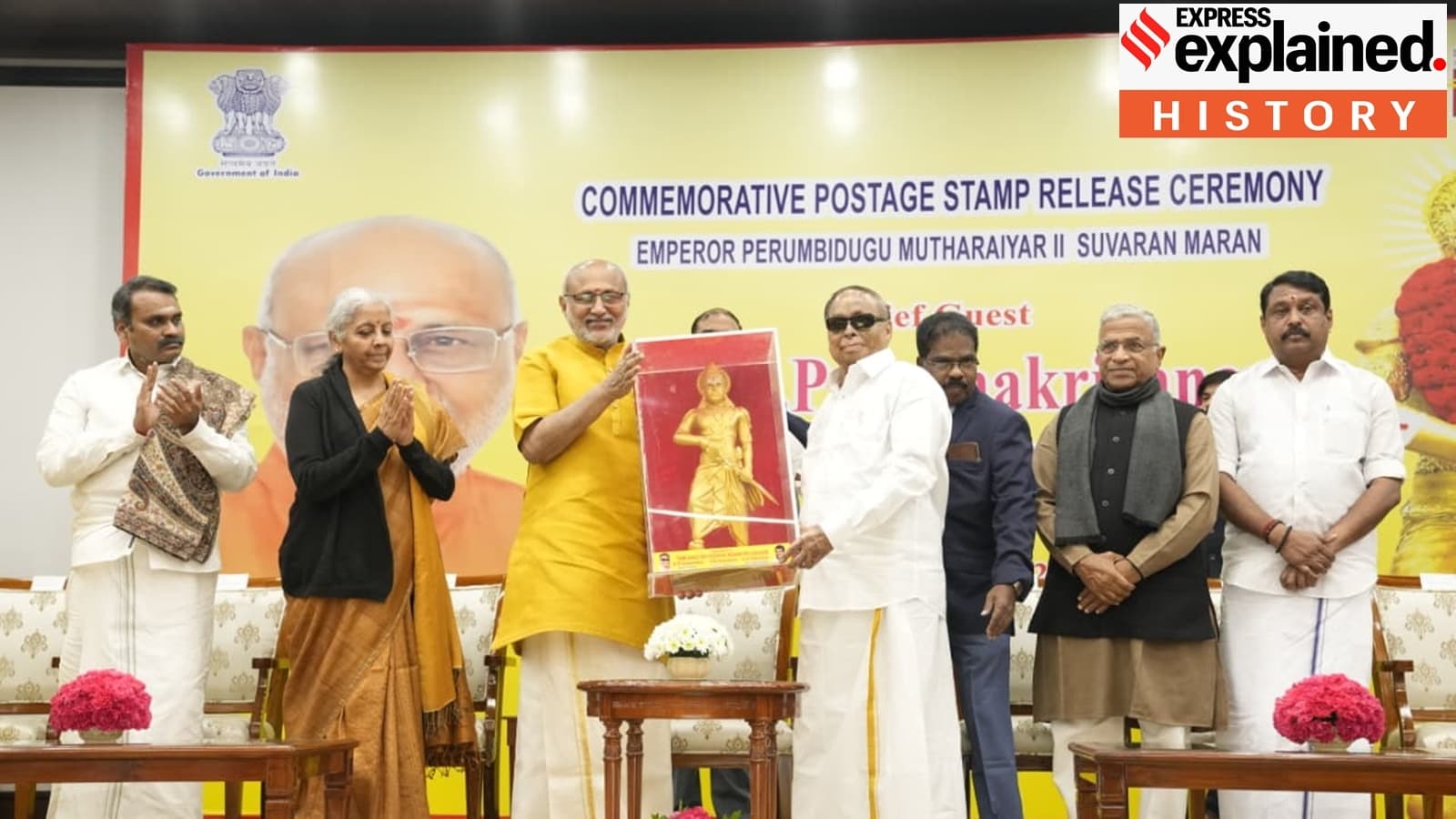
Content unavailable; unable to summarize V-P's stamp release for Perumbidugu Mutharaiyar.
Summary
Due to the unavailability of content for the article, a detailed summary explaining the event, its significance, and specific facts about Perumbidugu Mutharaiyar or the stamp release cannot be provided. The title indicates the Vice-President released a commemorative stamp for Perumbidugu Mutharaiyar, a historical figure, a topic generally relevant for history and current affairs sections in competitive exams.
Key Points
- 1No specific content was provided for detailed extraction of facts.
- 2Information regarding the historical figure Perumbidugu Mutharaiyar is unavailable from the article.
- 3Details about the stamp release, including its date and specific context, cannot be extracted.
- 4The Vice-President's involvement in the stamp release is mentioned in the title but lacks further article details.
- 5Specific achievements or the period of Perumbidugu Mutharaiyar's rule are not provided in the given content.
In-Depth Analysis
The release of a commemorative stamp by the Vice-President of India in honour of Perumbidugu Mutharaiyar is a significant event that transcends a mere philatelic release; it represents a deliberate effort to integrate regional historical narratives into the broader national consciousness. While the specific details of the event are not provided in the article, understanding the context of such an act is crucial for competitive exam aspirants.
**Background Context and Historical Significance:**
Perumbidugu Mutharaiyar was a prominent chieftain and ruler of the Mutharaiyar dynasty, which held sway over parts of present-day Tamil Nadu, particularly the Thanjavur and Tiruchirappalli regions, from roughly the 7th to the 9th centuries CE. This period was a dynamic one in South Indian history, characterized by the rise and fall of powerful kingdoms like the Pallavas, Pandyas, and the nascent Cholas. The Mutharaiyars, though often operating as vassals or allies to these larger powers, maintained significant autonomy and contributed notably to the region's cultural and architectural landscape. They were known for their strategic acumen, administrative capabilities, and patronage of arts and religion, particularly Jainism and early Shaivism. Their legacy includes several rock-cut temples and inscriptions, offering valuable insights into the social and political conditions of their time. Honoring such a figure through a national stamp serves to highlight the rich tapestry of India's regional histories, often overshadowed by more prominent empires.
**What Happened (Based on General Practice):**
Typically, when the Vice-President releases a commemorative stamp, it is part of a formal ceremony. Such events are orchestrated by India Post, under the Ministry of Communications, and involve dignitaries, historians, and often representatives from the community associated with the historical figure. The release usually coincides with an important anniversary – a birth or death centenary, or a significant historical milestone – aiming to educate the public about the individual's contributions and legacy. The Vice-President's presence elevates the event, signifying national recognition and the Union Government's endorsement of the figure's importance.
**Key Stakeholders Involved:**
1. **The Vice-President of India:** As the second-highest constitutional office, the Vice-President's involvement lends gravitas and national importance to the event, symbolizing the government's commitment to cultural heritage. This action falls under the broader scope of public duties and cultural promotion.
2. **India Post (Ministry of Communications):** This government department is responsible for the design, printing, and issuance of postage stamps. They meticulously research and approve subjects for commemorative stamps, ensuring historical accuracy and national relevance.
3. **Historians and Cultural Experts:** These individuals provide the academic foundation for such initiatives, validating the historical significance and contributions of figures like Perumbidugu Mutharaiyar.
4. **Regional Communities and Cultural Organizations:** Often, specific communities, in this case, the Mutharaiyar community in Tamil Nadu, advocate for the recognition of their historical heroes. Their persistent efforts play a crucial role in bringing such figures to national attention.
**Why This Matters for India:**
This initiative holds profound significance for India. Firstly, it promotes **cultural preservation and national integration**. By recognizing a regional hero, the government acknowledges the diverse contributions from all parts of the country, fostering a sense of shared heritage and pride. It helps in integrating regional histories into the national mainstream, preventing them from being confined to local narratives. Secondly, it serves an **educational purpose**, encouraging citizens, especially younger generations, to learn about lesser-known but historically vital figures. Thirdly, such acts often have **political implications**, as they resonate with specific regional communities and demonstrate the government's inclusivity in honoring diverse cultural legacies. This aligns with the spirit of **Article 51A(f)** of the Constitution, which mandates every citizen to value and preserve the rich heritage of our composite culture. Furthermore, it indirectly supports the directive principle under **Article 49**, which calls for the protection of monuments and places and objects of national importance, as historical figures are intrinsically linked to such heritage.
**Future Implications:**
The recognition of Perumbidugu Mutharaiyar could spur further academic research into the Mutharaiyar dynasty and other contemporary regional powers, leading to a more nuanced understanding of ancient and medieval South Indian history. It may also inspire state governments and local bodies to undertake more initiatives for heritage preservation, develop cultural tourism, and name public institutions after such figures. This trend of recognizing regional historical figures contributes to a more representative and inclusive national historical narrative, moving beyond a Delhi-centric view of Indian history. It encourages a deeper appreciation for India's federal cultural diversity and strengthens the bonds of national unity through shared historical pride.
Exam Tips
This topic falls under 'History of India' (Ancient/Medieval South India) and 'Indian Art and Culture' for UPSC and State PSC exams. For SSC/Railways/Defence, it's primarily 'General Awareness' (History, Personalities in News).
Study related topics like the major South Indian dynasties (Pallavas, Pandyas, Cholas) and their administrative, architectural, and cultural contributions. Understand the political landscape of South India from the 7th to 9th centuries CE.
Common question patterns include: 'Match the following' (ruler with dynasty/region), 'Which dynasty ruled the Thanjavur region before the Cholas?', 'Who was Perumbidugu Mutharaiyar associated with?', or direct questions on the significance of commemorative stamps and the role of the Vice-President.
Focus on the contributions of the Mutharaiyars to art and architecture (e.g., rock-cut temples) and their relationship with contemporary major powers. Also, be aware of the process and significance of releasing commemorative stamps in India.