



Relevant for Exams
Delhi-Dehradun Expressway update shared by Gadkari; specific opening details unavailable in content.
Summary
Union Minister Nitin Gadkari reportedly provided an update on the Delhi-Dehradun Expressway's opening, as per the title. However, the provided article content is empty, meaning no specific details regarding the project's timeline, progress, or other exam-relevant facts can be extracted. The expressway is a crucial infrastructure project, but its current status remains unclarified from this source.
Key Points
- 1The article title indicates Union Minister Nitin Gadkari shared an update on the Delhi-Dehradun Expressway.
- 2No specific details regarding the opening date or current progress of the Delhi-Dehradun Expressway are provided in the article content.
- 3The content lacks information on key project milestones, cost, length, or any new developments.
- 4Further exam-relevant facts about the Delhi-Dehradun Expressway cannot be extracted due to the absence of article content.
- 5The Delhi-Dehradun Expressway is a significant infrastructure project connecting Delhi and Dehradun, Uttarakhand.
In-Depth Analysis
The Delhi-Dehradun Expressway project, a significant undertaking in India's infrastructure development, represents the nation's commitment to enhancing connectivity and fostering regional growth. While the specific update from Union Minister Nitin Gadkari mentioned in the article title remains unclarified due to the lack of content, the project itself is a crucial case study for competitive exam aspirants, touching upon themes of governance, economy, environment, and federalism.
**Background Context and Evolution of India's Infrastructure Push:**
India's economic liberalization in the early 1990s spurred a rapid increase in trade, tourism, and population mobility, placing immense pressure on existing infrastructure. Recognizing that robust connectivity is a prerequisite for sustained economic growth, successive governments have prioritized infrastructure development. Major initiatives like the Golden Quadrilateral and North-South and East-West corridors during the Vajpayee era laid the groundwork for large-scale highway projects. The current government has further accelerated this drive through programs like the Bharatmala Pariyojana, launched in 2017, which aims to optimize the efficiency of freight and passenger movement across the country by constructing 83,677 km of roads. The Delhi-Dehradun Expressway fits squarely within this broader vision, addressing the long-standing need for a high-speed corridor between the national capital and Uttarakhand, a state known for its spiritual tourism, scenic beauty, and burgeoning industrial hubs.
**The Delhi-Dehradun Expressway: A Gateway to the Himalayas:**
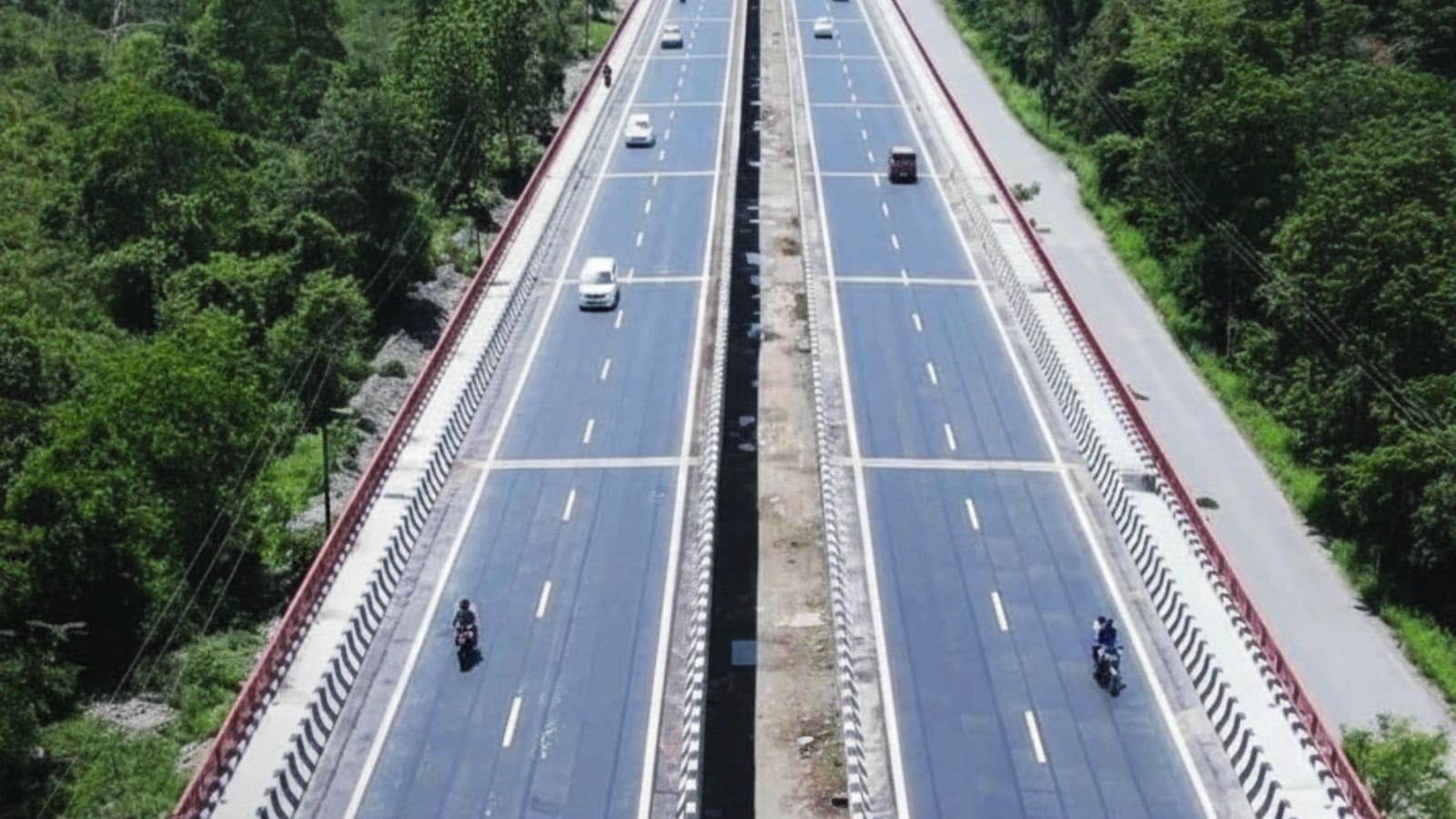
This 210-kilometer long, 6-lane access-controlled expressway is designed to drastically cut travel time between Delhi and Dehradun from approximately 6 hours to just 2.5 hours. Envisioned with an estimated cost of around Rs 12,000 crore, the project incorporates several innovative features, including a 12-kilometer elevated corridor for wildlife protection through the Rajaji National Park – a pioneering effort in sustainable infrastructure. It is divided into multiple packages, traversing through Delhi, Uttar Pradesh, and Uttarakhand, and aims to enhance connectivity not only to Dehradun but also to other important destinations like Haridwar and Rishikesh, thereby boosting tourism and economic activity in the region.
**Key Stakeholders and Their Roles:**
Several entities are instrumental in the conception, planning, and execution of such mega-projects. The **Ministry of Road Transport and Highways (MoRTH)**, led by Union Minister Nitin Gadkari, is the primary policymaking body, responsible for overall strategy, funding allocation, and project oversight. The **National Highways Authority of India (NHAI)** acts as the implementing agency, managing the engineering, procurement, and construction (EPC) contracts, and ensuring adherence to timelines and quality standards. **State Governments** (Delhi, Uttar Pradesh, and Uttarakhand) play a critical role in land acquisition, providing necessary local clearances, and ensuring law and order during construction. **Private contractors and construction companies** are the backbone of execution, often working under various models like Hybrid Annuity Model (HAM) or EPC. Lastly, **local communities** are significant stakeholders, both as beneficiaries of improved connectivity and as those potentially impacted by land acquisition and environmental changes, necessitating robust rehabilitation and resettlement efforts.
**Significance for India and Broader Themes:**
This expressway holds profound significance for India. **Economically**, it will act as a catalyst for growth, reducing logistics costs, improving market access for agricultural and industrial products from Uttarakhand, and significantly boosting tourism, a major revenue generator for the state. **Socially**, it will enhance accessibility to essential services like healthcare and education for communities along the corridor and improve road safety by diverting traffic from congested routes. **Environmentally**, the project presents a unique challenge, particularly with its passage through eco-sensitive zones. The construction of dedicated elevated corridors for wildlife movement exemplifies India's evolving approach to balancing development with environmental conservation, a critical aspect of sustainable development. This project also highlights the broader theme of **cooperative federalism**, as successful execution requires seamless coordination between the Union government and multiple state governments.
**Constitutional Provisions and Policy Frameworks:**
The legal and policy framework underpinning such projects is extensive. **Entry 23 of the Union List (List I) in the Seventh Schedule** of the Constitution empowers the Parliament to legislate on 'Highways declared by or under law made by Parliament to be national highways'. The **Land Acquisition, Rehabilitation and Resettlement Act, 2013 (LARR Act)** governs the process of land acquisition, ensuring fair compensation and rehabilitation for affected persons. Environmental clearances are mandated under the **Environmental (Protection) Act, 1986**, and projects involving forest land require approval under the **Forest (Conservation) Act, 1980**. The Bharatmala Pariyojana itself is a testament to the government's strategic planning under the **National Infrastructure Pipeline (NIP)** and more recently, the **PM Gati Shakti National Master Plan**, which aims for integrated planning and synchronized implementation of infrastructure projects to reduce logistics costs and boost economic activity.
**Future Implications:**
The successful completion of the Delhi-Dehradun Expressway will serve as a blueprint for future infrastructure projects, particularly those traversing ecologically sensitive regions. It will set a precedent for integrating wildlife protection measures into large-scale construction. Its operationalization is expected to transform regional connectivity, making Uttarakhand more accessible for business, tourism, and pilgrimage, potentially leading to further investment and development in the state. Challenges, however, will persist in terms of maintenance, further expansion to other remote areas, and ensuring that the economic benefits are equitably distributed among all sections of society. The project underscores India's ambition to build world-class infrastructure while navigating complex environmental and social considerations, a crucial balancing act for a developing nation.
Exam Tips
This topic falls under 'Indian Economy' (Infrastructure, Economic Development), 'Indian Polity' (Federalism, Governance, Acts like LARR), and 'Environment and Ecology' (Sustainable Development, Conservation) sections of the UPSC, State PSC, and SSC syllabi.
Study related government initiatives like Bharatmala Pariyojana, Sagarmala Project, National Infrastructure Pipeline, and PM Gati Shakti Master Plan in conjunction with this topic. Understand their objectives, scope, and funding mechanisms.
Pay attention to factual details such as the length, estimated cost, and states covered by major expressways. Also, be prepared for conceptual questions on the economic, social, and environmental impact of such projects, and the challenges involved in their implementation.
Familiarize yourself with key acts like the Land Acquisition, Rehabilitation and Resettlement Act, 2013, Environmental (Protection) Act, 1986, and Forest (Conservation) Act, 1980, as they are directly relevant to infrastructure development.
Practice mapping skills by identifying the geographical alignment of such expressways and connecting cities/regions. Questions may involve identifying states or major cities that benefit from specific infrastructure corridors.