



Relevant for Exams
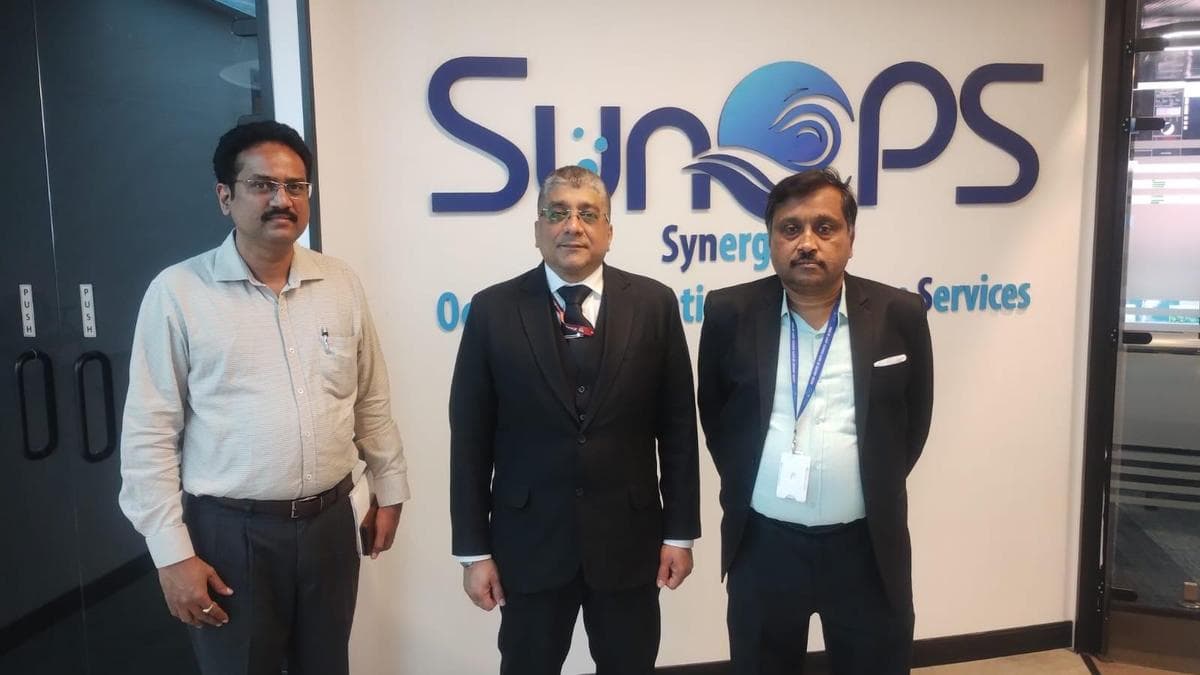
UNESCO Ambassador Vishal Sharma visits INCOIS, backs dedicated ocean observation satellite.
Summary
UNESCO Ambassador Vishal Sharma visited the Indian National Centre for Ocean Information Services (INCOIS), expressing support for a dedicated ocean observation satellite. This visit underscores India's commitment to advancing ocean science and international collaboration in leveraging satellite technology for crucial marine data. Such initiatives are vital for climate studies, disaster preparedness, and achieving sustainable development goals, making it relevant for environmental science and international relations topics.
Key Points
- 1UNESCO Ambassador Vishal Sharma undertook a visit to INCOIS.
- 2INCOIS stands for Indian National Centre for Ocean Information Services.
- 3Ambassador Sharma voiced support for the development of a dedicated ocean observation satellite.
- 4INCOIS operates under the Ministry of Earth Sciences, Government of India, focusing on ocean data and services.
- 5Dedicated ocean observation satellites are critical for monitoring climate change, marine ecosystems, and disaster warning systems.
In-Depth Analysis
The visit of UNESCO Ambassador Vishal Sharma to the Indian National Centre for Ocean Information Services (INCOIS) and his endorsement for a dedicated ocean observation satellite marks a significant moment for India's growing prowess and commitment in ocean science and technology. This event underscores the critical role of oceans in global climate, economy, and security, and India's strategic push to leverage advanced technology for better understanding and managing these vast resources.
**Background Context and Evolution of Ocean Science in India:**
India, with its vast coastline of over 7,500 km and a strategic position in the Indian Ocean Region (IOR), has long recognized the importance of marine science. Historically, India's maritime trade routes and coastal communities have been deeply intertwined with the ocean. Post-independence, the scientific exploration of oceans gained momentum. Institutions like the National Institute of Oceanography (NIO), established in 1966, laid the groundwork. However, the need for real-time, operational ocean data and services led to the establishment of the Indian National Centre for Ocean Information Services (INCOIS) in 1999, as an autonomous body under the Ministry of Earth Sciences (MoES). INCOIS's mandate is to provide ocean information and advisory services to various stakeholders, including fishermen, coastal communities, shipping industries, and disaster management agencies. This includes services like Tsunami Early Warnings, Ocean State Forecasts, Potential Fishing Zone advisories, and marine living resource information.
**The Significance of Ambassador Sharma's Visit and the Call for a Dedicated Satellite:**
Ambassador Vishal Sharma represents India at UNESCO, particularly within its Intergovernmental Oceanographic Commission (IOC), which plays a crucial role in promoting international cooperation in marine scientific research, ocean observation systems, and capacity building. His visit to INCOIS, a premier institution in India's oceanography landscape, and his vocal support for a dedicated ocean observation satellite, highlight several key aspects. Firstly, it signifies international recognition of India's capabilities and contributions to ocean science. Secondly, it emphasizes the global consensus on the urgent need for comprehensive and continuous ocean data. A dedicated satellite, unlike multi-purpose satellites that carry oceanographic payloads, would be specifically designed and optimized for various ocean parameters, ensuring higher resolution, more frequent data acquisition, and specialized sensor capabilities crucial for precise monitoring.
**Key Stakeholders and Their Roles:**
* **UNESCO (Intergovernmental Oceanographic Commission - IOC):** As a UN body, UNESCO/IOC facilitates global cooperation in marine science and observations. Ambassador Sharma's support aligns with UNESCO's broader goals for ocean sustainability and scientific understanding.
* **INCOIS (Indian National Centre for Ocean Information Services):** The operational hub for ocean data and services in India. It processes satellite data, in-situ observations, and numerical models to generate advisories. A dedicated satellite would significantly enhance its data input capabilities.
* **Ministry of Earth Sciences (MoES):** The parent ministry overseeing INCOIS, responsible for policy formulation, funding, and overall direction of earth system sciences, including oceanography and meteorology.
* **Indian Space Research Organisation (ISRO):** The national space agency is the technological backbone for any such satellite mission. ISRO has a strong track record with ocean observation satellites like the Oceansat series, and its expertise would be critical in designing, developing, and launching a dedicated satellite.
* **Coastal Communities and Industries:** The ultimate beneficiaries of improved ocean data, ranging from fishermen who rely on Potential Fishing Zone advisories to disaster management agencies that utilize tsunami and cyclone warnings.
**Why This Matters for India: Economic, Environmental, and Strategic Impact:**
Improved ocean observation is paramount for India across multiple dimensions. Environmentally, it is crucial for monitoring the impacts of climate change, such as sea-level rise, ocean acidification, and warming oceans, which directly threaten India's vulnerable coastal regions. Data from a dedicated satellite would enhance the accuracy of predictions for extreme weather events like cyclones and tsunamis, bolstering India's disaster preparedness and early warning systems, like the Indian Tsunami Early Warning Centre (ITEWC) operated by INCOIS. Economically, it feeds into India's 'Blue Economy' vision, which aims for sustainable utilization of marine resources. Better data supports sustainable fisheries management, offshore oil and gas exploration, coastal tourism, and maritime transport. Strategically, India's dominance and understanding of the Indian Ocean are vital for its geopolitical influence, maritime security, and the 'Security And Growth for All in the Region' (SAGAR) doctrine. Scientific leadership in ocean observation enhances India's stature as a net security provider and a responsible global player.
**Connecting to Broader Themes and Constitutional Provisions:**
The push for advanced ocean observation aligns with India's broader commitment to environmental protection and sustainable development. While there isn't a single constitutional article directly mandating ocean observation satellites, the spirit is reflected in the Directive Principles of State Policy (DPSP) and Fundamental Duties. Article 48A directs the State to 'endeavour to protect and improve the environment and to safeguard the forests and wildlife of the country.' Furthermore, Article 51A(g) mandates every citizen 'to protect and improve the natural environment including forests, lakes, rivers and wildlife, and to have compassion for living creatures.' These provisions underscore the state's and citizens' responsibility towards environmental stewardship, for which accurate scientific data is indispensable. Policies like the Environment (Protection) Act, 1986, and the Coastal Regulation Zone (CRZ) Notifications, which govern activities in coastal areas, rely heavily on precise oceanographic and coastal data. India's ambitious Deep Ocean Mission, launched in 2021, further exemplifies this commitment to comprehensive ocean exploration, resource mapping, and technological development.
**Future Implications:**
A dedicated ocean observation satellite would propel India into a new era of marine scientific research and operational oceanography. It would lead to more precise climate models, enhanced understanding of marine ecosystems, better management of fisheries, and improved safety for coastal populations. It could also foster greater international collaboration, positioning India as a leader in sharing critical ocean data and expertise, especially within the Indian Ocean Rim Association (IORA) countries. This initiative is a testament to India's holistic approach to national development, integrating scientific advancement with environmental responsibility and strategic foresight.
Exam Tips
This topic falls under GS Paper I (Geography - Oceanography, Climate Change) and GS Paper III (Environment & Ecology, Science & Technology - Space Technology, Disaster Management, Indian Economy - Blue Economy) for UPSC CSE. For SSC and State PSCs, focus on factual aspects like INCOIS's location, parent ministry, and major functions, and India's space missions related to oceanography.
Study related topics together: India's Deep Ocean Mission, Blue Economy initiatives, ISRO's earth observation satellites (e.g., Oceansat series, SARAL), UNCLOS, UNESCO-IOC, major ocean currents, climate change impacts on coastal areas, and disaster management mechanisms in India (e.g., NDMA, Tsunami Early Warning System).
Common question patterns include: 'Discuss the significance of ocean observation for India's Blue Economy and disaster preparedness.' 'Evaluate India's capabilities in oceanography and space technology with reference to its maritime interests.' 'What are the functions of INCOIS, and how does it contribute to national security and development?' Factual questions on INCOIS, MoES, ISRO, and specific satellite missions are common in preliminary exams.