

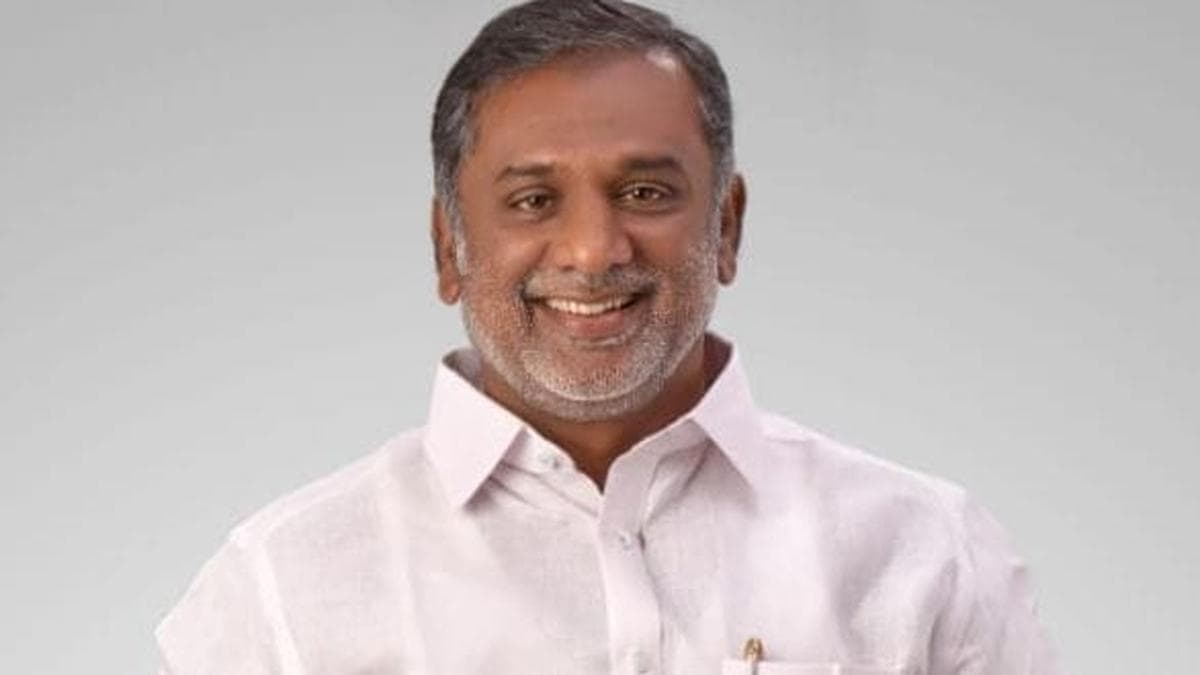


No content available for Thrikkakara municipality chairperson race analysis.
Summary
The provided article titled 'Thrikkakara municipality sees two contenders for chairperson post' lacks specific content. Consequently, detailed information regarding the candidates, the election process, or the broader significance of this local political development for competitive exam preparation cannot be extracted or analyzed. Without the actual text, no factual data can be presented.
Key Points
- 1The article's content is unavailable, preventing identification of the two contenders for the Thrikkakara municipality chairperson post.
- 2Specific dates or procedural details regarding the chairperson's selection in Thrikkakara municipality cannot be extracted due to missing content.
- 3No information on the political affiliations or backgrounds of the candidates for the Thrikkakara municipality chairperson is provided.
- 4Constitutional or legal provisions relevant to the Thrikkakara municipality chairperson election are not discussed in the absent content.
- 5The broader implications or significance of this local political event for competitive exams remain unknown due to the lack of article text.
In-Depth Analysis
While the specific details of the Thrikkakara municipality chairperson contest are unavailable, the article's title offers a valuable opportunity to delve into the foundational aspects of urban local self-governance in India. This topic is crucial for understanding India's democratic structure, its commitment to decentralization, and the mechanisms through which local development is fostered. The election of a chairperson in a municipality like Thrikkakara is not merely a local event; it is a microcosm of India's vibrant, multi-layered democracy in action.
**Background Context: The Evolution of Local Self-Governance**
India's journey towards empowering local bodies has been long and deliberate. Historically, local self-governance existed in various forms even in ancient India. However, its modern iteration gained shape under British rule, notably with Lord Ripon's Resolution of 1882, often hailed as the 'Magna Carta' of local self-government in India. Post-independence, despite Mahatma Gandhi's strong advocacy for 'Gram Swaraj' (village self-rule), local bodies initially struggled with constitutional recognition and financial autonomy. They were largely creatures of state legislation, often superseded or dissolved at the whim of state governments. The need for democratic decentralization became increasingly apparent to ensure grassroots participation and effective service delivery.
This led to the landmark 74th Constitutional Amendment Act of 1992, which granted constitutional status to Urban Local Bodies (ULBs). This amendment, along with the 73rd Amendment for Panchayati Raj Institutions, fundamentally transformed India's federal structure by adding a third tier of governance. It mandated the establishment of municipalities, defined their powers, and ensured regular elections, financial devolution, and a degree of autonomy. The Thrikkakara municipality, therefore, operates within this constitutionally mandated framework, where the election of its chairperson is a regular, essential democratic exercise.
**What Happens (General Municipal Election Process)**
In a typical municipality, citizens elect ward members (councillors) directly. The chairperson (or Mayor, in larger corporations) can be elected either directly by the electorate or indirectly by the elected ward members from among themselves. The method varies from state to state, as stipulated by state legislation enacted in conformity with the 74th Amendment. In an indirect election, as suggested by the 'two contenders for chairperson post' among elected members, the process involves the newly elected councillors voting to choose their leader. This process often involves intense political maneuvering, coalition-building, and negotiations among different political parties or independent candidates to secure the majority required for their candidate to win. The State Election Commission (SEC) plays a pivotal role in conducting these elections, ensuring fairness and transparency.
**Key Stakeholders Involved**
Several key stakeholders are involved in municipal governance and elections:
1. **Citizens/Voters:** They are the ultimate beneficiaries and participants, electing their ward representatives and, in some cases, the chairperson directly.
2. **Political Parties:** They nominate candidates, campaign, and form alliances to gain control of the municipal council, aiming to implement their local development agendas.
3. **Elected Ward Members (Councillors):** They represent their respective wards, voice local concerns, participate in municipal decision-making, and often elect the chairperson.
4. **Chairperson/Mayor:** The executive head of the municipality, responsible for implementing council decisions, overseeing administration, and representing the city.
5. **Municipal Bureaucracy:** The administrative wing, comprising officials responsible for day-to-day operations and service delivery.
6. **State Election Commission (SEC):** An independent body responsible for the superintendence, direction, and control of the preparation of electoral rolls and the conduct of all elections to municipalities.
7. **State Government:** Provides legislative framework, financial grants, and often exercises supervisory control over municipalities.
**Why This Matters for India: Significance of Local Self-Governance**
Local self-governance is the bedrock of participatory democracy and effective public service delivery. Municipalities are responsible for essential urban services such as water supply, sanitation, public health, urban planning, solid waste management, and road maintenance. A well-functioning municipality, led by an accountable chairperson, can significantly improve the quality of life for urban residents. It fosters accountability by bringing governance closer to the people, allowing citizens to directly engage with their representatives on local issues. Furthermore, strong ULBs are crucial for implementing national urban development policies and schemes, such as the Smart Cities Mission, Swachh Bharat Abhiyan, and Pradhan Mantri Awas Yojana (Urban). The financial health of municipalities, often dependent on state grants, local taxes, and user charges, is vital for their functioning, linking back to the recommendations of the State Finance Commission.
**Constitutional Provisions and Acts**
The 74th Constitutional Amendment Act, 1992, inserted **Part IX-A** (The Municipalities) into the Constitution, comprising **Articles 243P to 243ZG**. Key provisions include:
* **Article 243Q:** Constitution of Municipalities (Nagar Panchayats, Municipal Councils, Municipal Corporations).
* **Article 243R:** Composition of Municipalities, detailing the election of members and provisions for representation of certain categories.
* **Article 243S:** Constitution and composition of Ward Committees and Metropolitan Planning Committees.
* **Article 243T:** Reservation of seats for Scheduled Castes, Scheduled Tribes, and women (not less than one-third of the total seats, including reserved seats for SC/ST women).
* **Article 243U:** Duration of Municipalities (five years, with provisions for re-election within six months of dissolution).
* **Article 243W:** Powers, authority, and responsibilities of Municipalities, enabling state legislatures to endow them with powers for self-governance and implementation of schemes for economic development and social justice, relating to the 12th Schedule.
* **Article 243Y:** Constitution of a State Finance Commission to review the financial position of municipalities and make recommendations to the Governor.
* **Article 243ZA:** Elections to the Municipalities, vesting the superintendence, direction, and control of the preparation of electoral rolls and the conduct of all elections in the State Election Commission.
**Future Implications**
The successful functioning of municipalities like Thrikkakara is critical for India's urban future. As India urbanizes rapidly, the effectiveness of ULBs in managing growth, providing infrastructure, and ensuring sustainable development becomes paramount. Challenges persist, including inadequate financial resources, capacity deficits among elected representatives and bureaucracy, political interference, and the need for greater citizen engagement beyond elections. Future reforms are likely to focus on enhancing financial autonomy, strengthening administrative capabilities, leveraging technology for better service delivery, and fostering greater collaboration between municipal bodies and other levels of government. The election of a capable and visionary chairperson in any municipality is a step towards addressing these challenges and realizing the full potential of urban local self-governance in India.
Exam Tips
This topic falls under the 'Indian Polity' and 'Governance' sections of the UPSC Civil Services Exam (Prelims and Mains GS-II) and various State Public Service Commission exams. Focus on the constitutional provisions (Articles 243P to 243ZG) of the 74th Amendment Act.
Study the 73rd Constitutional Amendment Act (Panchayati Raj) alongside the 74th Amendment. Understand their similarities (e.g., State Election Commission, State Finance Commission, reservations) and differences (rural vs. urban, specific schedules).
Prepare for questions on the powers and functions of municipalities, challenges faced by Urban Local Bodies (ULBs) like financial constraints and capacity issues, and the role of the State Election Commission and State Finance Commission. Be ready to analyze the significance of decentralization for democracy and development.
Common question patterns include direct questions on constitutional articles, comparative analysis between 73rd and 74th Amendments, challenges and solutions for urban governance, and the role of specific bodies like the State Finance Commission.
Memorize the 12th Schedule of the Constitution, which lists the 18 functional items placed within the purview of municipalities. This is a frequent factual question in prelims.