



Relevant for Exams
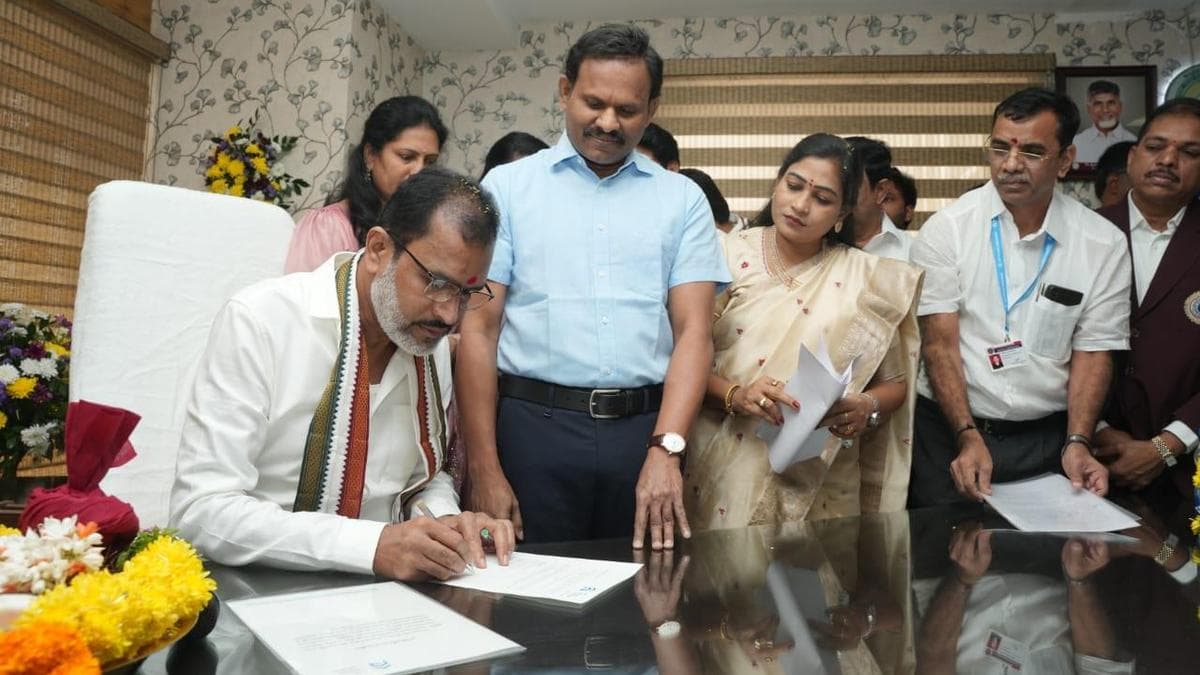
Shiva Srinivas appointed new Chairman of A.P. Police Housing Corporation.
Summary
Shiva Srinivas has been appointed as the new Chairman of the A.P. Police Housing Corporation. This is a significant state-level administrative appointment relevant for competitive exams, particularly those focusing on Andhra Pradesh. While specific details about his tenure or prior roles are not available, such appointments are crucial for understanding state government structures and personnel changes, often appearing in general awareness sections.
Key Points
- 1Shiva Srinivas has been appointed as the new Chairman.
- 2The appointment is for the A.P. Police Housing Corporation.
- 3This is a key administrative position within the state of Andhra Pradesh.
- 4The role involves overseeing housing projects for the police force in A.P.
- 5Such state-level appointments are important for State Public Service Commission exams.
In-Depth Analysis
The appointment of Shiva Srinivas as the new Chairman of the Andhra Pradesh Police Housing Corporation (APPOLHC) might seem like a routine administrative change, but it offers a valuable lens through which to understand state-level governance, public administration, and the critical role of specialized corporations in India. Such appointments are not merely about personnel changes; they reflect the state government's priorities, its approach to infrastructure development, and its commitment to the welfare of its uniformed services.
**Background Context and What Happened:** The Andhra Pradesh Police Housing Corporation is a state-owned enterprise established to address the housing and infrastructure needs of the Andhra Pradesh Police Department. Its primary mandate includes constructing residential quarters, police stations, training centers, and other essential facilities for police personnel across the state. The corporation plays a pivotal role in ensuring that police forces, who work tirelessly to maintain law and order, have adequate living and working conditions. This directly impacts their morale, efficiency, and overall effectiveness. Shiva Srinivas's appointment signifies a new leadership at the helm of this crucial corporation, tasked with steering its projects and policies. While specific details of his background or prior roles are not available, chairpersons of such corporations are typically individuals with significant administrative experience, often from the civil services or with a strong background in public works and infrastructure.
**Key Stakeholders Involved:** The primary stakeholders in this appointment and the functioning of APPOLHC include the **Government of Andhra Pradesh**, particularly the Home Department and the Finance Department, which provide policy direction and budgetary allocations. The **Andhra Pradesh Police Department** is the direct beneficiary and a key partner, as the corporation's projects are designed to meet their specific needs. **Shiva Srinivas** himself, as the new Chairman, is a central figure, responsible for the strategic direction, operational efficiency, and accountability of the corporation. The **employees of APPOLHC** are also stakeholders, as their work environment and project execution depend on the leadership. Ultimately, the **citizens of Andhra Pradesh** are indirect stakeholders, as an effective and well-supported police force contributes to overall public safety and governance.
**Why This Matters for India:** This appointment, while state-specific, highlights broader themes relevant across India. Firstly, it underscores the importance of **police welfare** as a critical component of national security and effective governance. Adequate housing is a basic necessity that significantly boosts the morale and retention of police personnel, a challenge faced by police forces nationwide. Secondly, it exemplifies the role of **state-level public sector undertakings (PSUs) and corporations** in delivering essential public services and infrastructure. Many states operate similar housing boards, infrastructure development corporations, and welfare bodies that are instrumental in implementing government policies at the grassroots level. Their efficient functioning is crucial for the success of various development programs. Thirdly, such appointments are part of the **administrative machinery** that ensures continuity and responsiveness in governance. The selection process, though often an executive decision, reflects the state government's administrative priorities and its vision for key sectors.
**Historical Context and Constitutional Provisions:** The concept of police housing and welfare initiatives gained significant traction post-independence, recognizing the demanding nature of police work. Over time, specialized bodies like police housing corporations were established to streamline and expedite these projects, moving beyond general public works departments. Constitutionally, **'Police'** falls under **Entry 2 of List II (State List)** of the Seventh Schedule, meaning state governments have the primary responsibility for policing, including the welfare of their police forces. The executive power of the state to create such corporations and make appointments derives from **Article 162** of the Constitution, which extends to matters on which the state legislature has the power to make laws. Appointments to public services and corporations are broadly governed by principles related to services under the state, though specific acts for the corporation would detail the chairman's appointment process. The broader goal of such welfare measures aligns with the **Directive Principles of State Policy (DPSP)**, particularly **Article 38**, which mandates the state to secure a social order for the promotion of welfare of the people.
**Future Implications:** Shiva Srinivas's tenure will likely focus on accelerating existing housing projects, potentially initiating new ones, and ensuring transparent and efficient utilization of funds. Given the perennial shortage of police housing in many states, his leadership will be crucial in bridging this gap in Andhra Pradesh. His actions could set precedents for project execution, quality control, and financial management within the corporation. Furthermore, the success of APPOLHC under his leadership could serve as a model for other states facing similar challenges in police infrastructure development. It also reflects the ongoing decentralization of service delivery through specialized agencies, a trend visible across various sectors in India's federal structure. This appointment is a small but significant piece in the larger puzzle of effective state governance and welfare delivery in India.
Exam Tips
This topic falls under 'Indian Polity and Governance' and 'Current Affairs' sections for UPSC CSE, State PSCs, SSC, and Banking exams. Focus on the structure and functions of state-level corporations and public administration.
Study related topics like the role of Public Sector Undertakings (PSUs) in India, police reforms, and welfare schemes for uniformed services. Understand the constitutional provisions related to state powers (Seventh Schedule, Article 162) and DPSP.
Common question patterns include: direct questions on recent appointments (for current affairs), questions on the functions of state housing corporations, or analytical questions on the importance of police welfare and infrastructure in good governance.
For State PSC exams (especially Andhra Pradesh PSC), specific details about APPOLHC, its mandate, and past projects could be important. Know the difference between a government department and a government corporation.
Be prepared for questions that link such appointments to broader themes of administrative efficiency, accountability, and the challenges faced by state governments in service delivery.