



Relevant for Exams
SHANTI Bill links nuclear accident liability to plant size, encouraging private sector in nuclear energy.
Summary
The SHANTI Bill aims to attract private sector investment in India's nuclear energy sector by establishing a clear liability framework. It mandates that nuclear plant operators will be penalized based on the size of the plants they operate, rather than the extent of damage caused by an accident. This policy shift is significant for competitive exams as it pertains to energy policy, private participation in strategic sectors, and legal provisions governing nuclear liability.
Key Points
- 1The legislation discussed is referred to as the 'SHANTI Bill'.
- 2The primary objective of the SHANTI Bill is to 'spur private sector to make, run nuclear plants'.
- 3The bill establishes a framework for penalizing operators in the event of a nuclear accident.
- 4Operators are required to compensate based on 'the size of plants operated'.
- 5Compensation under the SHANTI Bill is explicitly 'not the damage experienced in itself'.
In-Depth Analysis
India's journey towards energy security and sustainable development has long grappled with the complex interplay of demand, indigenous resources, and technological advancements. Nuclear energy, a clean and potent source, has always been a strategic imperative for the nation. However, its expansion, particularly with private sector involvement, has been hampered by stringent liability concerns, a legacy amplified globally by incidents like the Fukushima disaster in 2011. The proposed SHANTI Bill (likely an acronym or placeholder for a specific legislative draft, standing for 'Strengthening and Harmonizing Atomic Nuclear Technology Initiative' or similar, though the exact full form is not publicly confirmed) emerges against this backdrop, aiming to unlock private investment in India's nuclear power sector by recalibrating the liability framework.
Historically, India's nuclear program, initiated in the 1950s, has been predominantly a public sector enterprise, governed by the Atomic Energy Act, 1962. This Act vests the Department of Atomic Energy (DAE) and its public sector undertaking, Nuclear Power Corporation of India Limited (NPCIL), with the exclusive right to establish and operate nuclear power plants. While India has successfully developed a robust three-stage nuclear power program, the pace of expansion has been slower than desired, partly due to capital intensity and partly due to the complex issue of nuclear liability.
The critical turning point came with the 2008 Indo-US Civil Nuclear Agreement, which opened doors for international cooperation and technology transfer. However, the subsequent Civil Liability for Nuclear Damage Act (CLNDA), 2010, enacted to align India with international liability conventions (like the Convention on Supplementary Compensation for Nuclear Damage - CSC), became a significant deterrent. The CLNDA 2010, particularly Sections 17(b) and 46, allowed the operator (NPCIL) to seek recourse from suppliers in case of an accident, making international suppliers wary of investing in India due to potentially unlimited liability. This framework was designed to ensure victim compensation but inadvertently created an investment bottleneck.
The SHANTI Bill seeks to address this by proposing a radical shift: penalizing operators based on the *size of the plants operated* rather than the *extent of damage experienced* in an accident. This move aims to provide a predictable and quantifiable risk for private investors, making nuclear projects more attractive. By delinking compensation from the actual damage, the bill attempts to cap the financial exposure of operators, thereby reducing the perceived risk for private companies. This is crucial because private entities thrive on predictable regulatory environments and manageable financial risks.
Key stakeholders in this scenario include the Government of India (especially the DAE and the Prime Minister's Office, which oversees nuclear energy), NPCIL as the primary operator, potential Indian and international private sector investors, and international nuclear suppliers (e.g., from the US, France, Russia). Additionally, the Atomic Energy Regulatory Board (AERB) plays a crucial role in safety oversight, and environmental groups and the public remain significant stakeholders, concerned about safety standards and adequate victim compensation.
For India, the SHANTI Bill holds immense significance. Economically, it promises to inject much-needed private capital into a sector that requires massive investment, potentially accelerating capacity addition and creating jobs. Politically, it reinforces India's commitment to clean energy and its Intended Nationally Determined Contributions (INDCs) under the Paris Agreement, aiming for 50% cumulative electric power installed capacity from non-fossil fuel-based energy resources by 2030. Socially, increased nuclear power can enhance energy access and reduce reliance on polluting fossil fuels, improving public health and environmental quality. It also aligns with the 'Make in India' initiative by fostering domestic manufacturing and technological capabilities in the nuclear supply chain.
From a constitutional perspective, the subject of atomic energy falls under the Union List (Entry 6) of the Seventh Schedule, granting the Parliament exclusive legislative competence. The Atomic Energy Act, 1962, and the CLNDA, 2010, are manifestations of this power. The SHANTI Bill, if enacted, would likely amend or supersede parts of the CLNDA 2010 to implement its new liability framework. The Directive Principles of State Policy, particularly Article 51, which promotes international peace and security, can be broadly linked to India's responsible use of nuclear technology within international frameworks.
The future implications are substantial. If successful, the SHANTI Bill could lead to a surge in nuclear power generation, contributing significantly to India's target of achieving net-zero emissions by 2070. It could foster new public-private partnership models in a strategic sector and attract advanced reactor technologies. However, challenges remain, including ensuring robust safety standards, addressing public perception regarding nuclear risks, and balancing investor interests with comprehensive victim compensation in the event of a catastrophic accident. The success of this policy will depend on its careful implementation and the ability to build confidence among all stakeholders, ensuring both economic growth and public safety.
Exam Tips
This topic primarily falls under GS Paper III (Economy, Science & Technology, Environment & Ecology) for UPSC Civil Services Exam. For State PSCs, it's relevant for General Studies papers on economy and current affairs.
Study the Civil Liability for Nuclear Damage Act (CLNDA), 2010, in detail, understanding its key provisions, especially Sections 17(b) and 46, and compare them with the proposed SHANTI Bill's approach to liability. Understand the rationale behind both legislative frameworks.
Be prepared for questions on India's energy security strategy, the role of nuclear power in achieving climate change targets (e.g., India's INDCs), and the pros and cons of private sector participation in strategic sectors like nuclear energy. Common question patterns include 'critically analyze' or 'discuss the challenges and opportunities'.
Understand the institutional framework: Atomic Energy Act, 1962, Atomic Energy Regulatory Board (AERB), Department of Atomic Energy (DAE), and Nuclear Power Corporation of India Limited (NPCIL). Questions can be factual about these bodies or analytical about their roles.
Relate this to broader economic concepts such as Public-Private Partnerships (PPPs), Foreign Direct Investment (FDI) in critical infrastructure, and the concept of 'ease of doing business' in India.
Related Topics to Study
Full Article
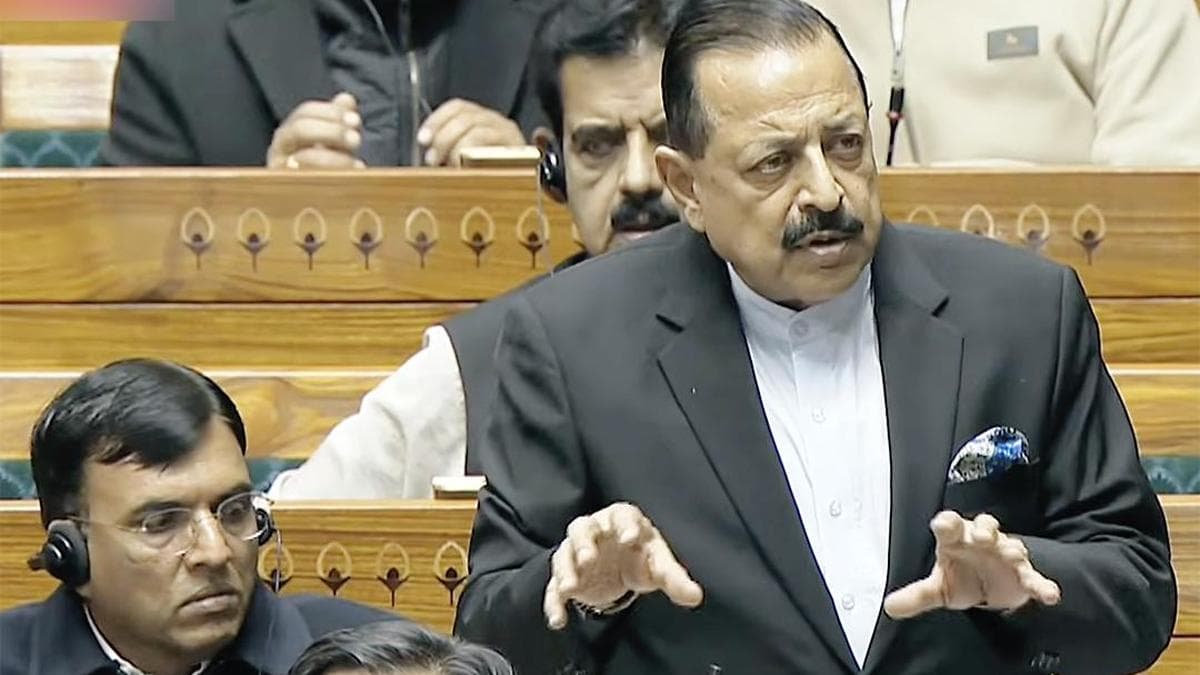
The SHANTI Bill penalises operators in case of a nuclear accident, requiring them to compensate on the basis of the the size of plants operated and not the damage experienced in itself