



Relevant for Exams
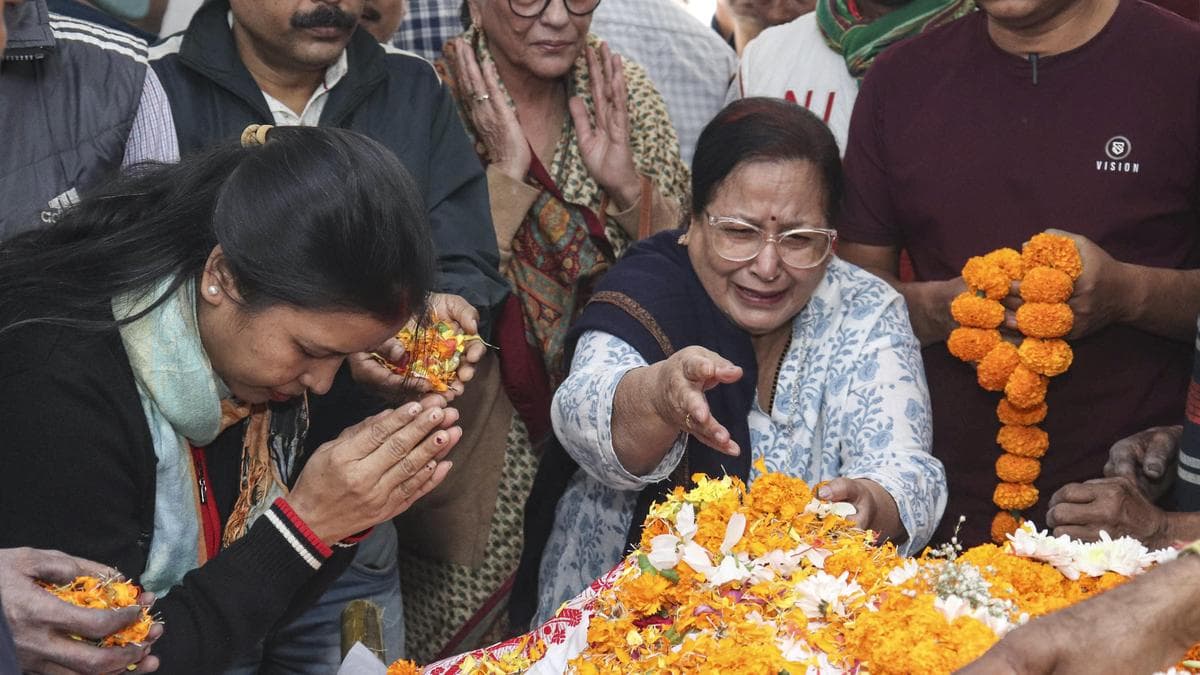
Assam editor and The Assam Tribune MD P.G. Baruah passes away; PM mourns.
Summary
Prafulla Gobinda Baruah, the esteemed editor and managing director of The Assam Tribune group, passed away on December 14. His demise marks the loss of a prominent figure in Indian journalism, particularly in Assam. The Prime Minister's condolence highlights his significant contribution to the media landscape, making this event relevant for general awareness sections in competitive exams, especially those focusing on personalities and regional news.
Key Points
- 1Prafulla Gobinda Baruah, also known as P.G. Baruah, passed away on December 14.
- 2He was a prominent editor from Assam.
- 3Baruah served as the managing director of The Assam Tribune group.
- 4The Assam Tribune is a significant media house in Assam.
- 5The Prime Minister of India expressed condolences on his demise.
In-Depth Analysis
The passing of Prafulla Gobinda Baruah, the esteemed editor and managing director of The Assam Tribune group, on December 14, 2023, marks a significant moment for Indian journalism, particularly for the North-Eastern region. His demise, mourned by the Prime Minister, underscores the profound impact an individual can have on regional media and, by extension, on the democratic fabric of the nation. This event, while seemingly a personal loss, carries broader implications for understanding the role of regional press, freedom of expression, and the unique challenges and contributions of media in India's diverse landscape.
**Background Context and What Happened:**
Prafulla Gobinda Baruah, often known as P.G. Baruah, inherited a formidable legacy. The Assam Tribune, a prominent English daily, was founded in 1939 by his father, Radha Govinda Baruah, a visionary who recognized the need for a strong journalistic voice in Assam. Over decades, The Assam Tribune grew to become not just a newspaper but an institution, a chronicler of Assamese life, politics, and culture. P.G. Baruah took the helm, continuing this tradition of journalistic integrity and regional focus. His leadership saw the publication navigate changing media landscapes, political upheavals, and socio-economic shifts in the state. His passing on December 14 signifies the end of an era for the publication and for many who grew up reading his group's newspapers. The Prime Minister's condolence highlights the national recognition of his contributions, moving his legacy beyond regional confines.
**Key Stakeholders Involved:**
At the forefront is **P.G. Baruah** himself, whose journalistic vision and editorial leadership shaped public discourse in Assam for decades. His role as managing director also meant overseeing the business aspects of a major media house. The **Assam Tribune Group**, comprising The Assam Tribune, Dainik Asam (Assamese daily), and Asam Bani (Assamese weekly), is a primary stakeholder. Its employees, journalists, and readers are directly affected by the transition. The **Government of India**, represented by the Prime Minister's condolences, acknowledges the importance of such figures in nation-building and upholding democratic values. Finally, the **people of Assam** are crucial stakeholders, as The Assam Tribune served as a vital source of information, a platform for their voices, and a custodian of their regional identity and interests.
**Why This Matters for India: Significance and Constitutional Links:**
P.G. Baruah's legacy is deeply intertwined with the **freedom of the press**, a cornerstone of Indian democracy enshrined under **Article 19(1)(a) of the Indian Constitution**, which guarantees the freedom of speech and expression. A robust and independent press, especially regional media, acts as a crucial check on power, informs the electorate, and facilitates public discourse. The Assam Tribune, under Baruah's leadership, consistently championed regional issues, often bringing to national attention the unique challenges of the North-East, from insurgency to development deficits. This role is vital for national integration, ensuring that diverse regional voices are heard and acknowledged in the broader national narrative. His contribution underscores how regional media houses are not just local news providers but essential components in fostering an informed citizenry and strengthening democratic processes across India's vast and varied landscape. They play a critical role in cultural preservation by promoting local languages and traditions.
**Historical Context and Broader Themes:**
The history of The Assam Tribune mirrors the evolution of Indian journalism. Founded before independence, it witnessed and reported on India's struggle for freedom, the challenges of nation-building, and the complexities of regional identity formation in the post-colonial era. The North-East, in particular, has faced unique historical challenges, including issues of identity, migration, and insurgency. Media houses like The Assam Tribune have often walked a tightrope, balancing reporting with regional sensitivities and national interests. P.G. Baruah's leadership during such periods demonstrated the critical role of an independent press in maintaining stability and fostering understanding.
**Future Implications:**
The passing of a long-standing editor and managing director raises questions about **succession and the future trajectory** of The Assam Tribune Group. In an increasingly digitized and competitive media environment, regional newspapers face immense pressure from national dailies, digital news platforms, and financial constraints. The challenge for The Assam Tribune will be to maintain its editorial independence, local relevance, and financial viability while adapting to new technologies and reader habits. This event also highlights the broader implications for **regional journalism in India**. The loss of experienced leaders like P.G. Baruah underscores the need for nurturing new journalistic talent and ensuring the sustainability of regional media, which is crucial for a truly pluralistic and democratic India. The future will see a greater emphasis on digital transformation, diversified revenue streams, and maintaining trust in an era of misinformation.
In conclusion, P.G. Baruah's life and work serve as a powerful reminder of the enduring importance of dedicated journalism and the indispensable role of regional media in upholding democratic values, preserving cultural identity, and giving voice to diverse communities across India.
Exam Tips
This topic falls under GS Paper I (Indian Heritage and Culture - Personalities, History of Press) and GS Paper II (Polity - Freedom of Press, Role of Media). Be prepared for questions on prominent personalities in Indian journalism and the significance of regional media.
Study related topics such as Article 19(1)(a) of the Indian Constitution (Freedom of Speech and Expression), the role and functions of the Press Council of India, and the historical evolution of the press in India, especially its role during the freedom struggle.
Common question patterns include biographical questions (e.g., 'Who was P.G. Baruah and what was his contribution?'), analytical questions on the importance of regional media, and questions linking press freedom to constitutional provisions. You might also encounter questions on challenges faced by the media industry today.
For State PSC exams, focus on the specific contributions of P.G. Baruah to Assamese journalism and the socio-political impact of The Assam Tribune in the region. Understand the unique context of North-East India.
Keep an eye on current affairs related to media ethics, regulatory bodies, and government policies affecting the press, as they can be linked to the broader theme of media's role in a democracy.
Related Topics to Study
Full Article
Prafulla Gobinda Baruah, also the managing director of The Assam Tribune group, breathed his last on December 14 night