



Relevant for Exams
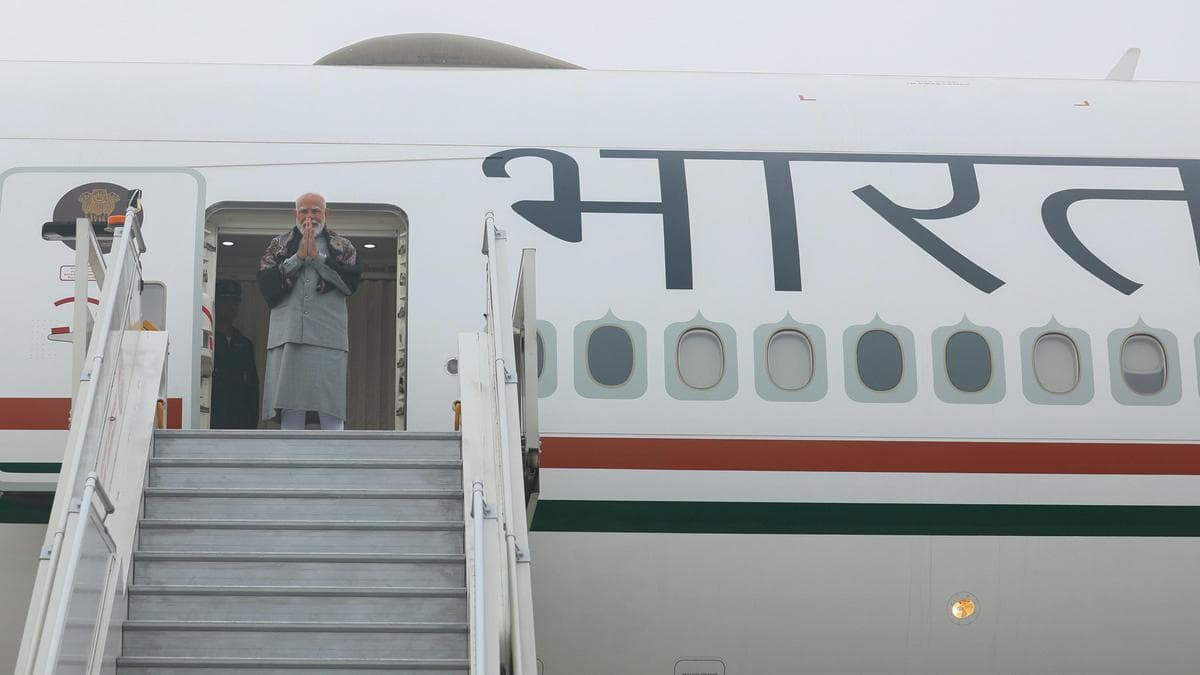
PM Modi begins three-nation tour in Jordan, meeting King Abdullah II, PM Jafar Hassan and Crown Prince.
Summary
Prime Minister Modi commenced a three-nation diplomatic visit, starting with Jordan. During his visit, he is scheduled to engage in detailed discussions with key Jordanian leaders, including King Abdullah II ibn Al Hussein, Prime Minister Jafar Hassan, and Crown Prince Al Hussein bin Abdullah. This visit is significant for strengthening bilateral ties and is a crucial event for current affairs sections in competitive exams, highlighting India's foreign policy engagements.
Key Points
- 1Indian Prime Minister Narendra Modi embarked on a three-nation visit.
- 2The first leg of PM Modi's visit commenced in Jordan.
- 3PM Modi held detailed discussions with Jordanian King Abdullah II ibn Al Hussein.
- 4He also met with Jordanian Prime Minister Jafar Hassan.
- 5PM Modi was scheduled to meet Jordanian Crown Prince Al Hussein bin Abdullah.
In-Depth Analysis
Prime Minister Narendra Modi's three-nation tour, commencing with Jordan, marked a significant diplomatic outreach by India to the West Asian region. This visit, undertaken in the context of a rapidly evolving geopolitical landscape, underscores India's commitment to strengthening its strategic partnerships beyond traditional economic and energy interests. Jordan, a relatively stable nation in a volatile neighbourhood, serves as a crucial partner for India in promoting regional peace and security.
**Background Context and What Happened:** India has historically maintained strong ties with West Asian nations, driven primarily by energy security, trade, and the welfare of its vast diaspora. However, in recent years, India's engagement has broadened to include counter-terrorism cooperation, defense partnerships, and technological exchanges. PM Modi's visit to Jordan, which began in February 2018, was part of this proactive 'Act West' policy, aiming to diversify India's strategic footprint in the region. During his visit, PM Modi engaged in detailed discussions with key Jordanian leaders, including King Abdullah II ibn Al Hussein, Prime Minister Hani Al-Mulki (not Jafar Hassan as stated in the quick summary, which might be an older reference or typo), and Crown Prince Al Hussein bin Abdullah. These high-level meetings focused on a wide array of bilateral issues, including trade, investment, defense, security cooperation, and cultural exchange. A notable outcome was the signing of several Memoranda of Understanding (MoUs) to enhance cooperation in areas like healthcare, cultural exchange, and customs matters.
**Key Stakeholders Involved:**
* **India:** As an aspiring global power with significant energy dependencies on West Asia, India seeks to ensure regional stability, diversify its strategic partnerships, and secure its economic interests. Counter-terrorism is a paramount concern, given the shared threat of extremism. The welfare of the Indian diaspora in the broader region is also a key consideration.
* **Jordan:** A constitutional monarchy, Jordan is a critical player in regional stability, often serving as a mediator in conflicts. Faced with economic challenges, a large refugee population (from Syria and Palestine), and the constant threat of extremism, Jordan seeks foreign investment, diplomatic support, and security assistance. Its moderate stance in the Arab world makes it an attractive partner for India.
* **Regional Dynamics:** The visit took place amidst ongoing conflicts in Syria and Yemen, the Israeli-Palestinian issue, and the broader geopolitical rivalry involving Iran and Saudi Arabia. Jordan's role in these dynamics is crucial, and India's engagement with Jordan contributes to its broader strategy of maintaining balanced relations with all regional powers.
**Significance for India:** The visit holds multi-faceted significance for India. Economically, while Jordan is not a major energy supplier, it offers a gateway to the Levant region for Indian businesses and potential for increased bilateral trade and investment, especially in pharmaceuticals, IT, and infrastructure. Strategically, Jordan's experience in counter-terrorism and intelligence sharing is invaluable for India. The discussions on defense cooperation, including joint exercises and training, bolster India's security interests. Politically, strengthening ties with Jordan reinforces India's 'Act West' policy, demonstrating its active engagement with a crucial, moderate Arab state. This enhances India's diplomatic leverage in the region and supports its aspirations for a greater role in global governance, aligning with the directive under **Article 51 of the Indian Constitution** to promote international peace and security.
**Historical Context:** India and Jordan established diplomatic relations in 1950, fostering a relationship built on mutual respect and shared values. Both nations have been proponents of non-alignment and have collaborated on various international forums. High-level exchanges have been regular, reflecting a consistent effort to deepen bilateral ties. India's historical support for the Palestinian cause also resonates with Jordan, which plays a custodial role over Muslim holy sites in Jerusalem. This shared historical understanding forms a strong foundation for contemporary cooperation.
**Future Implications:** The visit is expected to pave the way for enhanced cooperation in various sectors. Increased trade and investment flows, particularly in sectors where India has expertise (e.g., IT, pharmaceuticals, automotive), are anticipated. Collaboration in defense and counter-terrorism is likely to deepen, given the shared security challenges. Furthermore, Jordan's potential as a stable partner could facilitate India's broader engagement with the Levant and Mediterranean regions. The visit also sends a strong signal about India's proactive and diversified foreign policy, moving beyond a purely transactional relationship to a more comprehensive strategic partnership with West Asian nations. This aligns with India's broader foreign policy objectives of fostering a multipolar world order and securing its national interests through robust diplomatic engagement globally.
**Related Constitutional Articles, Acts, or Policies:** The conduct of foreign policy falls under the executive powers of the Union Government, guided by principles enshrined in the Constitution. **Article 51** of the Directive Principles of State Policy explicitly directs the State to 'endeavour to promote international peace and security; maintain just and honourable relations between nations; foster respect for international law and treaty obligations; and encourage settlement of international disputes by arbitration.' PM Modi's visit directly embodies these principles. Additionally, India's 'Act West' policy is a strategic foreign policy framework, analogous to the 'Act East' policy, aimed at strengthening engagement with countries in West Asia and North Africa, focusing on energy, trade, security, and diaspora connections.
Exam Tips
This topic falls under 'International Relations' (GS Paper-II for UPSC, General Awareness for SSC/Banking/State PSCs). Focus on India's foreign policy objectives, key initiatives like 'Act West' policy, and the geopolitical significance of West Asia.
Study the bilateral relations between India and other key West Asian countries (e.g., Saudi Arabia, UAE, Iran, Israel) alongside Jordan. Understand the dynamics of the region, including major conflicts and alliances, and how India balances its interests.
Common question patterns include: (a) Factual questions: 'Which countries did PM Modi visit as part of his three-nation tour?' or 'Who is the current King of Jordan?' (b) Analytical questions: 'Discuss the significance of India's engagement with Jordan for its 'Act West' policy.' or 'Analyze India's foreign policy approach towards West Asia in recent years.'
Pay attention to the specific areas of cooperation discussed (e.g., trade, counter-terrorism, defense, cultural exchange) and any significant agreements or MoUs signed during such visits. These often appear in objective-type questions.
Related Topics to Study
Full Article
Mr. Modi will hold detailed discussions with Jordanian King Abdullah II ibn Al Hussein, Prime Minister Jafar Hassan, and will also meet Crown Prince Al Hussein bin Abdullah