



Relevant for Exams
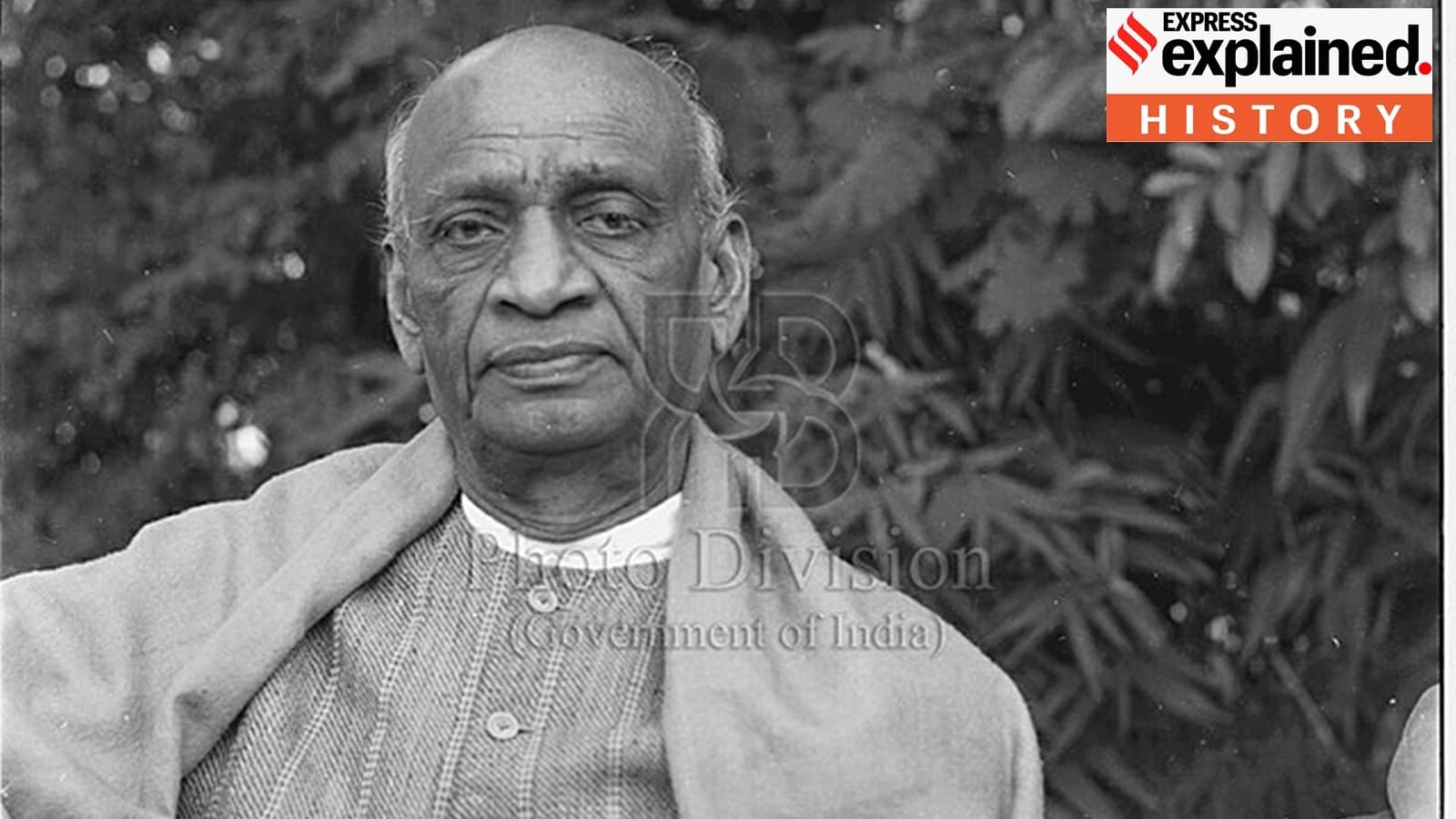
Sardar Vallabhbhai Patel's death anniversary: Recalling his legacy, 'Sardar' title, and early life.
Summary
The news pertains to Sardar Vallabhbhai Patel's death anniversary, highlighting his crucial role in India's freedom struggle and post-independence integration. It aims to cover how he earned the title 'Sardar' and anecdotes from his early life. This information is vital for competitive exams, focusing on modern Indian history, prominent personalities, and constitutional development, making it a recurring topic for MCQs.
Key Points
- 1Sardar Vallabhbhai Patel's death anniversary is observed on December 15.
- 2He earned the title 'Sardar' from the women of Bardoli during the Bardoli Satyagraha in 1928.
- 3Patel served as India's first Deputy Prime Minister and first Home Minister post-independence.
- 4He played a pivotal role in the integration of over 560 princely states into the Indian Union.
- 5The 'Statue of Unity', the world's tallest statue (182 meters), is dedicated to Sardar Patel and is located in Kevadia, Gujarat.
In-Depth Analysis
Sardar Vallabhbhai Patel, often hailed as the "Iron Man of India," remains a towering figure in India's struggle for independence and, more significantly, in the post-partition consolidation of the nation. His death anniversary on December 15 serves as a poignant reminder of his immense contributions, particularly in forging a unified India from a fragmented landscape of princely states. Understanding his life and work is crucial for competitive exam aspirants, as it touches upon critical aspects of modern Indian history, constitutional development, and nation-building.
Patel's journey from a lawyer to a national leader began with his deep commitment to Mahatma Gandhi's principles of Satyagraha. One of the defining moments that cemented his leadership and earned him the revered title 'Sardar' was the **Bardoli Satyagraha of 1928**. The background to this event was the arbitrary and exorbitant increase in land revenue by the Bombay Presidency government, affecting the farmers of Bardoli taluka in Gujarat. Under Patel's astute leadership, the farmers launched a non-violent protest, refusing to pay the enhanced taxes. Patel meticulously organized the movement, ensuring discipline and unwavering resolve among the peasants. The success of the Satyagraha, which compelled the British government to reduce the tax hike and restore confiscated land, showcased his exceptional organizational skills and firm determination. It was the grateful women of Bardoli who bestowed upon him the honorific 'Sardar,' meaning 'chief' or 'leader,' a title that has been synonymous with his name ever since.
Post-independence, as India's **first Deputy Prime Minister and first Home Minister**, Patel faced the monumental challenge of integrating over 560 princely states into the Indian Union. When the British Raj ended on August 15, 1947, it also meant the lapse of British paramountcy over these states, giving their rulers the choice to accede to India or Pakistan, or remain independent. This presented a grave threat of balkanization to the nascent Indian nation. Patel, working closely with his Secretary, V.P. Menon, employed a combination of diplomacy, persuasion, and, when necessary, firm action to bring these states into the fold. He understood that a strong, unified India was paramount for its survival and prosperity.
The process involved the signing of the **Instrument of Accession**, a legal document by which princely states agreed to hand over control of defence, external affairs, and communications to the Dominion of India. While most states acceded peacefully, some, like **Junagadh, Hyderabad, and Jammu & Kashmir**, posed significant challenges. Junagadh, with its Hindu majority but Muslim Nawab, acceded to Pakistan, leading to a plebiscite under Indian administration that resulted in its integration into India. Hyderabad, a large, powerful state with a Hindu majority but Muslim Nizam, initially sought independence. Patel's firm stance led to 'Operation Polo' in September 1948, a police action that swiftly brought Hyderabad into the Union. The issue of Jammu & Kashmir, acceding to India after Pakistani-backed tribal incursions, remains a complex legacy, but Patel's role was critical in securing its initial integration.
This consolidation was not just a political feat but laid the very foundation of modern India's territorial integrity, as enshrined in **Article 1 of the Constitution**, which declares India as a "Union of States." Patel also played a crucial role in the **Constituent Assembly**, notably as the chairman of the Advisory Committee on Fundamental Rights, Minorities, and Tribal and Excluded Areas. His vision for a strong administrative backbone for the country led to the establishment of the **All India Services**, particularly the Indian Administrative Service (IAS) and Indian Police Service (IPS), which he famously called the "steel frame" of India. This is reflected in **Article 312** of the Constitution, which provides for the creation of All India Services. His contributions ensured that India, despite its incredible diversity, would remain a strong, federal entity.
His legacy continues to be celebrated, most notably through the **Statue of Unity**, inaugurated on October 31, 2018 (his birth anniversary), in Kevadia, Gujarat. Standing at 182 meters, it is the world's tallest statue, symbolizing his monumental achievement in uniting India. Patel's life and work offer profound lessons in leadership, national integration, and constitutional governance, making him an indispensable subject for understanding India's journey.
Future implications of his work are evident in India's continued emphasis on national unity and territorial integrity. Challenges to federalism or regional aspirations are often viewed through the lens of the strong foundation Patel laid. His philosophy of a strong central government, while respecting regional identities, continues to shape debates on centre-state relations and national security. The 'Statue of Unity' also serves as a reminder of the importance of historical figures in inspiring national pride and reinforcing the values of unity and integration.
Exam Tips
This topic primarily falls under 'Modern Indian History' and 'Post-Independence Consolidation' in UPSC, SSC, and State PSC syllabi. Focus on key dates (Bardoli Satyagraha 1928, death anniversary Dec 15, Statue of Unity inauguration Oct 31, 2018) and specific events like the integration of Junagadh and Hyderabad.
Study related topics such as the Indian National Movement (especially the role of Gandhi and other leaders), the process of making the Indian Constitution (Constituent Assembly, key committees), and the States Reorganisation Act, 1956, to understand the broader context of nation-building.
Common question patterns include MCQs on who gave Patel the title 'Sardar,' his portfolio in the first cabinet, the number of princely states integrated, the location and height of the Statue of Unity, and the constitutional articles related to All India Services. Descriptive questions may ask about his role in national integration or his contributions to the Constituent Assembly.