



Relevant for Exams
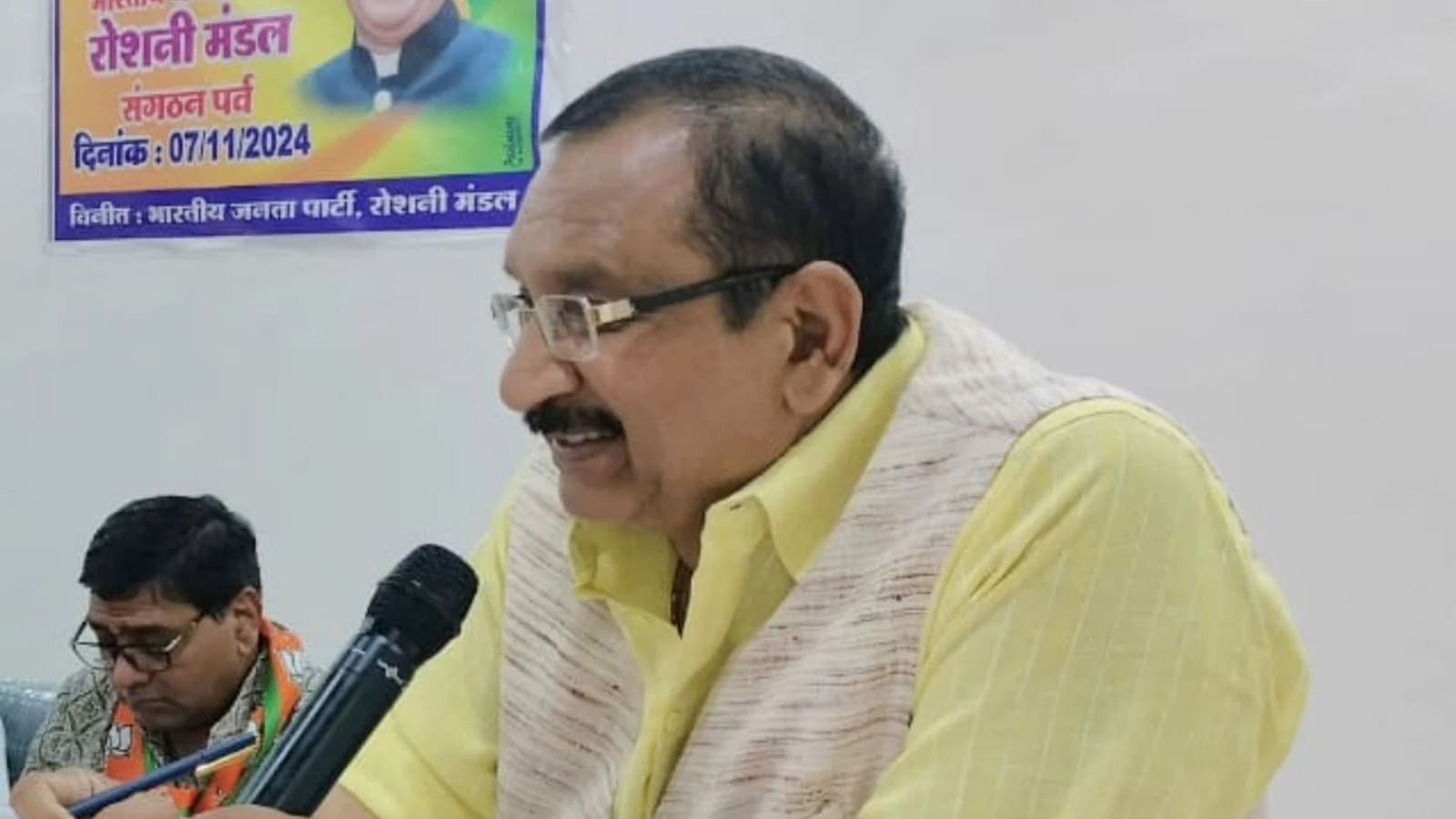
MP minister threatens Ladli Behna beneficiaries with investigation for not attending CM events.
Summary
A minister in Madhya Pradesh reportedly stated that beneficiaries of the Ladli Behna Yojana who do not attend Chief Minister's events will face investigation. This controversial statement raises significant concerns about the politicization of state welfare schemes and potential coercion of beneficiaries, impacting ethical governance and administrative fairness. For competitive exams, this highlights issues related to state government schemes, beneficiary rights, and the conduct of public officials.
Key Points
- 1The statement concerns the Ladli Behna Yojana, a flagship welfare scheme of the Madhya Pradesh government.
- 2A minister from Madhya Pradesh reportedly linked beneficiaries' attendance at Chief Minister's events to potential investigation.
- 3The Ladli Behna Yojana aims to provide financial assistance to eligible women beneficiaries in Madhya Pradesh.
- 4Such directives raise concerns regarding the politicization of state welfare programs and potential coercion of beneficiaries.
- 5The incident occurred in Madhya Pradesh, highlighting issues of administrative conduct and beneficiary rights in state-level governance.
In-Depth Analysis
The statement by a Madhya Pradesh minister, reportedly threatening investigation for Ladli Behna Yojana beneficiaries who do not attend Chief Minister's events, represents a significant concern regarding the politicization of welfare schemes and the ethical conduct of public officials in India. This incident delves into the core principles of democratic governance, administrative fairness, and the rights of citizens.
**Background Context: The Ladli Behna Yojana and its Significance**
The Ladli Behna Yojana is a flagship social welfare scheme launched by the Madhya Pradesh government in March 2023. It aims to provide financial assistance to eligible women in the state, initially ₹1000 per month, later increased to ₹1250. The scheme's objective is to empower women financially, improve their health and nutritional status, and enhance their role in family decision-making. Such direct benefit transfer (DBT) schemes have become a common tool for governments across India to address poverty and garner public support, especially ahead of elections. Madhya Pradesh, a politically crucial state, has seen intense competition, and welfare schemes like Ladli Behna Yojana often play a significant role in electoral strategies.
**What Happened: The Controversial Statement**
The core of the controversy stems from a Madhya Pradesh minister's reported statement implying that beneficiaries of the Ladli Behna Yojana who fail to attend Chief Minister's public events would face an 'investigation'. While the exact wording and context might be subject to interpretation, the widely reported implication is one of coercion. Such a statement, coming from a public official, suggests a linkage between receiving welfare benefits – which are meant to be rights-based or need-based entitlements – and political participation, specifically attendance at ruling party events. This blurs the lines between legitimate welfare delivery and political campaigning, potentially exploiting the vulnerability of beneficiaries.
**Key Stakeholders Involved**
1. **Madhya Pradesh Government and the Minister:** As the implementers of the scheme and the source of the controversial statement, they are at the center. Their actions reflect on the state's governance ethics and administrative fairness.
2. **Beneficiaries of Ladli Behna Yojana:** These women are the most vulnerable stakeholders. They rely on the financial assistance and could feel compelled to attend political events out of fear of losing their benefits, thereby compromising their freedom of choice and political autonomy.
3. **Opposition Parties:** They are likely to criticize such statements, accusing the ruling party of misusing state resources and administrative machinery for political gain, potentially demanding intervention from the Election Commission of India (ECI) if elections are near.
4. **Election Commission of India (ECI):** In an electoral context, the ECI's role becomes crucial. It is tasked with ensuring free and fair elections and preventing corrupt practices, including undue influence and bribery, as outlined in the Representation of the People Act, 1951.
5. **Civil Society and Media:** These entities play a vital role in highlighting such issues, holding public officials accountable, and advocating for ethical governance and beneficiary rights.
**Why This Matters for India: Impact on Democratic Principles and Governance**
This incident is significant for several reasons. Firstly, it undermines the principle of a welfare state, where benefits should be delivered impartially and without political conditions. Linking welfare to political attendance transforms an entitlement into a conditional favour, eroding public trust in government institutions. Secondly, it raises serious questions about administrative ethics and the neutrality of the bureaucracy. Government machinery is meant to serve all citizens equally, not to be used as a tool for political mobilization. Thirdly, it constitutes potential voter coercion and undue influence, which are prohibited under electoral laws. Such practices can distort the democratic process by making citizens feel obligated to support a particular party or leader out of fear or perceived obligation, rather than free will.
**Historical Context and Broader Themes**
The politicization of welfare schemes is not new in India. Historically, various governments, both at the Centre and in states, have been accused of using public funds and programs to cultivate vote banks. From food security programs to housing schemes, the timing of launches and the rhetoric surrounding them often coincide with election cycles. This reflects a broader challenge in Indian politics: balancing the legitimate need for social welfare with the imperative of maintaining political neutrality and fairness in governance. This incident also ties into themes of good governance, accountability, and transparency, which are cornerstones of a robust democracy.
**Future Implications**
The immediate implication is a potential chilling effect on beneficiaries, who might feel pressured to participate in political activities against their will. If such statements go unchecked, they could set a dangerous precedent, normalizing the coercive use of welfare programs for political ends. This could lead to a further erosion of democratic values and institutional integrity. The ECI might need to step in to issue advisories or take action if the Model Code of Conduct is in force or if there is evidence of corrupt practices. Furthermore, it could spark public debate on the need for clearer guidelines on the conduct of ministers and the administration of welfare schemes, ensuring they remain truly beneficial and apolitical.
**Related Constitutional Articles, Acts, or Policies**
This issue touches upon several constitutional and legal provisions:
* **Article 14 (Right to Equality):** The state cannot deny any person equality before the law or the equal protection of the laws. Arbitrary conditions for receiving welfare benefits would violate this principle.
* **Article 21 (Right to Life and Personal Liberty):** This article has been interpreted broadly to include the right to live with dignity and freedom from coercion. Being forced to attend political events to secure welfare benefits could infringe upon personal liberty and dignity.
* **Directive Principles of State Policy (DPSP), particularly Article 38 and 39:** These articles mandate the state to secure a social order for the promotion of welfare of the people and ensure adequate means of livelihood. While promoting welfare, the state must do so without compromising fundamental rights or democratic principles.
* **Representation of the People Act, 1951:** Specifically, **Section 123** defines 'corrupt practices' in elections, which include 'undue influence' (any direct or indirect interference or attempt to interfere on the part of the candidate or his agent, or of any other person with the consent of the candidate or his election agent, with the free exercise of any electoral right). Threatening to withdraw welfare benefits could be construed as undue influence.
* **Model Code of Conduct (MCC):** Though not legally enforceable, the MCC provides guidelines for the conduct of political parties and candidates during elections. It prohibits actions that could be seen as undue influence or misuse of official machinery for campaigning.
Exam Tips
This topic falls under UPSC GS Paper II (Governance, Polity, Social Justice) and GS Paper IV (Ethics). For SSC/State PSC exams, it's relevant for General Awareness (Polity & Governance) and current affairs.
Study related topics like the role and powers of the Election Commission of India, the Model Code of Conduct, Direct Benefit Transfer (DBT) schemes, principles of good governance, administrative ethics, and the concept of a welfare state. Understand the difference between legitimate welfare and political patronage.
Common question patterns include: analytical questions on the politicization of welfare schemes, case studies on ethical dilemmas faced by public officials, questions on the constitutional provisions related to equality and personal liberty, and the role of the ECI in ensuring free and fair elections. Be prepared to discuss the balance between state welfare and democratic principles.