



Relevant for Exams
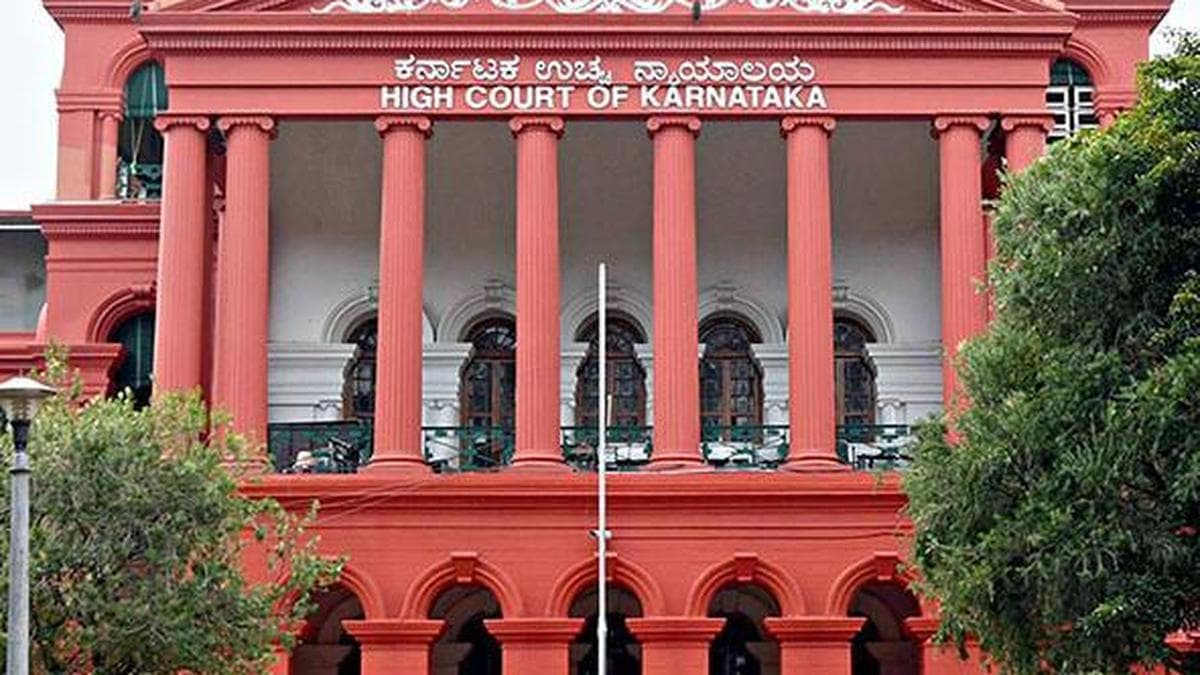
Karnataka High Court convicts ex-IIA employee for contempt, sentences to four months imprisonment.
Summary
The Karnataka High Court has convicted a former employee of the Indian Institute of Astrophysics (IIA) for contempt of court, sentencing them to four months imprisonment. This case highlights the judiciary's power to uphold its authority and ensure compliance with its orders, serving as a deterrent against disrespect for judicial processes. For competitive exams, understanding the concept of contempt of court and the powers of High Courts is crucial.
Key Points
- 1The conviction was pronounced by the Karnataka High Court.
- 2The individual convicted was a former employee of the Indian Institute of Astrophysics (IIA).
- 3The specific charge against the former employee was 'contempt of court'.
- 4The sentence delivered by the High Court was imprisonment for a period of four months.
- 5Contempt of court proceedings are governed by the Contempt of Courts Act, 1971, in India.
In-Depth Analysis
The recent conviction by the Karnataka High Court of a former employee of the Indian Institute of Astrophysics (IIA) for contempt of court, resulting in a four-month prison sentence, serves as a potent reminder of the judiciary's indispensable role in upholding the rule of law and ensuring compliance with its directives. This case, while specific, encapsulates broader principles vital for the functioning of India's democratic and legal framework.
**Background Context and What Happened:**
Contempt of court refers to any act or omission that obstructs or interferes with the administration of justice. Its primary objective is to safeguard the dignity and authority of the courts and to ensure that judicial pronouncements are respected and enforced. In India, the law governing contempt is primarily the Contempt of Courts Act, 1971. This Act distinguishes between 'civil contempt' and 'criminal contempt'. Civil contempt arises from willful disobedience to any judgment, decree, direction, order, writ, or other process of a court, or willful breach of an undertaking given to a court. Criminal contempt, on the other hand, involves the publication (whether by words, spoken or written, or by signs, or by visible representations, or otherwise) of any matter or the doing of any other act whatsoever which (i) scandalizes or tends to scandalize, or lowers or tends to lower the authority of any court; or (ii) prejudices, or interferes or tends to interfere with, the due course of any judicial proceeding; or (iii) interferes or tends to interfere with, or obstructs or tends to obstruct, the administration of justice in any other manner. While the specifics of the former IIA employee's actions leading to the conviction are not detailed in the summary, the sentence of imprisonment strongly suggests a serious breach, likely involving willful disobedience of a prior court order (civil contempt) or an act that significantly undermined judicial authority (criminal contempt).
**Key Stakeholders Involved:**
At the forefront is the **Karnataka High Court**, exercising its inherent and statutory powers to punish for contempt, as enshrined in the Constitution. The **former employee of the Indian Institute of Astrophysics (IIA)** is the individual against whom the contempt proceedings were initiated and subsequently convicted. While the IIA itself is not directly a party to the contempt conviction, the original dispute that led to the contempt action likely involved the employee's relationship with the institution. More broadly, the **Indian judiciary** as an institution is a key stakeholder, as its authority and ability to deliver justice depend on the enforcement of its orders. Finally, the **general public** is also a stakeholder, as public trust in the judiciary's ability to ensure justice and maintain order is paramount for a functioning democracy.
**Why This Matters for India:**
This conviction is significant for several reasons. Firstly, it reinforces the **rule of law**, a foundational principle of India's democratic structure. No individual, regardless of their position, is above the law or beyond the reach of judicial authority. Secondly, it underscores the **independence and authority of the judiciary**. Courts are not merely advisory bodies; they are institutions empowered to issue binding orders, and their efficacy hinges on the ability to ensure compliance. If court orders can be flouted with impunity, the entire justice delivery system would crumble, leading to anarchy. Thirdly, such convictions act as a **deterrent** against future acts of defiance or disrespect towards judicial processes. It sends a clear message that contempt of court is a serious offense with tangible consequences, including imprisonment. This helps in maintaining public faith in the judiciary and ensures the smooth administration of justice. The enforcement of judicial orders is crucial for economic stability and social order, as it provides predictability and reliability in contractual obligations and dispute resolution.
**Historical Context and Constitutional Provisions:**
The concept of contempt of court has deep roots in English common law, from which India's legal system largely draws. Post-independence, the need for a codified law led to the enactment of the Contempt of Courts Act, 1971. The Indian Constitution explicitly grants powers to the Supreme Court and High Courts to punish for contempt. **Article 129** states that the Supreme Court shall be a court of record and shall have all the powers of such a court, including the power to punish for contempt of itself. Similarly, **Article 215** vests the same power in High Courts. These articles are crucial for maintaining the sanctity of the judicial process. Furthermore, **Article 19(1)(a)** guarantees freedom of speech and expression, but **Article 19(2)** allows for reasonable restrictions on this right in matters relating to contempt of court. This highlights the delicate balance between fundamental rights and the need to protect judicial authority. The Supreme Court's extraordinary powers under **Article 142** to 'do complete justice' are also often invoked in contempt cases to ensure that its orders are fully complied with.
**Future Implications:**
The Karnataka High Court's decision will likely serve as a precedent, reinforcing the judiciary's resolve to act firmly against those who disrespect its authority or orders. This could lead to a more stringent enforcement of judicial orders across various domains, potentially impacting government bodies, private entities, and individuals alike. While crucial for maintaining judicial integrity, it also keeps alive the ongoing debate regarding the scope of contempt law, particularly concerning its potential impact on freedom of speech. Critics often argue that contempt laws can be misused to stifle legitimate criticism of the judiciary. Therefore, future cases might further refine the interpretation of 'scandalizing the court' or 'lowering the authority of the court' to strike a better balance between protecting judicial dignity and upholding democratic freedoms. This case underscores that the judiciary remains a vigilant guardian of constitutional principles and the rule of law, ensuring that its pronouncements are not merely symbolic but have real-world enforceability.
Exam Tips
This topic falls under 'Indian Polity' and 'Judiciary' sections of competitive exam syllabi (UPSC CSE General Studies Paper II, SSC CGL/CHSL, Banking, State PSCs). Focus on the powers and functions of the Supreme Court and High Courts.
Study the Contempt of Courts Act, 1971, in detail. Understand the distinction between 'civil contempt' and 'criminal contempt' with examples. Memorize the constitutional articles related to contempt (Articles 129, 215, 19(1)(a), 19(2), 142).
Expect questions on the definition of contempt, the rationale behind contempt laws, the powers of various courts (Supreme Court, High Courts) to punish for contempt, and the limitations or criticisms associated with these powers. Be prepared for both objective (MCQ) and subjective (descriptive) questions on the balance between freedom of speech and judicial authority in the context of contempt.