

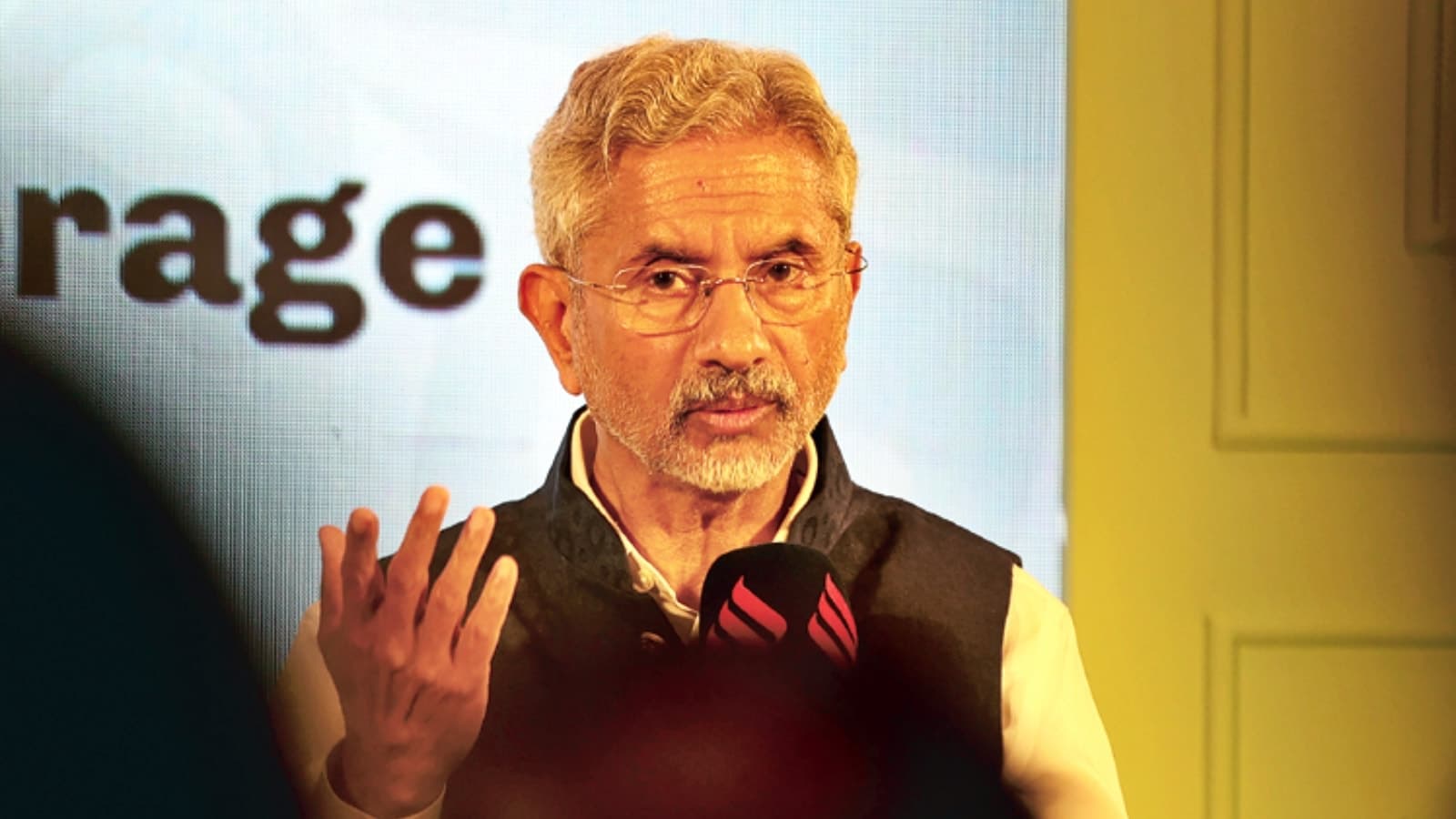


EAM Jaishankar's UAE-Israel visit; no content for details.
Summary
External Affairs Minister S. Jaishankar's diplomatic engagements in UAE and Israel are indicated by the title. However, no content was provided to detail the specific agendas, outcomes, or bilateral discussions. Thus, a comprehensive summary explaining the events' significance for competitive exams cannot be accurately generated.
Key Points
- 1External Affairs Minister S. Jaishankar was indicated to be on a diplomatic visit to UAE and Israel.
- 2Specific dates and locations of meetings in UAE and Israel are not available from the provided input.
- 3Details of discussions with the UAE leadership cannot be extracted due to missing content.
- 4The agenda for meetings in Israel today is not specified in the absence of article content.
- 5Without content, specific outcomes, agreements, or policy implications cannot be identified for exam preparation.
In-Depth Analysis
External Affairs Minister S. Jaishankar's diplomatic engagements in the UAE and Israel, as indicated by the title, represent a crucial facet of India's robust and dynamic foreign policy in West Asia. While the specific details of the meetings are not provided in the article content, such high-level visits invariably underscore the strategic importance India attaches to these two nations, both individually and within the broader regional context. This analysis will delve into the underlying significance, historical trajectory, and future implications of India's relations with the UAE and Israel.
**Background Context and Historical Trajectory:**
India's relationship with the United Arab Emirates (UAE) is rooted in deep historical and cultural ties, predating the formation of the UAE in 1971. The Gulf region has long been a destination for Indian traders and workers. In contemporary times, the UAE is India's third-largest trading partner, a major source of energy, and home to a significant Indian diaspora (estimated at over 3.5 million). Relations have evolved from primarily economic to a comprehensive strategic partnership. A significant milestone was the signing of the Comprehensive Economic Partnership Agreement (CEPA) in February 2022, aiming to boost bilateral non-oil trade to $100 billion by 2030. This partnership also extends to defense, technology, and counter-terrorism cooperation.
India's relationship with Israel, on the other hand, embarked on a full diplomatic journey relatively later, in 1992. For decades, India's foreign policy, shaped by its Non-Aligned Movement (NAM) principles and solidarity with the Palestinian cause, maintained a cautious distance. However, post-Cold War and particularly in the 21st century, the relationship has blossomed into a multi-faceted strategic partnership. Areas of intense cooperation include defense and security, agriculture, water management, and high-tech sectors. Prime Minister Narendra Modi's historic visit to Israel in 2017, followed by Israeli PM Benjamin Netanyahu's visit to India in 2018, signaled a new era of open and robust engagement, shedding the previous reticence.
**What Such a Visit Entails and Key Stakeholders:**
An External Affairs Minister's visit to critical partners like the UAE and Israel typically involves reviewing the entire gamut of bilateral relations, discussing regional security issues, exploring new avenues for cooperation, and addressing global challenges. Key stakeholders include the Ministry of External Affairs (India), led by EAM Jaishankar, the respective leaderships and foreign ministries of the UAE and Israel, and various governmental departments involved in trade, defense, technology, and cultural exchanges. The Indian diaspora in the UAE is also a crucial stakeholder, as their welfare and contributions are often a point of discussion. For the UAE, the visit reinforces its strategy of economic diversification and its role as a regional hub. For Israel, it solidifies a key strategic partnership in Asia, particularly in defense and technology.
**Significance for India:**
These engagements hold immense significance for India. Economically, the UAE is vital for India's energy security and a significant destination for Indian exports and investments. The CEPA exemplifies a forward-looking economic partnership. With Israel, India seeks advanced defense technologies, intelligence sharing for counter-terrorism, and expertise in areas like drip irrigation and water purification, crucial for India's agricultural and resource management challenges. Strategically, strengthening ties with both nations aligns with India's 'Act West' policy, aiming to enhance its influence and presence in the geopolitically vital West Asian region. It also demonstrates India's multi-aligned foreign policy, capable of maintaining strong relations with diverse partners, even amidst regional complexities like the Israel-Palestine conflict. The formation of the I2U2 grouping (India, Israel, UAE, USA) further highlights the evolving trilateral and quadrilateral cooperation, focusing on joint investments and infrastructure projects.
**Constitutional Provisions and Broader Themes:**
India's foreign policy is guided by **Article 51** of the Constitution, which directs the State to endeavor to promote international peace and security, maintain just and honorable relations between nations, foster respect for international law, and encourage settlement of international disputes by arbitration. These visits directly contribute to these objectives by fostering friendly relations and cooperation. Broader themes include India's pursuit of energy security, economic growth through trade and investment, technological advancement, and strengthening its strategic autonomy in a multipolar world. The welfare of the Indian diaspora, protected under various consular access agreements and bilateral frameworks, is also a constant underlying theme in such diplomatic interactions.
**Future Implications:**
The continued high-level engagement suggests a trajectory of deepening strategic convergence. We can anticipate further growth in trade and investment, especially in non-oil sectors with the UAE, and enhanced collaboration in cutting-edge technologies and defense with Israel. The I2U2 framework is likely to gain more traction, potentially leading to concrete projects in infrastructure, energy, and food security. However, India will continue to navigate the complex regional dynamics, particularly the Israel-Palestine issue, with its established principled stance, while simultaneously advancing its national interests through these bilateral partnerships. The stability of the West Asian region is paramount for India's energy security and economic prosperity, making these diplomatic efforts critical for long-term strategic stability.
Exam Tips
This topic falls under the 'International Relations' section of the UPSC Civil Services Exam (General Studies Paper-II) and State Public Service Commission exams. Focus on India's foreign policy objectives, 'Act West' policy, and the strategic importance of West Asia.
Study related topics such as the India-UAE Comprehensive Economic Partnership Agreement (CEPA), the I2U2 grouping (India, Israel, UAE, USA), the Abraham Accords, and India's energy security strategy. Understand how these initiatives are interconnected.
Common question patterns include analytical questions on the significance of India's deepening ties with West Asian countries, the challenges and opportunities for India in the region, and the role of specific groupings like I2U2 in shaping regional geopolitics. Be prepared to discuss economic, strategic, and diaspora-related aspects.
Remember key dates like the establishment of full diplomatic ties with Israel (1992) and the signing of the India-UAE CEPA (2022). Also, be aware of constitutional provisions like Article 51 related to foreign policy.
Prepare short notes on key terms like 'Act West Policy,' 'Abraham Accords,' and 'I2U2' as they are frequently asked in both preliminary and mains examinations.