



Relevant for Exams
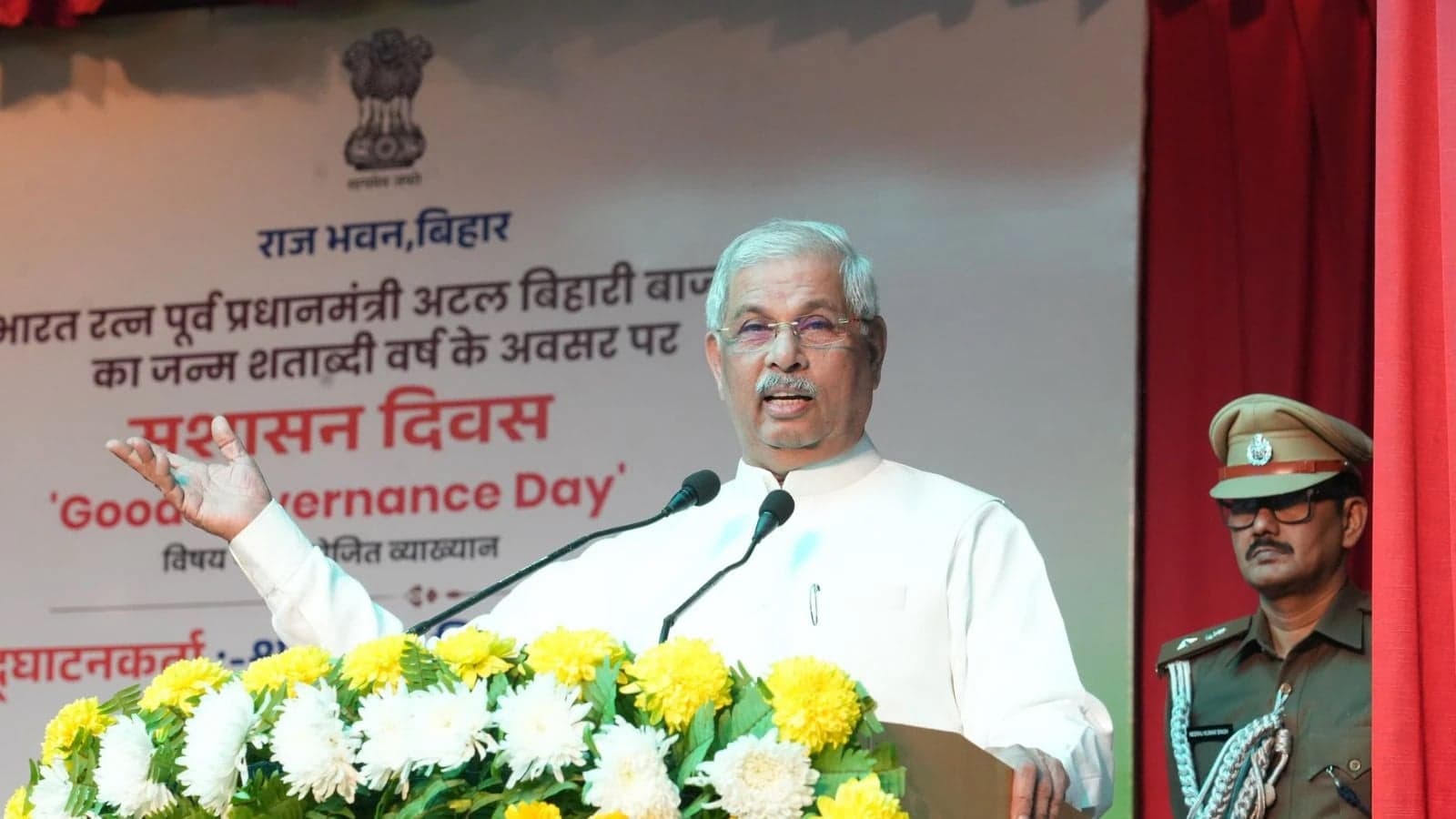
Kerala Governor's 'limits' remark follows SC's VC panel directive, highlighting institutional power dynamics.
Summary
Kerala Governor's statement on institutional limits follows a Supreme Court directive for a panel to recommend Vice-Chancellors, indicating a potential conflict over university appointments. This highlights the ongoing tussle between the Governor's office and judiciary regarding higher education governance. It's crucial for understanding the constitutional roles of Governor and SC, and federalism for competitive exams.
Key Points
- 1The Governor of a state typically serves as the ex-officio Chancellor of state universities, holding powers related to Vice-Chancellor (VC) appointments.
- 2The Supreme Court's intervention in VC appointments underscores its power of judicial review over executive actions and university governance matters.
- 3Article 153 of the Indian Constitution mandates a Governor for each state, whose powers are further defined in Articles 154 and 163.
- 4The Governor's statement on "institutions respecting limits" reflects on the principle of separation of powers and institutional boundaries in governance.
- 5The appointment of Vice-Chancellors is a critical aspect of university administration, often becoming a point of contention between state governments and Governors.
In-Depth Analysis
The recent statement by the Kerala Governor, emphasizing that "institutions should know and respect limits," following a Supreme Court directive for a panel to recommend Vice-Chancellors (VCs), encapsulates a significant and recurring constitutional tussle in India. This incident is not isolated but is a symptom of deeper conflicts concerning federalism, the separation of powers, and the governance of higher education.
**Background Context and What Happened:**
Traditionally, the Governor of a state serves as the ex-officio Chancellor of state universities. This role grants them substantial powers, including the appointment of Vice-Chancellors, often in consultation with the state government or based on recommendations from a search committee. However, in recent years, this power has become a major point of contention, particularly in states where the ruling party is different from that at the Centre. Governors, as appointees of the President (and thus, the Union government), are often perceived as acting on the Centre's behalf, leading to friction with elected state governments. The appointment of VCs is critical as they head academic and administrative functions, influencing the direction and quality of higher education. The process typically involves a search-cum-selection committee, whose recommendations are then submitted to the Chancellor for final approval.
In the specific Kerala instance, the Supreme Court's intervention likely stemmed from a petition challenging the legality or procedure of a previous VC appointment. The Court's directive to form a new panel for recommendations signals a judicial assertion of oversight, ensuring adherence to statutory provisions and constitutional principles. The Governor's subsequent statement, though general, is widely interpreted as a veiled criticism of the judiciary's perceived overreach into executive functions, highlighting the delicate balance of power.
**Key Stakeholders Involved:**
1. **The Governor:** As the constitutional head of the state (Article 153, 154) and ex-officio Chancellor, the Governor holds significant sway over university appointments. Their actions are often viewed through the prism of their dual role: a constitutional head and a central government appointee.
2. **The Supreme Court:** As the apex judicial body, the SC exercises the power of judicial review (Articles 32, 136, 142, 226/227 for High Courts), allowing it to scrutinize executive actions and legislative validity. Its intervention ensures that appointments adhere to legal and constitutional norms, including those laid down by the University Grants Commission (UGC).
3. **The State Government:** The elected executive, led by the Chief Minister and Council of Ministers (Article 163), is responsible for state policy, including higher education. They often seek to appoint VCs aligned with their vision, leading to clashes with Governors.
4. **State Universities:** These institutions, while enjoying statutory autonomy, are caught in the crossfire. The quality of leadership directly impacts academic standards, research, and overall institutional health.
5. **University Grants Commission (UGC):** A statutory body under the Ministry of Education, UGC frames regulations for higher education, including minimum qualifications and procedures for VC appointments. The UGC (Minimum Qualifications for Appointment of Teachers and Other Academic Staff in Universities and Colleges and Measures for the Maintenance of Standards in Higher Education) Regulations, 2018, are particularly relevant.
**Why This Matters for India:**
This conflict has profound implications for India's federal structure, the principle of separation of powers, and the future of higher education. Politicization of VC appointments undermines academic autonomy and meritocracy, potentially compromising the quality of education and research. It highlights the strain in Centre-state relations, especially when Governors act beyond mere titular roles. The Supreme Court's intervention, while upholding the rule of law, also raises questions about judicial activism and the boundaries of its jurisdiction. Ensuring transparent and merit-based appointments is crucial for nurturing intellectual independence and excellence in universities, which are vital for national development and innovation.
**Historical Context and Broader Themes:**
Conflicts between Governors and state governments over university appointments are not new. There have been numerous instances across states like West Bengal, Tamil Nadu, and Maharashtra where gubernatorial actions regarding VCs or assent to university bills have been challenged. This issue ties into the broader debate on the discretionary powers of the Governor, particularly Article 163, which states that the Governor acts on the aid and advice of the Council of Ministers, except in matters where the Constitution requires them to act in their discretion. The Supreme Court has, in various judgments (e.g., *Chancellor, University of Mysore v. Dr. C.D. Govinda Rao*, 1991, and more recently cases involving adherence to UGC regulations), emphasized the importance of following prescribed procedures and qualifications for VC appointments. The *Pawan Agrawal v. The Chancellor, University of Delhi* case also reinforced the importance of adhering to the UGC regulations.
**Future Implications:**
This ongoing tussle could lead to several outcomes. It might prompt clearer legislative frameworks at both state and central levels to define the powers of the Chancellor and the appointment process, potentially reducing ambiguity and scope for conflict. The Supreme Court's consistent emphasis on adhering to UGC regulations could force states to amend their university acts to align with central guidelines, strengthening the UGC's role. Ultimately, a more defined understanding of institutional boundaries and a commitment to constitutional morality by all stakeholders are essential to ensure that universities remain centers of excellence, free from undue political interference, thereby safeguarding academic freedom and the quality of higher education in India.
Exam Tips
This topic falls under the 'Indian Polity and Governance' section of the UPSC Civil Services Exam (GS Paper II) and State PSCs. For SSC, it relates to basic constitutional structure and roles.
Study the roles and powers of the Governor (Articles 153-163, 200, 201), the Supreme Court (Articles 32, 136, 142, Judicial Review), and the concepts of federalism, separation of powers, and judicial activism/restraint. Also, understand the structure and role of the UGC Act, 1956, and its regulations on higher education.
Common question patterns include: MCQs on specific constitutional articles related to the Governor's powers or the SC's jurisdiction; descriptive questions on the challenges to federalism posed by the Governor's role; analytical questions on the balance between university autonomy and government oversight; and case studies on Governor-state government conflicts.
Pay attention to recent Supreme Court judgments concerning university appointments and the interpretation of UGC regulations, as these often form the basis of current affairs questions.
Understand the distinction between the Governor's constitutional role and their role as Chancellor of universities, as these are often conflated but have distinct legal underpinnings.