



Relevant for Exams
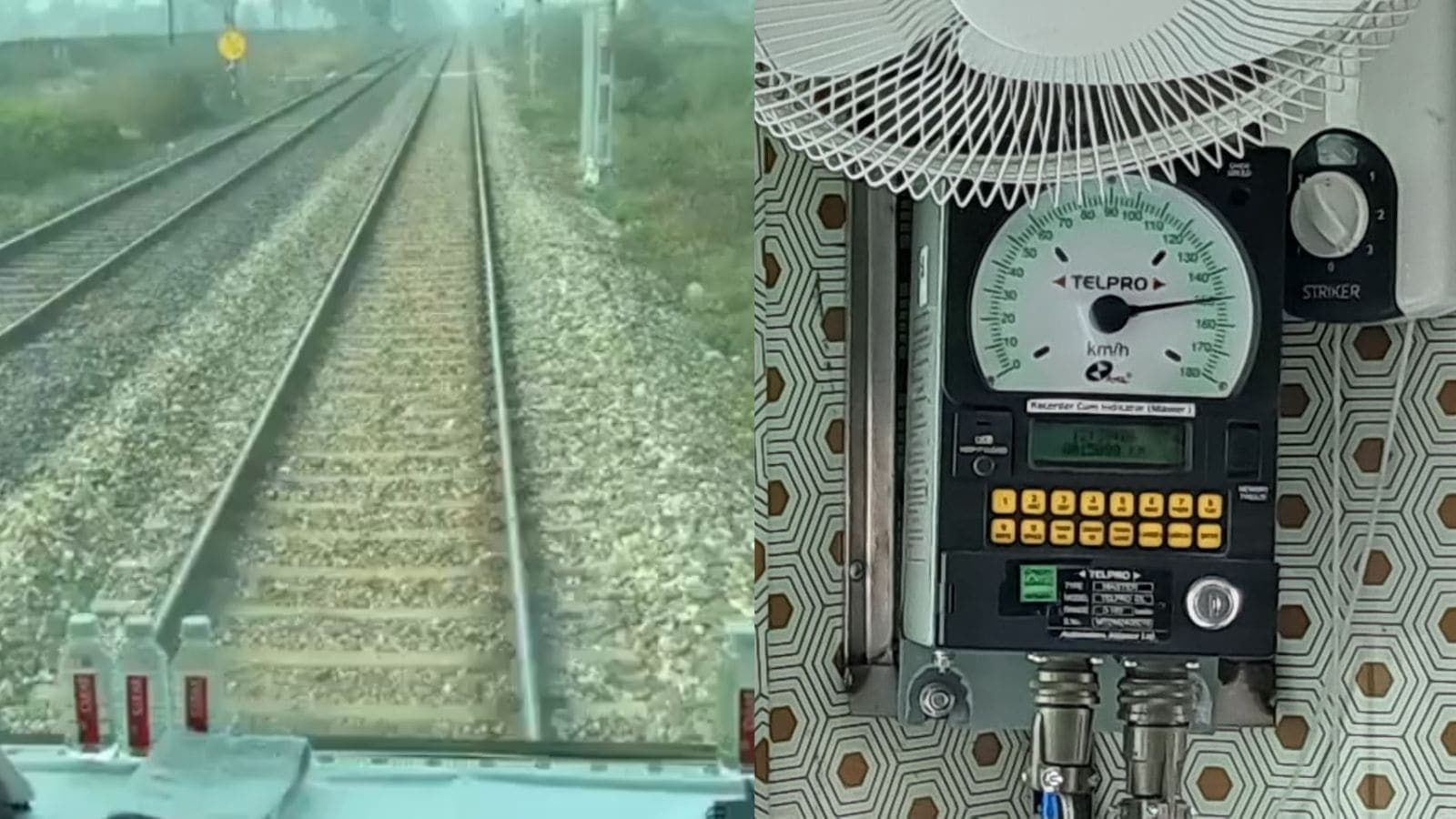
Indian Railways train hits 150 kmph milestone in Dhanbad Division, showcasing speed upgrade.
Summary
Indian Railways achieved a significant milestone by operating a train at 150 kmph in the Dhanbad Division. This highlights advancements in railway infrastructure and operational efficiency, demonstrating India's progress in modernizing its transportation network. Such achievements are crucial for competitive exams, especially those focusing on infrastructure, technology, and economic development.
Key Points
- 1Indian Railways achieved a new operational milestone.
- 2A train successfully reached a speed of 150 kmph.
- 3The speed achievement occurred within the Dhanbad Division.
- 4This marks a significant advancement in India's railway capabilities.
- 5The event underscores ongoing modernization efforts in the transport sector.
In-Depth Analysis
Indian Railways, often considered the lifeline of the nation, has embarked on an ambitious journey of modernization and capacity enhancement. The recent achievement of a train operating at 150 kmph in the Dhanbad Division marks a significant milestone in this endeavor, symbolizing India's progress in upgrading its crucial transportation infrastructure. This isn't merely about a train's speed; it represents a confluence of technological advancements, strategic planning, and a renewed focus on efficiency.
**Background Context and What Happened:**
Historically, Indian Railways, established in 1853, has been the backbone of the country's logistics and passenger movement. For decades, the network struggled with aging infrastructure and average speeds. However, in recent years, there has been a concentrated push towards upgrading tracks, signaling systems, and rolling stock. The introduction of semi-high-speed trains like the Vande Bharat Express (Train 18), which debuted in 2019, capable of reaching speeds up to 180 kmph, was a game-changer. These trains, designed and manufactured indigenously, showcased India's potential for advanced rail technology. The 150 kmph speed achievement in the Dhanbad Division, while the specific context (e.g., type of train, test run vs. regular service) is not detailed, indicates successful trials or operational readiness on a specific section of the network. This likely involves upgraded tracks, improved signaling systems, and robust electric traction, making such speeds safe and feasible. It builds upon the broader 'Mission Raftar' initiative aimed at increasing average speeds of both passenger and freight trains.
**Key Stakeholders Involved:**
Several entities play crucial roles in such achievements. The **Ministry of Railways** is the primary policy-making body, setting targets and allocating resources. **Indian Railways (IR)**, comprising various zonal railways and divisions (like Dhanbad Division under East Central Railway), is responsible for execution, operation, and maintenance. The **Research Designs and Standards Organisation (RDSO)**, IR's technical arm, is pivotal in testing, standardizing, and developing new technologies for rolling stock and infrastructure. **Public Sector Undertakings (PSUs)** under the Ministry of Railways, such as Integral Coach Factory (ICF) for manufacturing Vande Bharat coaches, Rail Vikas Nigam Limited (RVNL) for infrastructure projects, and RailTel for communication, also contribute significantly. The **private sector** is increasingly involved in supplying components, technology, and even in infrastructure development, aligning with the 'Make in India' initiative.
**Significance for India:**
This milestone holds immense significance for India. **Economically**, faster trains improve connectivity, reduce travel time, boost trade and tourism, and enhance the efficiency of freight movement, thereby lowering logistics costs. This directly contributes to India's GDP growth and makes Indian goods more competitive. **Socially**, it improves accessibility for citizens, connecting remote areas to economic hubs, and potentially spurring regional development. **Strategically**, a modern and efficient railway network is vital for national security and disaster response. It also positions India as a leader in railway technology, fostering exports and 'Make in India' initiatives. The environmental impact is also positive, as efficient electric trains offer a greener alternative to road and air travel.
**Historical Context and Policy Framework:**
The journey towards high-speed rail began with initial efforts to upgrade conventional tracks for higher speeds, leading to the introduction of Rajdhani and Shatabdi Express trains in the late 20th century. The real impetus came with the 'Diamond Quadrilateral' project and subsequent focus on Dedicated Freight Corridors (DFCs) to separate freight and passenger traffic, allowing for higher speeds. The **National Rail Plan for India – 2030**, unveiled by the Ministry of Railways, aims to create a 'future-ready' railway system by 2030, with a focus on increasing modal share of railways in freight to 45% and achieving 100% electrification. This plan envisions creating high-speed rail corridors and upgrading existing conventional lines to handle speeds of 160 kmph and above. The **PM Gati Shakti National Master Plan**, launched in 2021, integrates infrastructure development across 16 ministries, including railways, ensuring holistic planning and execution to create a seamless multimodal transport network.
**Constitutional and Legal Provisions:**
Railways are a subject under the **Union List** (Entry 22 of the Seventh Schedule) of the Indian Constitution, granting the central government exclusive legislative and executive powers over them. The **Railways Act, 1989**, governs the construction, maintenance, and operation of railways in India, including aspects related to safety, tariffs, and passenger amenities. Amendments to this act and various railway policies are crucial for implementing modernization drives.
**Future Implications:**
The successful operation at 150 kmph indicates that more sections of the Indian rail network are being upgraded to handle semi-high speeds. This paves the way for expanding the Vande Bharat network to more routes, reducing travel times significantly across the country. We can expect further investments in track modernization, advanced signaling systems (like Kavach, India's indigenous Automatic Train Protection system), and enhanced safety measures. The integration of these faster passenger services with the Dedicated Freight Corridors will optimize the overall logistics network, creating a more efficient and competitive transportation ecosystem for India. This continuous push for speed and efficiency is central to India's aspiration of becoming a developed nation with world-class infrastructure.
Exam Tips
This topic falls under the 'Indian Economy' and 'Infrastructure' sections for UPSC (GS Paper III), SSC (General Awareness), Banking (General Awareness), and State PSC exams. Focus on government initiatives, policies, and their economic impact.
Study related topics like the National Rail Plan 2030, PM Gati Shakti, Dedicated Freight Corridors (DFCs), Vande Bharat Express (Train 18), and 'Make in India' initiatives in the context of infrastructure development. Understand the technical aspects like Kavach system, electrification, and track upgrades.
Common question patterns include: (a) Factual questions on specific projects, speeds, or dates (e.g., 'What is the target of National Rail Plan 2030?'); (b) Policy-based questions on government initiatives (e.g., 'How does PM Gati Shakti impact railway development?'); (c) Analytical questions on the economic and social significance of railway modernization for India; (d) Questions on indigenous technology and manufacturing (e.g., 'Which train is a symbol of 'Make in India' in railways?').