



Relevant for Exams
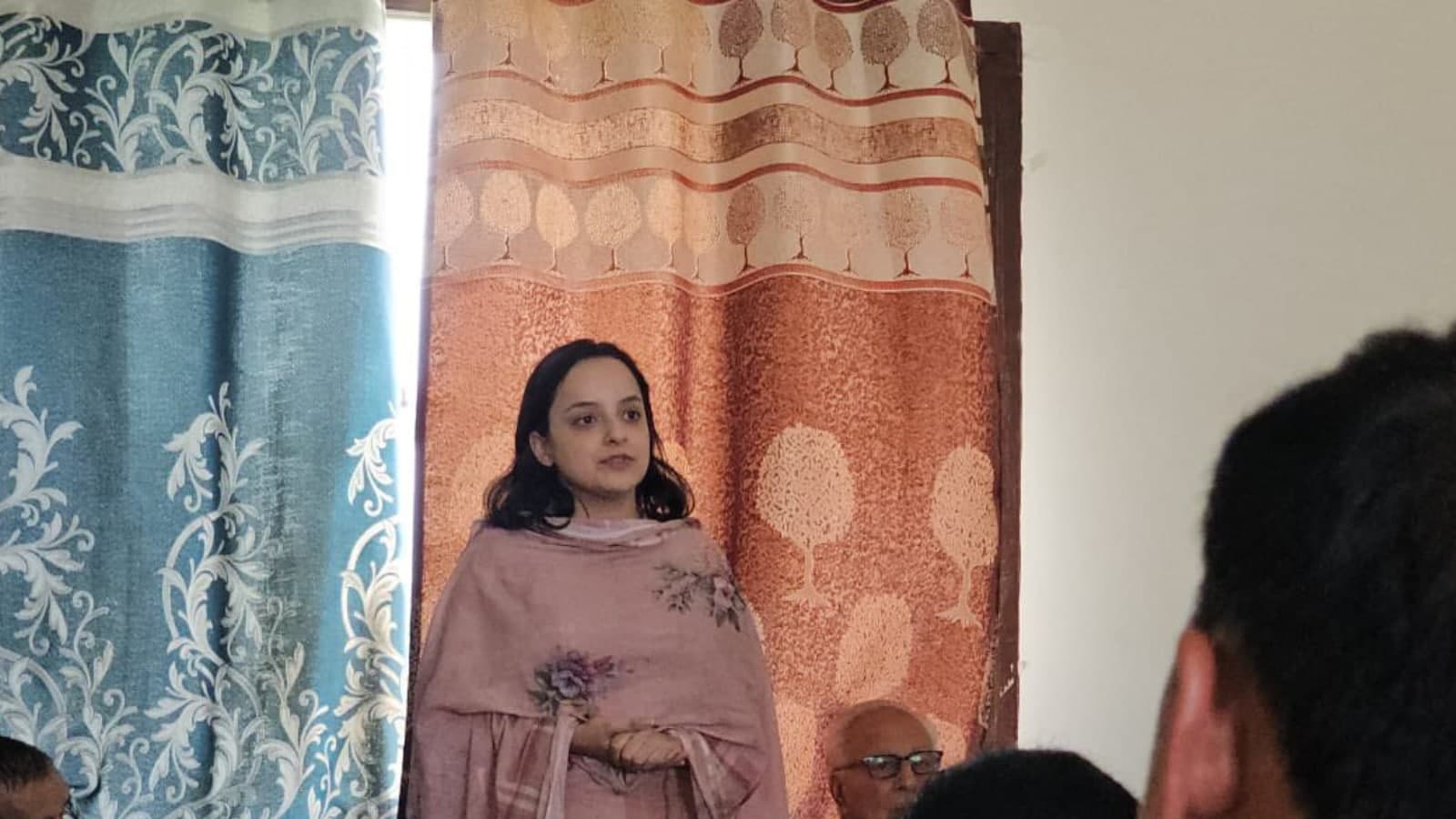
Debutant BJP MLA Shagun Parihar linked to Jammu hydel project controversy.
Summary
The article title introduces Shagun Parihar, a debutant BJP MLA, who is reportedly at the center of a controversy surrounding a hydel project in Jammu. However, as the content is unavailable, specific details about the project, the nature of the controversy, or Parihar's role cannot be extracted. This limits its exam preparation value to general awareness of political figures and regional projects without factual depth.
Key Points
- 1The name of the specific hydel project in Jammu is not provided in the article content.
- 2Details regarding the nature of the 'storm' or controversy surrounding the project are absent.
- 3Shagun Parihar is identified as a debutant BJP MLA, but further biographical details are unavailable.
- 4No specific dates, timelines, or financial implications related to the project or controversy are mentioned.
- 5The article explicitly states 'No content available', preventing extraction of any factual data.
In-Depth Analysis
The article title, "In eye of Jammu hydel project storm, BJP’s fiery, debutant MLA: Who is Shagun Parihar?" hints at a significant political and developmental issue in the Jammu region. While the specific content of the article is unavailable, the title itself provides enough context to delve into the broader implications of such events for competitive exam aspirants. This scenario encapsulates critical themes related to energy infrastructure, environmental governance, regional politics, and the role of local representatives in India, particularly in a sensitive region like Jammu & Kashmir.
**Background Context and What Happened (Generalised):**
Jammu and Kashmir, now a Union Territory, has immense hydropower potential due to its mountainous terrain and numerous rivers like the Chenab, Jhelum, and Indus. Hydel projects are crucial for India's energy security and J&K's economic development, offering clean energy and potential revenue. Historically, these projects have been a double-edged sword: while promising progress, they often involve significant environmental impact, displacement of local communities, and land acquisition issues. The 'storm' mentioned in the title likely refers to a controversy surrounding one such project, which could stem from environmental clearances, compensation for displaced families, impact on livelihoods, or perceived benefits not reaching the local populace. The involvement of a 'debutant MLA' suggests a fresh political voice potentially challenging established norms or advocating strongly for local interests.
**Key Stakeholders Involved:**
1. **Shagun Parihar (Debutant BJP MLA):** As a newly elected representative, her involvement signifies a local political voice. Debutant MLAs often seek to establish their credibility by taking up issues directly affecting their constituents. Her 'fiery' nature suggests a proactive and possibly confrontational stance, which could be either in support of the project with local modifications or against it due to local grievances.
2. **The Jammu & Kashmir Administration/Government of India:** These are the primary decision-makers for large infrastructure projects. Post the abrogation of Article 370 and the reorganisation of J&K into a Union Territory in August 2019, the central government has a more direct role in the region's development policies. Balancing development needs with local concerns is a key challenge for them.
3. **Project Developers (Public Sector Undertakings like NHPC or private entities):** These entities are responsible for the execution of the hydel project. Their primary interest lies in timely completion and operational efficiency.
4. **Local Communities:** These are the most directly affected stakeholders, facing potential displacement, loss of land, changes in river ecology, and promises of employment or development. Their protests or support can make or break a project.
5. **Environmental Activists and NGOs:** They play a crucial role in scrutinizing environmental impact assessments (EIAs) and advocating for ecological preservation and sustainable development practices.
**Why This Matters for India:**
1. **Energy Security:** Hydropower is a critical component of India's renewable energy strategy, reducing reliance on fossil fuels and contributing to climate change mitigation goals. Projects in J&K are vital for meeting the region's and the nation's power demands.
2. **Regional Development and Integration:** Infrastructure projects like hydel power plants are seen as engines of economic growth, providing employment and improving living standards. For J&K, such projects are crucial for its integration into the national mainstream and fostering stability.
3. **Governance and Federalism:** The controversy highlights the complexities of governance, especially in balancing national development priorities with local aspirations and environmental concerns. It also touches upon the federal structure, where resource management (like water) often involves both central and state/UT governments (e.g., Entry 56 of Union List and Entry 17 of State List, Schedule VII).
4. **Political Representation and Accountability:** The role of an MLA like Shagun Parihar underscores the importance of local political leadership in articulating public grievances and ensuring accountability in large-scale projects.
**Historical Context and Constitutional Provisions:**
J&K's history is intertwined with its water resources. Treaties like the Indus Waters Treaty (1960) with Pakistan, which allocates the waters of the Indus, Jhelum, and Chenab rivers, have long influenced hydro-development. Domestically, hydel projects fall under the purview of various laws and policies. The **Environmental (Protection) Act, 1986**, mandates Environmental Impact Assessments (EIAs) for such projects. The **Forest (Conservation) Act, 1980**, becomes relevant if forest land is diverted. The **Right to Fair Compensation and Transparency in Land Acquisition, Rehabilitation and Resettlement Act, 2013**, governs land acquisition and ensures fair treatment of displaced persons. Post-2019, the **Jammu and Kashmir Reorganisation Act, 2019**, has brought J&K fully under the ambit of central laws, simplifying legal frameworks but also potentially intensifying local scrutiny of projects.
**Future Implications:**
Such controversies often lead to project delays, cost overruns, and sometimes even abandonment. For the BJP, especially with a debutant MLA involved, it presents a challenge and an opportunity: to demonstrate effective governance, responsiveness to public concerns, and a commitment to sustainable development. The outcome could set a precedent for how future developmental projects are handled in the Union Territory, influencing public trust and political stability. It also underscores the need for robust public participation mechanisms, transparent decision-making, and effective rehabilitation policies to prevent such 'storms' from escalating.
In essence, while the specific details of the 'storm' are missing, the underlying themes of development vs. environment, local rights vs. national interest, and political accountability are perennial issues crucial for understanding India's developmental trajectory.
Exam Tips
This topic falls under GS Paper II (Polity & Governance, Social Justice) and GS Paper III (Economy, Environment & Disaster Management). Focus on federalism, environmental policy, energy security, and regional development.
Study the constitutional provisions related to water resources (Schedule VII – Union List, State List, Concurrent List), environmental protection (Environmental Protection Act, 1986; Forest Conservation Act, 1980), and land acquisition (RFCTLARR Act, 2013).
Prepare for questions on the socio-economic and environmental impact of large infrastructure projects, the role of local self-governance, and challenges in project implementation in sensitive regions like J&K. Also, understand the implications of the J&K Reorganisation Act, 2019.
Be ready to analyze case studies of similar controversies (e.g., Narmada Bachao Andolan, Tehri Dam) to draw parallels and understand common patterns of stakeholder conflict and resolution strategies.
Practice essay questions on balancing development and environmental concerns, the role of MLAs in local governance, or the challenges of energy security in India.