



Relevant for Exams
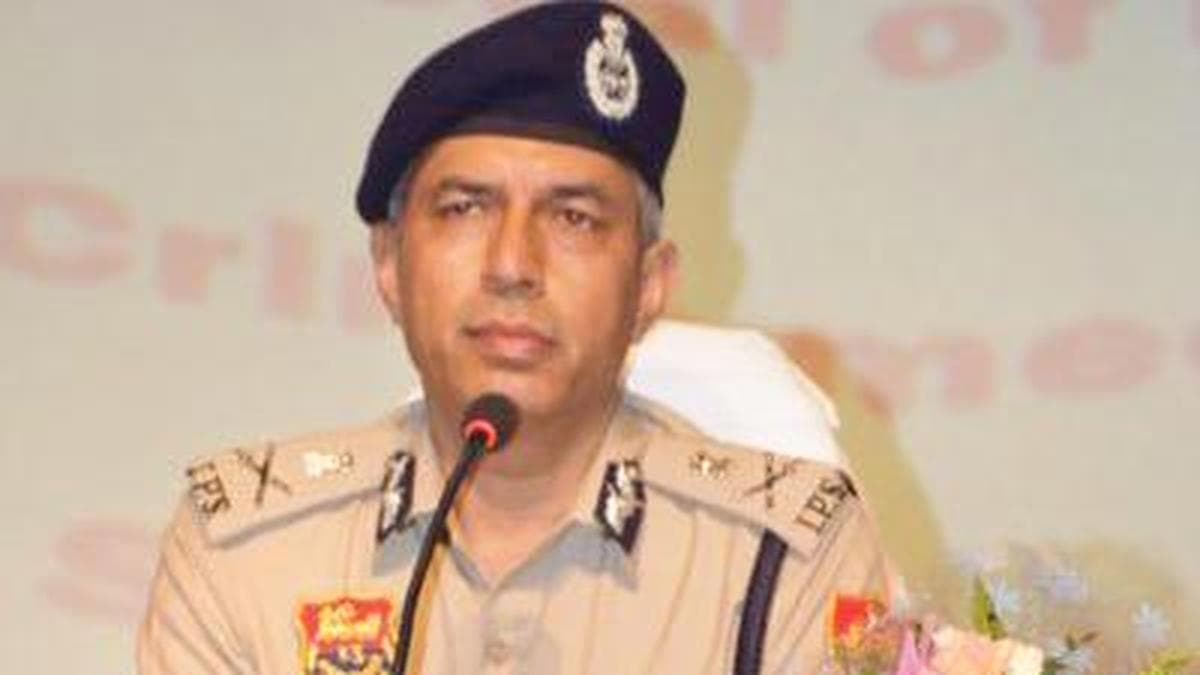
O.P. Singh appointed as officiating DGP of Haryana; Shatrujeet Kapur relieved from charge.
Summary
O.P. Singh has been appointed as the officiating Director General of Police (DGP) for Haryana. This significant administrative change occurred after Shatrujeet Kapur was relieved from the DGP charge. This appointment is crucial for competitive exams, especially State PSCs, as it involves a key position in the state's police hierarchy, requiring candidates to stay updated on top administrative roles.
Key Points
- 1O.P. Singh has been appointed as the officiating Director General of Police (DGP).
- 2He was given additional charge as the state police chief of Haryana.
- 3Shatrujeet Kapur was relieved from his charge as DGP.
- 4The appointment pertains to the state of Haryana's police administration.
- 5O.P. Singh's appointment is 'till further orders', indicating an officiating capacity.
In-Depth Analysis
The recent appointment of O.P. Singh as the officiating Director General of Police (DGP) for Haryana, following the relief of Shatrujeet Kapur from the charge, signifies a crucial development in state administration and law enforcement. While the quick summary mentions this as a significant administrative change, the article's title, "Haryana IPS officer's death: Shatrujeet Kapur relieved from DGP charge," provides critical background context. This suggests that the administrative shuffle might be linked to a significant incident, potentially an investigation or a need for a fresh leadership perspective in the wake of an IPS officer's death.
**Background Context and What Happened:**
The Director General of Police is the highest-ranking police officer in an Indian state or union territory. The news indicates that Shatrujeet Kapur, who previously held the post, was relieved, and O.P. Singh was given the 'additional charge' and subsequently appointed as 'officiating DGP till further orders.' This implies a temporary arrangement, often put in place to ensure continuity of administration when a permanent incumbent is unavailable or removed. The phrase 'officiating' is key here; it suggests that a full-time, regular appointment, adhering to specific guidelines, is yet to be made. The underlying reason for Kapur's relief, particularly if tied to the death of an IPS officer, would have significant implications for police morale, public trust, and the overall law and order situation in Haryana.
**Key Stakeholders Involved:**
Several key stakeholders are involved in such an appointment. Firstly, the **Haryana State Government** is the primary authority responsible for the appointment and removal of the DGP, acting through its Home Department and Chief Minister's Office. Secondly, the **Police Department of Haryana** itself is a major stakeholder, as the leadership change affects its functioning, discipline, and operational strategies. The outgoing and incoming DGPs, Shatrujeet Kapur and O.P. Singh, are central figures. The **Union Ministry of Home Affairs (MHA)** also plays a role through the All India Services cadre control, as IPS officers are part of this central service. Finally, the **citizens of Haryana** are crucial stakeholders, as the effectiveness of the police leadership directly impacts their safety, security, and perception of justice.
**Why This Matters for India and Historical Context:**
This administrative change in Haryana holds broader significance for India's governance structure, particularly concerning law and order and police reforms. The role of a DGP is paramount in maintaining public order, investigating crimes, and ensuring the rule of law. Frequent or politically motivated changes in such a crucial post can destabilize the police force and undermine its independence. This brings us to the landmark **Prakash Singh v. Union of India (2006) judgment** by the Supreme Court. This judgment aimed to insulate the police from undue political interference by mandating a fixed tenure of two years for DGPs, selection from a panel of senior officers by the UPSC, and other reforms. The appointment of an 'officiating' DGP, while sometimes necessary, can be seen as a deviation from the spirit of the Prakash Singh judgment if it becomes a prolonged arrangement, potentially exposing the force to political influence and hindering long-term strategic planning. Historically, police forces in India have grappled with issues of autonomy, accountability, and modernization, making the DGP's role a focal point for reform efforts.
**Related Constitutional Articles, Acts, and Policies:**
Several constitutional and legal provisions underpin such appointments. **Article 309** of the Indian Constitution empowers the appropriate legislature to regulate the recruitment and conditions of service of persons appointed to public services and posts in connection with the affairs of the Union or of any State. **Article 312** deals with All India Services, to which IPS officers belong, emphasizing their dual accountability to both the central and state governments. The **All India Services (Conditions of Service) Act, 1951**, and various rules framed thereunder, govern the service conditions of IPS officers. State-specific police acts, such as the **Haryana Police Act**, also outline the structure and functioning of the state police force. Most importantly, the **Prakash Singh judgment (2006)** serves as a judicial directive, laying down specific guidelines for the appointment and tenure of DGPs to ensure greater functional autonomy and security of tenure.
**Future Implications:**
The appointment of O.P. Singh as officiating DGP has several future implications. Firstly, it indicates a period of administrative transition for the Haryana Police. A key question will be the duration of this officiating appointment and the process for selecting a permanent DGP, which must ideally conform to the Prakash Singh guidelines. If the previous DGP's relief is linked to an investigation, the new leadership will be under pressure to ensure a fair and thorough inquiry, upholding transparency and accountability. The stability and morale of the Haryana Police force will depend on the clarity and fairness of the leadership transition. Furthermore, this incident underscores the ongoing challenges in implementing police reforms across Indian states, particularly regarding the security of tenure and functional autonomy of top police officials, which are vital for effective governance and internal security.
Exam Tips
This topic falls under the 'Indian Polity and Governance' and 'Internal Security' sections of competitive exam syllabi, especially relevant for State PSCs, UPSC Civil Services, and SSC exams. Focus on the structure of state administration and law enforcement.
Study related topics such as the All India Services (IAS, IPS, IFS) – their recruitment, cadre control, and role in federal governance. Also, delve into the evolution and impact of police reforms in India, particularly the Prakash Singh judgment (2006).
Common question patterns include factual questions (e.g., 'Who is the current DGP of Haryana?', 'What is the tenure of a DGP as per the SC guidelines?'), conceptual questions (e.g., 'Explain the significance of the Prakash Singh judgment in police reforms.'), and analytical questions (e.g., 'Discuss the challenges of ensuring police autonomy in India.'). Be prepared to differentiate between 'officiating' and 'permanent' appointments.
Understand the constitutional provisions related to public services (Article 309, 312) and the role of the Union Public Service Commission (UPSC) in selection processes for All India Services. Knowledge of the Police Act, 1861, and state police acts is also beneficial.
Related Topics to Study
Full Article
O.P. Singh, who was given the additional charge as State police chief during Shatrujeet Kapur's absence, has been appointed as officiating DGP till further orders