



Relevant for Exams
Govt proposes VBSA Bill to JPC, aiming to subsume UGC, AICTE, NCTE; Opposition cites federalism concerns.
Summary
The government proposes to send the VBSA Bill to a Joint Parliamentary Committee (JPC). This significant Bill aims to overhaul higher education regulation by subsuming existing bodies like UGC, AICTE, and NCTE, and separating funding from the regulatory function. The Opposition has criticized it as an "attack on federalism," making it a crucial topic for competitive exams focusing on governance, education policy, and constitutional matters.
Key Points
- 1The government has proposed to send the VBSA Bill to a Joint Parliamentary Committee (JPC).
- 2The VBSA Bill seeks to subsume major higher education regulatory bodies: the UGC (University Grants Commission), AICTE (All India Council for Technical Education), and NCTE (National Council for Teacher Education).
- 3A key provision of the VBSA Bill is the separation of funding functions from the regulatory body.
- 4The Opposition has strongly criticized the VBSA Bill, terming it an "attack on federalism."
- 5The Bill represents a significant reform in India's higher education regulatory framework.
In-Depth Analysis
The proposal to send the VBSA Bill to a Joint Parliamentary Committee (JPC) marks a critical juncture in India's higher education reform trajectory. This Bill, the full name of which is often associated with overarching regulatory reforms like the Higher Education Commission of India (HECI) Bill proposed earlier, seeks to fundamentally restructure the regulatory landscape by subsuming major existing bodies like the University Grants Commission (UGC), All India Council for Technical Education (AICTE), and National Council for Teacher Education (NCTE). Furthermore, it aims to separate the crucial function of funding from the regulatory body, a move intended to enhance transparency and focus on academic standards.
**Background Context and the Need for Reform:**
India's higher education system, one of the largest globally, has historically been governed by a multi-regulator framework. The UGC, established in 1956 under the UGC Act, 1956, became the primary body for coordination, determination, and maintenance of standards of university education and disbursement of grants. Subsequently, AICTE (1987) and NCTE (1993) were created to regulate technical and teacher education, respectively. Over the decades, this fragmented regulatory structure faced significant criticism for overlapping jurisdictions, bureaucratic delays, lack of accountability, and a perceived stifling of innovation and autonomy among educational institutions. Concerns about quality, access, and relevance of higher education often surfaced, leading to calls for comprehensive reform from various committees and policy documents, notably the National Education Policy (NEP) 2020.
**What the VBSA Bill Proposes:**
At its core, the VBSA Bill (or its likely predecessor, the HECI Bill, which aligns with the NEP 2020 vision) aims to replace this multi-regulator system with a single, overarching body. This new entity would be solely responsible for setting academic standards, ensuring quality, and accrediting institutions, thereby streamlining the regulatory process. The most significant structural change proposed is the explicit separation of funding responsibilities from regulatory functions. Currently, bodies like the UGC allocate grants while also regulating institutions, leading to potential conflicts of interest and a focus on compliance rather than academic excellence. By separating these roles, the Bill intends to allow the new regulator to concentrate solely on academic standards, while a separate body or the Ministry of Education itself would handle financial disbursements.
**Key Stakeholders Involved:**
1. **The Government (Ministry of Education):** The primary proponent, seeking to implement the vision of NEP 2020 for a 'light but tight' regulatory framework, enhance quality, and foster greater autonomy. Its objective is to simplify governance and improve India's global standing in education.
2. **Parliament (Joint Parliamentary Committee):** The JPC will scrutinize the Bill in detail, inviting expert opinions, public feedback, and stakeholder consultations. This process is crucial for building consensus and addressing potential contentious issues, especially given the Bill's sweeping nature.
3. **The Opposition:** Has vehemently criticized the Bill, primarily on grounds of it being an "attack on federalism." They argue that centralizing regulatory power in higher education, which is on the Concurrent List, would undermine the autonomy of state governments and state-funded institutions, potentially leading to a uniform, centrally-dictated approach that disregards regional diversity and needs.
4. **UGC, AICTE, NCTE:** The existing regulatory bodies whose functions will be subsumed. Their employees and leadership will be directly affected by this restructuring.
5. **State Governments:** Major stakeholders, as education falls under the Concurrent List (Seventh Schedule, List III, Entry 25). They fear an erosion of their powers and influence over higher education within their states, impacting their ability to tailor educational policies to local requirements.
6. **Higher Education Institutions, Faculty, and Students:** Institutions hope for greater autonomy and reduced bureaucratic burden but also express concerns about potential over-centralization. Faculty and students are interested in how these reforms will impact academic freedom, curriculum development, and overall quality of education.
**Why This Matters for India and Future Implications:**
This reform is profoundly significant for India. If successful, it could lead to a more coherent, efficient, and quality-focused higher education system. A unified regulator could ensure consistent standards across disciplines and institutions, promoting better accreditation and global competitiveness. The separation of funding from regulation could foster greater institutional autonomy and encourage innovation, as institutions would be judged solely on academic merit rather than their ability to secure grants. This, in turn, could improve India's human resource development, crucial for its economic growth and global standing.
However, the concerns raised by the Opposition regarding federalism are substantial. Education was moved to the Concurrent List via the 42nd Constitutional Amendment in 1976. While both the Centre and states can legislate on it (Article 246), central legislation often takes precedence. A highly centralized regulatory body could indeed diminish the role of state governments in shaping their educational landscape, potentially leading to a 'one-size-fits-all' approach that may not suit India's vast diversity. This tension between centralization for standardization and decentralization for local relevance is a recurring theme in Indian governance. The JPC's deliberations will be key in addressing these concerns, perhaps by incorporating mechanisms that ensure state participation and respect regional specificities.
Historically, commissions like the Kothari Commission (1964-66) have emphasized the need for quality and relevance in education. The VBSA Bill is a direct attempt to implement the recommendations of NEP 2020, which envisions a complete overhaul of the regulatory architecture. Its passage could redefine the Centre-state relationship in education and reshape the future of millions of students and thousands of institutions, impacting academic freedom, research output, and India's ability to leverage its demographic dividend. The ultimate success will depend on effective implementation, robust institutional mechanisms, and a balanced approach that respects both national standards and regional needs.
Exam Tips
This topic falls under GS Paper II (Polity & Governance, Social Justice - Human Resource Development) and potentially GS Paper III (Economy - Education as a factor of production). Focus on the constitutional provisions related to federalism (Concurrent List, Article 246) and the structure/functions of regulatory bodies.
Study the National Education Policy 2020 (NEP 2020) thoroughly, as this Bill is a direct implementation of its recommendations regarding regulatory reform. Understand the 'light but tight' regulatory philosophy and the proposed Higher Education Commission of India (HECI).
Prepare for analytical questions on the pros and cons of centralizing higher education regulation, the implications for federalism in India, and the impact on institutional autonomy and quality. Be ready to discuss the role of parliamentary committees like JPC in legislative scrutiny.
Familiarize yourself with the history and mandates of UGC, AICTE, and NCTE, including their successes and failures, as this provides context for the proposed reforms. Questions might ask about the challenges faced by the existing multi-regulator system.
Understand the concept of 'separation of powers' in governance and how the separation of funding from regulation aligns with principles of good governance and reducing conflicts of interest.
Related Topics to Study
Full Article
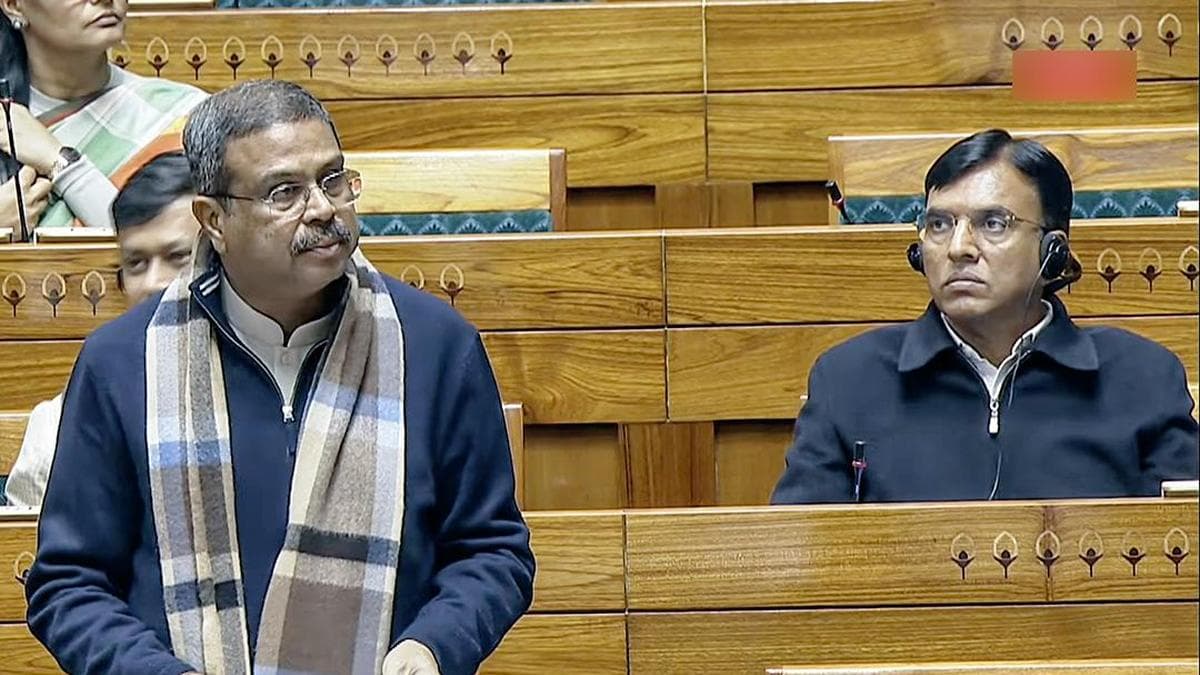
The Bill seeks to subsume the UGC, AICTE, NCTE, and separate funding from the regulatory body; the Opposition has slammed the Bill as an “attack on federalism”