



Relevant for Exams
India's exports jump 19.37% to $38.13 billion in November, offsetting October losses.
Summary
India's outbound shipments witnessed a significant surge, increasing by 19.37% to reach $38.13 billion in November. This growth, as highlighted by Commerce Secretary Rajesh Agrawal, is particularly noteworthy as it successfully offset the losses incurred in October this year. For competitive exams, this data is crucial for understanding India's economic performance, trade trends, and the roles of key government officials, serving as an important current affairs topic in the economics section.
Key Points
- 1India's exports increased by 19.37% in November.
- 2Total outbound shipments in November reached $38.13 billion.
- 3The data reflects export performance for the month of November.
- 4The information was provided by Commerce Secretary Rajesh Agrawal.
- 5The November export growth helped offset the losses recorded in October this year.
In-Depth Analysis
India's economy, a dynamic and increasingly globalized entity, constantly navigates complex international trade currents. The news of a significant 19.37% surge in India's outbound shipments to $38.13 billion in November is not just a statistical anomaly but a crucial indicator of the nation's economic resilience and strategic positioning in the global market. This growth, as highlighted by Commerce Secretary Rajesh Agrawal, is particularly noteworthy because it successfully offset the losses incurred in October, signaling a potential rebound and stability.
To understand this development, we must first consider the broader background context. India's trade performance has been a mixed bag in recent years, influenced by global economic headwinds such as supply chain disruptions, geopolitical tensions (like the Russia-Ukraine conflict), inflationary pressures in major economies, and fluctuating commodity prices. After a period of robust growth post-pandemic, global demand had softened, leading to a dip in India's exports in certain months, including October. The government, under its 'Make in India' and 'Atmanirbhar Bharat' initiatives, has been actively pushing for greater domestic manufacturing and export competitiveness, providing various incentives and policy support.
The November surge to $38.13 billion indicates a strong recovery and potentially improved demand in key markets or enhanced competitiveness of Indian goods and services. This rebound is vital as exports are a significant driver of economic growth, contributing to the Gross Domestic Product (GDP), creating employment opportunities across various sectors, and bringing in crucial foreign exchange reserves. The Commerce Secretary's statement underscores the government's continuous monitoring and strategic interventions to maintain export momentum.
Several key stakeholders are intricately involved in this export narrative. At the forefront is the **Ministry of Commerce and Industry**, headed by the Union Minister and supported by officials like Commerce Secretary Rajesh Agrawal. This ministry is responsible for formulating and implementing foreign trade policy, negotiating trade agreements, and promoting Indian exports. Then there are the **Indian exporters and various industries**—from engineering goods, electronics, textiles, and pharmaceuticals to agriculture and services—who are the actual drivers of these shipments. Their ability to innovate, maintain quality, and access markets directly impacts export figures. The **Reserve Bank of India (RBI)** plays a crucial role through its monetary policy, exchange rate management, and trade finance regulations, which affect the competitiveness of Indian products. Finally, the **Government of India** as a whole, through its fiscal policies, infrastructure development, and diplomatic efforts, creates an enabling environment for trade.
Historically, India's foreign trade landscape underwent a significant transformation post-1991 economic reforms, moving from a highly protected regime to a more liberalized, market-oriented approach. This shift opened up India to global markets, leading to increased trade volumes and diversification of export baskets. Successive Foreign Trade Policies (FTPs), like the current FTP 2023, have aimed at boosting exports, simplifying procedures, and supporting exporters through schemes like the Production Linked Incentive (PLI) scheme and the Remission of Duties and Taxes on Exported Products (RoDTEP) scheme. These policies are critical in enhancing the cost-competitiveness of Indian goods in international markets by neutralizing embedded taxes and duties.
For India, consistent export growth is paramount for several reasons. Economically, it helps manage the **Current Account Deficit (CAD)**, which occurs when a country's total value of imports of goods, services, and transfers is greater than its total value of exports. A healthy export sector generates foreign currency, strengthening India's **Balance of Payments**. Politically, it enhances India's standing as a reliable trading partner and strengthens its position in multilateral forums like the World Trade Organization (WTO). Socially, a thriving export sector leads to job creation, technological advancements, and improved living standards.
While the Constitution of India doesn't directly deal with specific export figures, it lays the foundational principles for economic governance. **Article 301** ensures the freedom of trade, commerce, and intercourse throughout the territory of India, fostering a unified domestic market which is a prerequisite for efficient international trade. The **Foreign Trade (Development and Regulation) Act, 1992**, is the primary legislation governing foreign trade, empowering the Central Government to formulate and implement the Foreign Trade Policy. Furthermore, the Goods and Services Tax (GST) regime, specifically through provisions for input tax credit and refunds for exporters, aims to make Indian exports more competitive by removing cascading taxes.
Looking ahead, the future implications of such export performance are significant. Sustained growth could lead to increased foreign investment, further industrialization, and greater integration into global supply chains. However, challenges persist, including potential global economic slowdowns, rising protectionist tendencies in some countries, and the need for India to diversify its export basket further and explore new markets. The government's focus on Free Trade Agreements (FTAs) with various countries and blocs (e.g., UAE, Australia, UK) is a strategic move to secure preferential market access for Indian products. This November's export surge offers a renewed sense of optimism, suggesting that with targeted policies and robust industrial performance, India can navigate global uncertainties and continue its trajectory towards becoming a major global trading power.
Exam Tips
This topic falls under the 'Indian Economy' and 'Current Affairs' sections of competitive exams (UPSC, SSC, Banking, Railways, State PSC). Pay attention to specific data points like growth percentages and total values, as direct questions on these are common.
Study related topics such as India's Balance of Payments, Foreign Exchange Reserves, Current Account Deficit, and the role of the Reserve Bank of India in managing trade. Understand the impact of global economic trends (inflation, interest rates, geopolitical events) on India's export performance.
Familiarize yourself with government policies and schemes aimed at boosting exports, such as the Foreign Trade Policy (FTP), Production Linked Incentive (PLI) scheme, and Remission of Duties and Taxes on Exported Products (RoDTEP). Questions often test knowledge of these initiatives and their objectives.
Be prepared for analytical questions that require you to interpret trade data and discuss its implications for India's economic growth, employment, and global standing. Understand the difference between merchandise exports and services exports.
Know the key institutions and officials involved in trade policy, such as the Ministry of Commerce and Industry, Directorate General of Foreign Trade (DGFT), and their respective roles. Constitutional articles like Article 301 and relevant acts like the Foreign Trade (Development and Regulation) Act, 1992, are also important for comprehensive understanding.
Related Topics to Study
Full Article
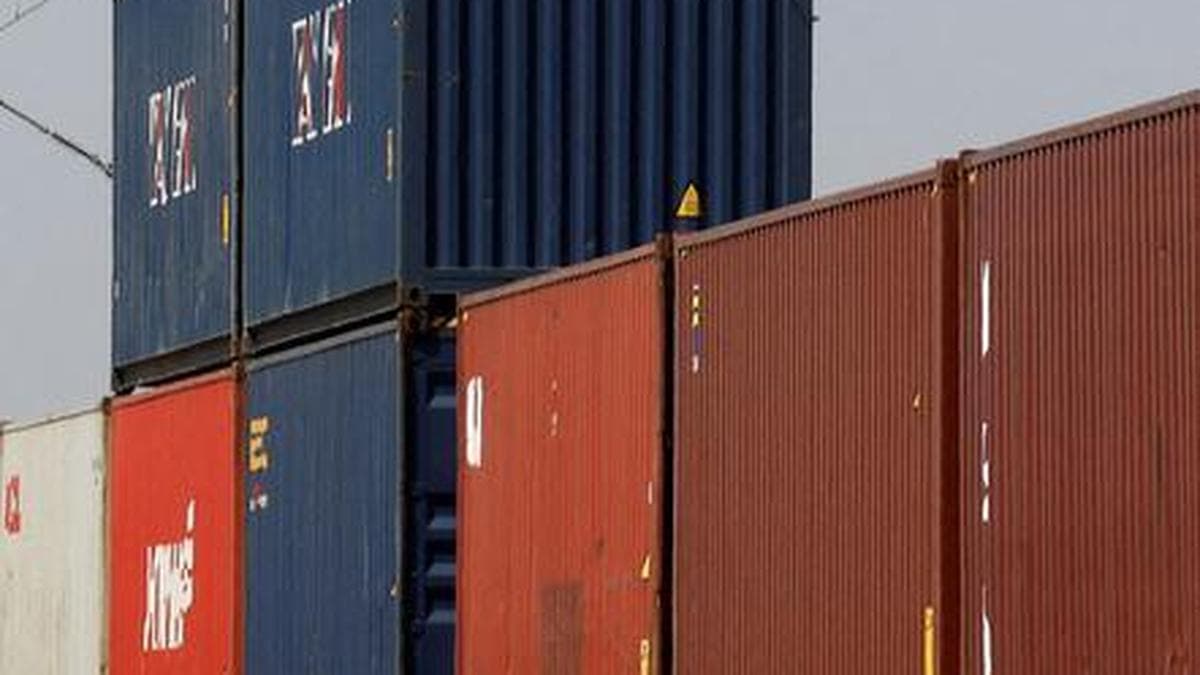
Commerce Secretary Rajesh Agrawal said that outbound shipments in November offset the losses in October this year