



Relevant for Exams
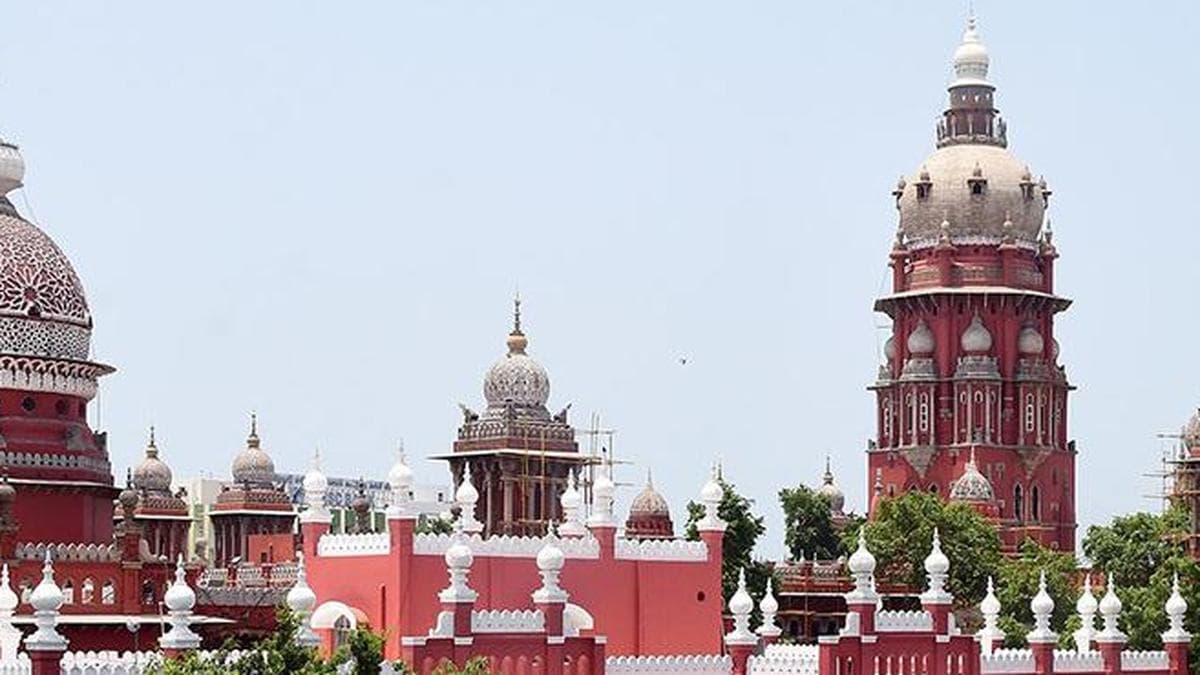
Madras HC directs Public Secretary to explain delay in prosecuting two IAS officers in ₹98.25 crore scam.
Summary
The Madras High Court, through Justice N. Anand Venkatesh, has directed the Public Secretary to explain by January 6 the delay in granting sanction to prosecute two IAS officers. This directive pertains to a significant ₹98.25 crore corporation contract irregularities case involving former Minister S.P. Velumani. The case highlights judicial scrutiny over administrative accountability and corruption, making it relevant for exams focusing on governance and judicial oversight.
Key Points
- 1The Madras High Court issued a directive regarding the prosecution of two IAS officers.
- 2Justice N. Anand Venkatesh of the Madras High Court sought the explanation.
- 3The Public Secretary was directed to provide an explanation by January 6.
- 4The case involves alleged corporation contract irregularities amounting to ₹98.25 crore.
- 5Former Minister S.P. Velumani is implicated in the irregularities case.
In-Depth Analysis
The Madras High Court's recent directive to the Public Secretary, demanding an explanation for the delay in granting sanction to prosecute two IAS officers, sheds critical light on the persistent challenges of combating corruption and ensuring accountability within India's administrative machinery. This directive, issued by Justice N. Anand Venkatesh and setting a deadline of January 6, pertains to a significant ₹98.25 crore corporation contract irregularities case allegedly involving former Minister S.P. Velumani. This incident is not merely an isolated legal proceeding but a potent illustration of the broader systemic issues that competitive exam aspirants must understand.
**Background Context and What Happened:**
Corruption involving public servants and politicians has been a perennial concern in India, eroding public trust and hindering development. To combat this, laws like the Prevention of Corruption Act, 1988 (PC Act) were enacted. A crucial, yet often contentious, provision within this Act is Section 19, which mandates that prior sanction from the appropriate government authority is required before a court can take cognizance of an offence committed by a public servant. The rationale behind this provision is to protect honest public servants from vexatious or malicious prosecution, thereby allowing them to discharge their duties without fear. However, in practice, this provision has frequently been criticized for being misused, leading to inordinate delays or even denial of sanction, effectively shielding corrupt officials.
In this specific instance, the Directorate of Vigilance and Anti-Corruption (DVAC) had investigated the alleged ₹98.25 crore corporation contract irregularities case. The investigation reportedly implicated not only former Minister S.P. Velumani but also two IAS officers. Following the investigation, the DVAC would have sought sanction from the state's Public Secretary (as the competent authority for IAS officers) to proceed with prosecution. The Madras High Court's intervention stems from the apparently unexplained delay in processing this request for sanction, prompting Justice Venkatesh to seek an urgent explanation.
**Key Stakeholders Involved:**
* **Madras High Court (Justice N. Anand Venkatesh):** Represents the judiciary's role as a watchdog, ensuring justice, accountability, and upholding the rule of law. The court's proactive stance highlights judicial activism in cases of administrative inaction.
* **The Public Secretary:** A high-ranking administrative official, representing the executive branch. This individual is the designated 'appropriate authority' responsible for granting or denying sanction for prosecution of IAS officers under Section 19 of the PC Act. Their decision-making process and the reasons for delay are now under judicial scrutiny.
* **The IAS Officers:** Public servants against whom allegations of corruption have been made. Their actions and the subsequent investigation underscore the need for ethical conduct in public service.
* **Former Minister S.P. Velumani:** A political figure implicated in the irregularities, highlighting the nexus between political power and alleged corruption.
* **Directorate of Vigilance and Anti-Corruption (DVAC):** The investigative agency responsible for unearthing the alleged irregularities and gathering evidence. Their effectiveness often depends on timely cooperation from sanctioning authorities.
* **The Public/Citizens:** The ultimate beneficiaries of good governance and victims of corruption, whose trust in institutions is affected by such delays.
**Why This Matters for India:**
This case is profoundly significant for India's governance framework. Firstly, it underscores the critical importance of **accountability and transparency** in public administration. When high-ranking officials are implicated in corruption and the process of bringing them to justice is delayed, it erodes public trust in the government and the bureaucracy. Secondly, it highlights the **role of judicial oversight** in holding the executive accountable. When the executive branch falters in its duty to act against corruption, the judiciary often steps in, reinforcing the principle of the rule of law and ensuring that no one, irrespective of their position, is above the law. Thirdly, it reignites the debate surrounding **Section 19 of the Prevention of Corruption Act**. While intended as a safeguard, its potential for misuse as a tool to protect corrupt officials has been a recurring theme in legal discourse. Delays in granting sanction can lead to evidence tampering, witness intimidation, and a loss of public confidence in the justice system.
**Historical Context and Future Implications:**
The issue of sanction for prosecution has a rich historical context in Indian jurisprudence. Landmark judgments, such as the **Vineet Narain case (1998)** and the **Subramanian Swamy case (2014)**, have repeatedly emphasized the need for a time-bound decision-making process for granting sanction. The Supreme Court, in the Subramanian Swamy case, specifically directed that sanctioning authorities must decide on such requests within four months. The current High Court directive aligns with this judicial push for expeditious action. Historically, delays in sanction have been a significant bottleneck in prosecuting corruption cases, leading to low conviction rates and strengthening the perception of impunity among corrupt officials.
Looking ahead, this directive could have several future implications. It may put increased pressure on sanctioning authorities across various states and at the Centre to act promptly on requests for prosecuting public servants. It reinforces the message that courts will not tolerate arbitrary or unexplained delays, potentially leading to a more streamlined and transparent process for granting sanction. This could bolster the morale of investigating agencies and foster greater public confidence in the government's commitment to combating corruption. Conversely, continued delays or attempts to circumvent judicial directives could lead to further judicial interventions, potentially straining executive-judiciary relations. Ultimately, the outcome of this specific case and the High Court's subsequent actions will serve as a precedent, shaping the future landscape of bureaucratic accountability and the fight against corruption in India.
**Related Constitutional Articles, Acts, or Policies:**
* **Article 14 (Equality before Law):** Reinforces the principle that no person is above the law, including public servants.
* **Article 226 (Power of High Courts to issue certain writs):** Empowers High Courts to issue directions, orders, or writs, including mandamus, to any person or authority within its jurisdiction for the enforcement of fundamental rights or for any other purpose, as seen in this directive.
* **Prevention of Corruption Act, 1988:** The primary legislation dealing with corruption among public servants. Specifically, **Section 19** deals with the requirement of previous sanction for prosecution.
* **All India Services (Conduct) Rules:** These rules govern the ethical conduct and disciplinary actions against IAS officers, emphasizing integrity and devotion to duty.
* **Central Vigilance Commission Act, 2003:** Establishes the CVC to inquire into offences alleged to have been committed under the PC Act. The CVC also advises the government on sanction for prosecution.
* **Various Supreme Court Judgments:** Particularly the Vineet Narain case (1998) and Subramanian Swamy v. Manmohan Singh (2014) which laid down strict timelines for sanction for prosecution. This case reiterates the judiciary's commitment to these principles.
Exam Tips
This topic falls under **GS Paper II (Polity & Governance)**, specifically sections on the Indian Judiciary, Executive, and Accountability & Transparency. It also touches upon **GS Paper IV (Ethics, Integrity & Aptitude)** in the context of public service values and combating corruption.
When studying, focus on the **Prevention of Corruption Act, 1988**, particularly **Section 19** (Sanction for Prosecution). Understand its purpose, controversies, and key Supreme Court judgments (like Vineet Narain and Subramanian Swamy cases) that have interpreted or clarified it. Also, know the powers of High Courts under **Article 226**.
Common question patterns include: direct questions on the PC Act and sanction for prosecution; analysis of the role of the judiciary in ensuring executive accountability; case studies on ethical dilemmas faced by public servants; and questions on administrative reforms needed to curb corruption and delays.
Related Topics to Study
Full Article
Justice N. Anand Venkatesh calls for the explanation by January 6 in the ₹98.25 crore corporation contract irregularities case against former Minister S.P. Velumani