



Relevant for Exams
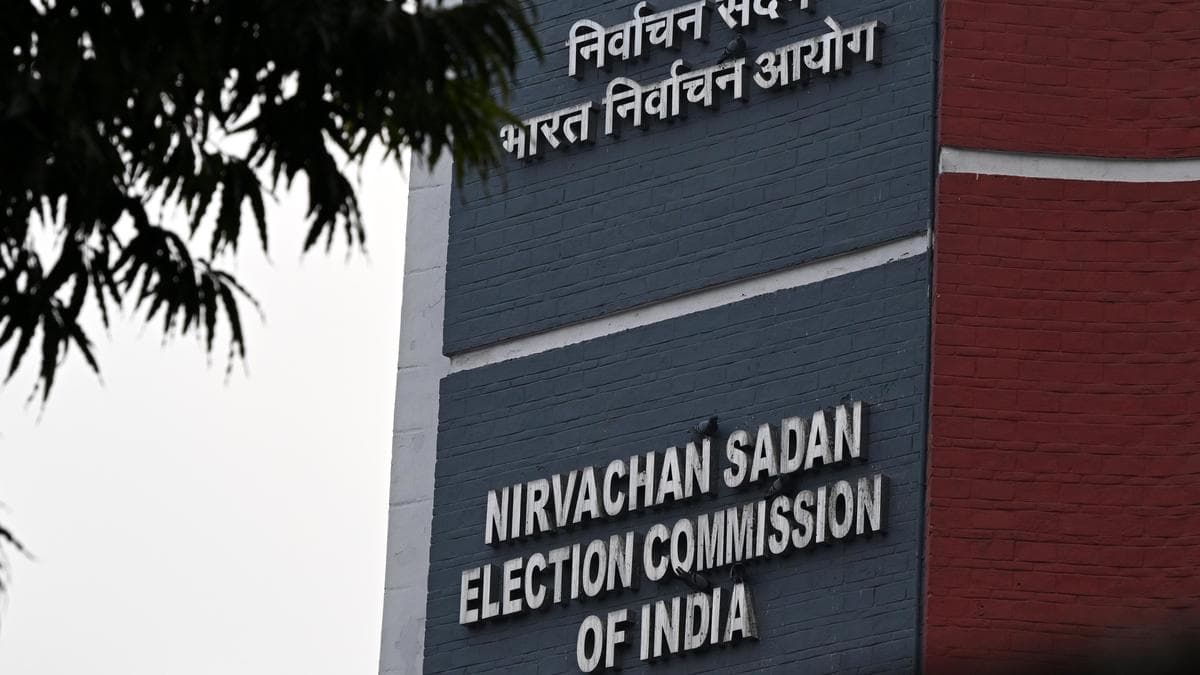
EC appoints 5 officers for 2026 Bengal EVM check; mandates candidate images on EVMs.
Summary
The Election Commission (EC) has appointed 5 nodal officers to conduct the first-level checking (FLC) of Electronic Voting Machines (EVMs) in preparation for the 2026 West Bengal Assembly polls. Concurrently, the EC introduced new rules mandating the display of each candidate's image on the EVM. This initiative aims to bolster electoral transparency and voter confidence, making it significant for competitive exams covering electoral reforms and governance.
Key Points
- 1The Election Commission (EC) has appointed 5 nodal officers.
- 2These nodal officers are designated for the first-level checking (FLC) of Electronic Voting Machines (EVMs).
- 3The FLC process is being carried out in anticipation of the 2026 West Bengal Assembly polls.
- 4The EC has introduced a new rule requiring the display of each candidate's image on the EVM.
- 5This rule aims to enhance voter identification and ensure greater transparency in the electoral process.
In-Depth Analysis
The recent actions by the Election Commission of India (ECI) concerning the preparation for the 2026 West Bengal Assembly polls, specifically the appointment of nodal officers for Electronic Voting Machine (EVM) first-level checking (FLC) and the introduction of candidate images on EVMs, represent significant steps towards enhancing electoral transparency and integrity. These measures are crucial for upholding democratic principles and ensuring public trust in the electoral process in India.
**Background Context and What Happened:**
India, as the world's largest democracy, relies heavily on a robust and credible electoral system. The Election Commission of India, an autonomous constitutional body, is entrusted with the superintendence, direction, and control of elections (Article 324 of the Constitution). Over the decades, the EC has continuously evolved its methods to ensure free and fair elections, moving from paper ballots to EVMs, and then incorporating Voter Verifiable Paper Audit Trails (VVPATs). The current initiative is part of this ongoing evolution.
In anticipation of the 2026 West Bengal Assembly polls, the EC has appointed five nodal officers to oversee the First Level Checking (FLC) of EVMs. FLC is a critical preparatory step where EVMs are thoroughly inspected, cleaned, and tested by engineers from Bharat Electronics Limited (BEL) and Electronics Corporation of India Limited (ECIL) – the public sector undertakings that manufacture these machines. This process ensures that all EVMs are in perfect working condition and free from any tampering or technical glitches before they are deployed for elections. This meticulous check is vital to address concerns about EVM reliability and maintain public confidence.
Concurrently, the EC has introduced a new rule mandating the display of each candidate's photograph alongside their name and party symbol on the ballot unit of the EVM. This is a significant reform aimed at reducing voter confusion, especially in constituencies where multiple candidates might share similar names. By presenting a visual identifier, the EC seeks to ensure that voters can accurately identify and cast their vote for their intended candidate, thereby minimizing accidental votes and enhancing the accuracy of the electoral outcome.
**Key Stakeholders Involved:**
Several stakeholders are directly impacted by and involved in these developments:
* **Election Commission of India (ECI):** As the constitutional body responsible for conducting elections, the EC is the primary driver of these reforms, exercising its powers under Article 324.
* **Political Parties:** All registered political parties and their candidates are directly affected by the rules, as they rely on a fair electoral process. The new image rule directly impacts candidate presentation.
* **Voters:** The ultimate beneficiaries, as these measures aim to empower them with clearer information and greater confidence in the voting process.
* **Bharat Electronics Limited (BEL) and Electronics Corporation of India Limited (ECIL):** These public sector undertakings are crucial for the FLC process, providing the technical expertise to maintain and verify the EVMs.
* **Nodal Officers:** These appointed officials are key to ensuring the meticulous execution of the FLC process, acting as the EC's eyes and ears on the ground.
**Significance for India and Historical Context:**
These measures hold immense significance for India's democratic fabric. They underscore the EC's commitment to continuous electoral reform and transparency. The move to display candidate images builds upon previous reforms like the introduction of the 'None Of The Above' (NOTA) option in 2013 and the mandatory use of VVPATs from the 2019 General Elections. VVPATs allow voters to verify that their vote has been cast correctly by printing a paper slip of their choice, which is then dropped into a sealed box. These innovations collectively aim to address persistent concerns regarding EVM tampering and to bolster the credibility of election results.
Historically, India's electoral journey has been marked by continuous efforts to refine processes. The transition from paper ballots to EVMs, initiated in 1982 in a by-election in Kerala and widely adopted from 2000 onwards, was a major technological leap. However, this transition also brought challenges and skepticism, particularly from opposition parties regarding EVM security. The EC has consistently worked to counter these doubts through transparent FLC procedures, randomisation of EVMs, and the introduction of VVPATs. The candidate image feature is another layer of voter-centric reform, making the process more intuitive and error-proof.
**Future Implications and Constitutional Provisions:**
These reforms are likely to have several positive future implications. They are expected to further increase voter confidence and participation by making the voting process more transparent and user-friendly. By reducing ambiguities, the EC aims to minimize electoral disputes stemming from voter confusion. This could also set a precedent for similar reforms in other elections across the country, potentially leading to a more standardized and robust electoral system nationwide.
From a constitutional perspective, these actions are firmly rooted in **Article 324** of the Indian Constitution, which grants the Election Commission broad powers of superintendence, direction, and control over the preparation of electoral rolls and the conduct of all elections to Parliament and to the Legislature of every State. The **Representation of the People Act, 1951**, further elaborates on the conduct of elections, and the EC derives its power to issue rules and guidelines for the smooth conduct of elections from this statutory framework. The EC's ability to introduce such progressive reforms autonomously is a testament to its constitutional independence and its pivotal role in safeguarding Indian democracy. These reforms align with broader themes of good governance, institutional integrity, and the effective use of technology to enhance public administration and democratic processes.
Exam Tips
This topic falls under the 'Indian Polity and Governance' section of the UPSC Civil Services Exam (GS-II) and State PSCs, and 'General Awareness' for SSC, Banking, Railway, and Defence exams. Focus on the constitutional provisions related to the Election Commission.
Study the composition, powers, and functions of the Election Commission of India (ECI) in detail. Understand the evolution of electoral reforms in India, including the introduction of EVMs, VVPATs, and NOTA. Link these reforms to the broader goal of free and fair elections.
Common question patterns include factual questions on Article 324, the role of BEL/ECIL, the purpose of FLC, and the timeline of EVM/VVPAT introduction. Analytical questions might ask about the challenges to electoral integrity, the impact of technological reforms on voter confidence, or the EC's role in strengthening democracy.
Related Topics to Study
Full Article
The EC has introduced rules by which the image of each candidate would be displayed on the EVM