



Relevant for Exams
Thousands displaced by Naxal violence seek electoral roll inclusion; specific details unavailable.
Summary
The news title indicates that thousands of individuals displaced by Naxal violence are seeking inclusion in electoral rolls. This highlights critical issues of internal displacement, the impact of left-wing extremism on citizen rights, and challenges in electoral administration. For competitive exams, this topic is significant for internal security, governance, social justice, and electoral reforms, requiring knowledge of constitutional provisions and government policies related to Naxalism and voting rights. Due to no content being available, specific details cannot be extracted.
Key Points
- 1Specific details regarding the number of displaced persons, affected regions, or timelines are unavailable due to no content being provided.
- 2The article's title points to the issue of internal displacement caused by Naxal violence, a key topic for internal security studies.
- 3It highlights challenges in ensuring voting rights and electoral participation for citizens displaced from their native places.
- 4Potential exam questions would focus on government policies for Naxal-affected areas and rehabilitation of displaced persons.
- 5Constitutional provisions related to electoral rolls (Article 326) and the Election Commission's role in voter registration are relevant.
In-Depth Analysis
The news title, "Displaced by Naxal violence, thousands now seek inclusion in electoral rolls," succinctly captures a critical intersection of internal security, democratic rights, and governance challenges in India. While specific details from the article are unavailable, the headline itself provides enough context to delve into a comprehensive analysis relevant for competitive exams.
**Background Context: The Scourge of Naxalism and Internal Displacement**
Left-Wing Extremism (LWE), often referred to as Naxalism or Maoism, traces its origins to the Naxalbari village in West Bengal in 1967. Rooted in an agrarian uprising against landlord exploitation, it quickly adopted a Maoist ideology advocating for the overthrow of the Indian state through armed struggle. Over the decades, Naxalism has spread across what is known as the 'Red Corridor,' primarily in states like Chhattisgarh, Jharkhand, Odisha, Bihar, Maharashtra, and Andhra Pradesh. The core reasons for its persistence include deep-seated socio-economic disparities, lack of development, inadequate land reforms, exploitation of tribal populations, and poor governance in remote areas. The violence perpetrated by Naxalites, targeting security forces, government infrastructure, and even civilians perceived as 'informers,' inevitably leads to significant internal displacement. Thousands of people, particularly from tribal and marginalized communities, are forced to abandon their homes and livelihoods, seeking refuge in safer regions or government-run camps. This displacement not only uproots their lives but also severs their connection to basic civic rights and services.
**What Happened (as inferred): A Quest for Democratic Participation**
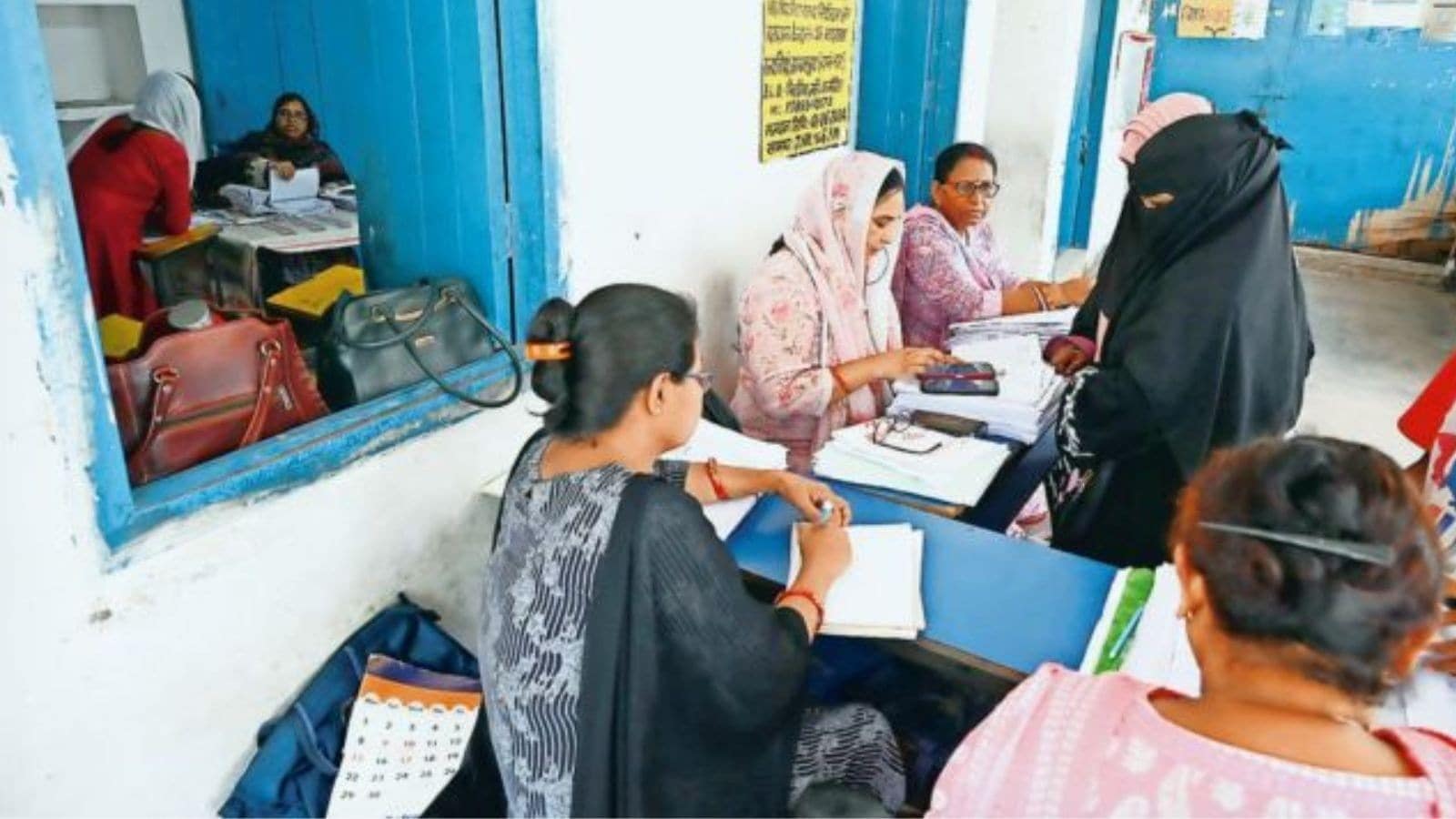
The headline implies that a substantial number of these internally displaced persons (IDPs) are now actively seeking to be included in the electoral rolls. This suggests that their displacement has either led to their names being struck off the rolls in their native villages, or they were unable to register in their new locations, or they face administrative hurdles in transferring their voter registration. The act of seeking inclusion is a powerful assertion of their citizenship and their fundamental right to participate in the democratic process, despite the severe hardships inflicted by violence. It underscores a yearning for normalcy and the exercise of a basic democratic right guaranteed to every adult citizen.
**Key Stakeholders and Their Roles**
Several entities play crucial roles in this complex scenario. The **Displaced Persons** are the primary stakeholders, victims of violence, and seekers of justice and their democratic rights. The **Naxalites/Maoists** are the perpetrators of the violence, often actively discouraging or disrupting elections in their areas of influence, viewing them as symbols of the state they oppose. The **Election Commission of India (ECI)**, mandated by **Article 324** of the Constitution to ensure free, fair, and inclusive elections, is a critical player. Its responsibility includes the preparation and revision of electoral rolls as per **Article 326**, and it must find mechanisms to include IDPs. **State Governments** bear the immediate responsibility for law and order, rehabilitation of displaced persons, and facilitating the ECI's work on the ground. The **Central Government** frames national policies, provides security forces, and financial aid for LWE-affected areas and rehabilitation efforts. Finally, **Civil Society Organizations** often advocate for the rights of the displaced, assist in documentation, and facilitate their interaction with government agencies.
**Significance for India: Upholding Democracy and Addressing Internal Security**
This issue holds immense significance for India. Firstly, it directly challenges the foundational principles of Indian democracy. The denial or difficulty in exercising the right to vote for any citizen, especially those displaced by internal conflict, undermines the concept of universal adult franchise and inclusive governance. It questions the state's ability to protect its citizens' most basic democratic rights. Secondly, it highlights the persistent internal security threat posed by LWE. The violence leading to displacement is a stark reminder of the state's incomplete success in neutralizing this threat. Thirdly, it is a matter of social justice; IDPs are often from vulnerable tribal and rural communities, and their disenfranchisement exacerbates existing inequalities. Politically, their exclusion can lead to further alienation and distrust in state institutions. Economically, displacement disrupts livelihoods and hinders development efforts in already backward regions.
**Historical Context and Constitutional Framework**
Since the late 1960s, successive Indian governments have grappled with Naxalism through a dual strategy of security operations and socio-economic development. However, the human cost, including displacement, has been a recurring feature. The ECI has historically faced challenges in conducting elections in conflict zones, often adapting procedures to ensure participation. Constitutionally, **Article 326** guarantees universal adult franchise to every citizen above 18, and the **Representation of the People Act, 1950**, details the preparation of electoral rolls. The ECI's powers under **Article 324** are broad enough to devise special measures for IDPs, such as special camps for registration or absentee voting provisions, though the latter is primarily for service voters currently. The **National Policy and Action Plan to Combat LWE (2015)** emphasizes a multi-pronged approach encompassing security, development, ensuring rights and entitlements, and perception management, all of which are relevant to addressing the root causes and consequences of displacement.
**Future Implications: Towards Inclusive Governance and Lasting Peace**
The future implications are profound. Successfully integrating these displaced persons into the electoral rolls would be a significant step towards restoring their faith in the democratic system and the state's commitment to their rights. It would bolster the legitimacy of elections in these regions. Conversely, continued exclusion could deepen alienation, potentially fueling further unrest or disengagement from the democratic process. This situation necessitates robust rehabilitation policies, ensuring not just physical safety but also social and political integration. The ECI will likely need to refine its mechanisms for voter registration and accessibility in conflict-affected and post-conflict areas. Ultimately, addressing this issue is intertwined with achieving lasting peace and inclusive development in LWE-affected regions, requiring a sustained, coordinated effort focusing on security, development, and, crucially, upholding democratic rights and processes for all citizens, irrespective of their circumstances.
Exam Tips
This topic falls under GS Paper-II (Polity & Governance, Social Justice) and GS Paper-III (Internal Security) for UPSC. For SSC and State PSCs, it's relevant for General Awareness, Indian Polity, and Current Affairs sections.
Study the constitutional provisions related to the Election Commission (Article 324) and universal adult franchise (Article 326), along with the Representation of the People Acts (1950 & 1951). Understand the specific challenges faced by the ECI in conducting elections in conflict zones.
Be prepared for questions on the causes and consequences of Left-Wing Extremism (LWE), government strategies to combat Naxalism (e.g., National Policy and Action Plan, development initiatives), and the socio-economic impact of internal displacement. Common question patterns include analytical essays on the challenges to democracy from LWE or direct questions on rehabilitation policies for displaced persons.
Analyze the linkage between security, development, and governance in addressing LWE. Questions might ask how improving governance and delivering development can reduce Naxal influence and ensure democratic participation.
Focus on the human rights aspect of internal displacement. Understand how displacement affects fundamental rights, including the right to vote, and what measures can be taken to safeguard these rights in such situations.