



Relevant for Exams
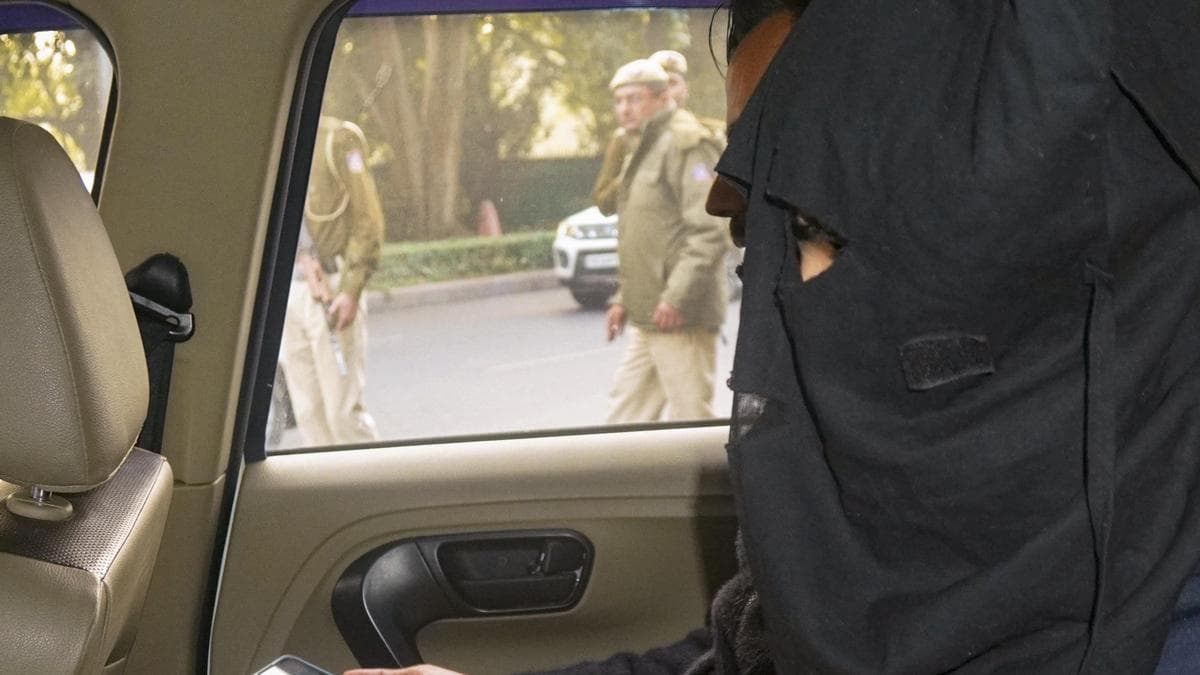
Court extends NIA custody of Delhi blast accused Soyab and Naseer Bilal by four days.
Summary
A court has extended the National Investigation Agency (NIA) custody of Delhi blast accused Soyab and Naseer Bilal by four more days. This development is significant as it highlights ongoing efforts in national security investigations and the role of central agencies like the NIA in probing terror-related incidents. For competitive exams, understanding the functions of the NIA and legal procedures in such cases is crucial.
Key Points
- 1The court extended the custody of Delhi blast accused Soyab and Naseer Bilal.
- 2The custody extension was granted to the National Investigation Agency (NIA).
- 3The accused's custody was extended by an additional four days.
- 4The case under investigation pertains to a Delhi blast incident.
- 5Media persons were barred from covering the court proceedings related to the case.
In-Depth Analysis
The extension of National Investigation Agency (NIA) custody for Delhi blast accused Soyab and Naseer Bilal by four days, along with the barring of media from proceedings, offers a crucial lens into India's internal security framework, the functioning of its premier counter-terrorism agency, and the delicate balance between national security, judicial process, and media freedom.
**Background Context and What Happened:**
India has long grappled with the menace of terrorism, which has necessitated the establishment of robust legal and investigative mechanisms. The National Investigation Agency (NIA) was conceived in the aftermath of the horrific 26/11 Mumbai terror attacks in 2008. These attacks highlighted the urgent need for a central agency with the mandate to investigate and prosecute terror-related crimes across state borders without specific permission from state governments. The NIA Act, 2008, empowered this agency to deal with terror cases, including those involving international linkages, financing of terrorism, and organized crime. In the present case, the NIA sought and received an extension of custody for Soyab and Naseer Bilal, who are accused in a Delhi blast incident. This extension, granted by a court, signifies that the agency requires more time to interrogate the accused, gather evidence, and possibly unearth further details related to the conspiracy.
**Key Stakeholders Involved:**
1. **National Investigation Agency (NIA):** As India's central counter-terrorism law enforcement agency, the NIA is at the forefront of investigating terror-related offenses. Its role here is to meticulously probe the Delhi blast, identify perpetrators, gather evidence, and build a strong case. Their actions are governed by the NIA Act, 2008, and the Unlawful Activities (Prevention) Act (UAPA), 1967, which provides extensive powers for investigation and detention in terror cases.
2. **The Judiciary (Court):** The court plays a pivotal role as the custodian of justice and fundamental rights. In this scenario, the court's decision to extend custody is not automatic but based on the NIA presenting sufficient grounds and evidence to justify further detention. This oversight ensures that investigative agencies do not misuse their powers and that the accused's rights are protected, even while facilitating legitimate investigation. The court's decision is guided by provisions of the Code of Criminal Procedure (CrPC), particularly Section 167, which deals with remand.
3. **The Accused (Soyab and Naseer Bilal):** As individuals under investigation, they are entitled to fundamental rights guaranteed by the Constitution, notably Article 20 (protection in respect of conviction for offences), Article 21 (protection of life and personal liberty, including the right to a fair trial), and Article 22 (protection against arrest and detention in certain cases, including the right to be produced before a magistrate within 24 hours and consult a legal practitioner). Their legal representation would argue against extended custody if the grounds are deemed insufficient.
4. **Media Persons:** The barring of media from court proceedings is a significant aspect. While freedom of the press is enshrined under Article 19(1)(a) of the Constitution, courts often restrict media access in sensitive cases, especially during initial investigation phases, to prevent prejudice to the ongoing probe, protect the identity of witnesses, or ensure the integrity of evidence. However, it also raises questions about transparency and the public's right to know.
**Why This Matters for India and Historical Context:**
This incident underscores India's ongoing battle against internal security threats. Effective investigation and prosecution of terror cases are crucial for maintaining public order, deterring future attacks, and projecting India's resolve against terrorism on the global stage. The NIA's formation in 2008 marked a paradigm shift in India's counter-terrorism strategy, moving towards a more centralized and coordinated approach. Prior to NIA, anti-terror laws like TADA (Terrorist and Disruptive Activities (Prevention) Act) and POTA (Prevention of Terrorism Act) were in force but faced criticism for alleged misuse, leading to their repeal. UAPA, in its amended form, is currently the primary legislative tool for combating terrorism.
**Future Implications:**
The extension of custody suggests an intensive phase of investigation. This could lead to the filing of a charge sheet, further arrests, or the uncovering of a larger conspiracy. The trial phase, if it proceeds, will be critical in delivering justice and upholding the rule of law. The outcome of such cases also influences public perception of national security agencies and the justice system. The issue of media access in sensitive trials will likely remain a subject of debate, balancing the public's right to information with the imperatives of justice and security.
**Related Constitutional Articles, Acts, or Policies:**
* **NIA Act, 2008:** The foundational law establishing and governing the National Investigation Agency.
* **Unlawful Activities (Prevention) Act (UAPA), 1967:** A comprehensive anti-terror law, frequently amended, providing for enhanced powers of arrest, detention, and investigation in terror-related cases.
* **Code of Criminal Procedure (CrPC), 1973:** Governs the procedural aspects of criminal investigation and trial in India. Section 167 is particularly relevant for police/judicial custody and remand.
* **Article 19(1)(a):** Guarantees freedom of speech and expression, which includes freedom of the press. The barring of media, while often justified on case-specific grounds, always raises questions regarding this fundamental right.
* **Article 20:** Provides protection in respect of conviction for offences, including protection against ex post facto laws, double jeopardy, and self-incrimination.
* **Article 21:** Guarantees protection of life and personal liberty, ensuring due process and a fair trial for all individuals.
* **Article 22:** Provides protection against arrest and detention in certain cases, stipulating rights like being informed of the grounds of arrest, the right to consult a legal practitioner, and the requirement to be produced before a magistrate within 24 hours.
Exam Tips
This topic falls under GS Paper II (Indian Polity, Governance, Fundamental Rights) and GS Paper III (Internal Security) for UPSC. Focus on the structure, mandate, and powers of central investigative agencies like NIA, CBI, ED, and the legal framework governing them.
Study the Unlawful Activities (Prevention) Act (UAPA), 1967, in detail, including its key provisions, recent amendments, and criticisms. Understand how it differs from general criminal laws like the Indian Penal Code (IPC) and CrPC.
Familiarize yourself with Fundamental Rights, especially Articles 19, 20, 21, and 22, and their application in cases of arrest, detention, and trial. Questions often test the balance between individual liberties and state security concerns.
Common question patterns include: Direct questions on the establishment and functions of NIA; comparative analysis of UAPA with previous anti-terror laws; case studies on the role of judiciary in upholding fundamental rights during investigations; and essays on internal security challenges and India's response.
Related Topics to Study
Full Article
Media persons were barred from covering the proceedings